
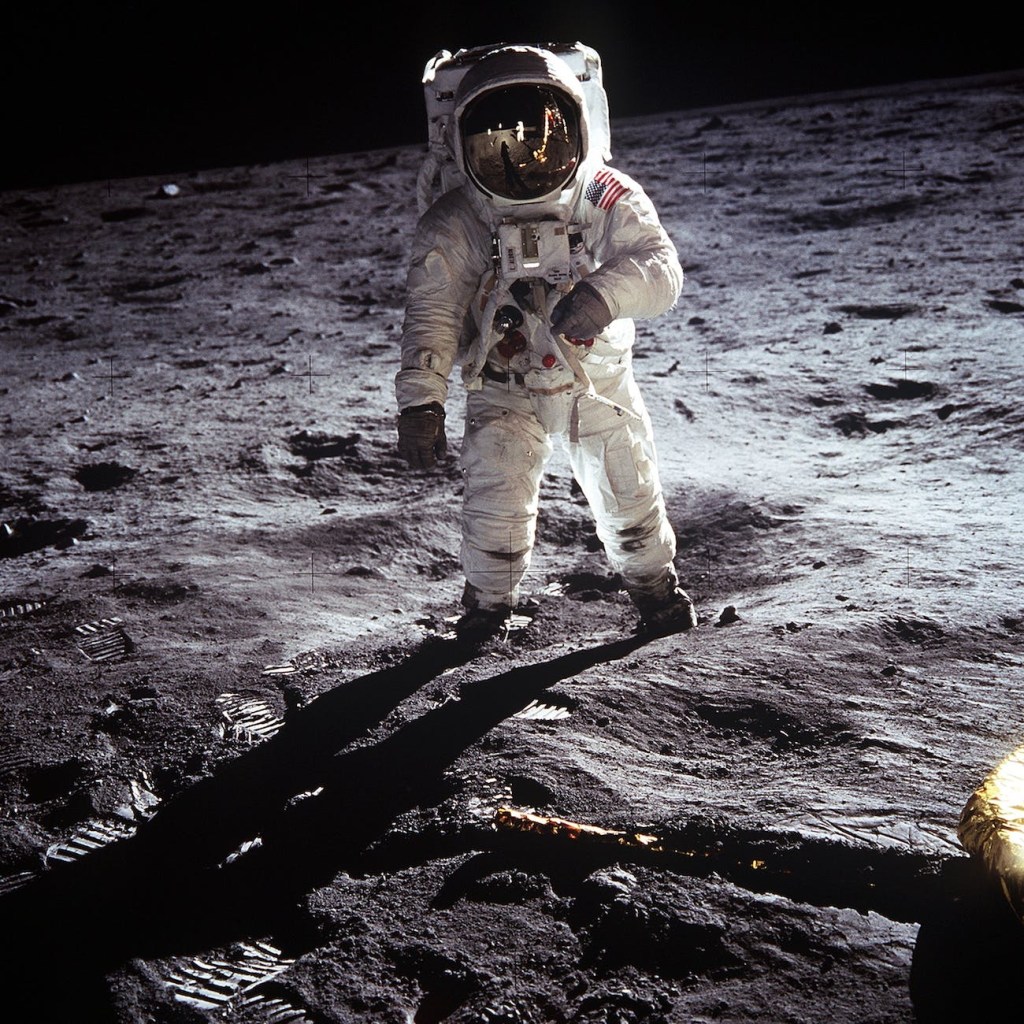
Apollo Moon Landings History

The Apollo program was a series of manned space missions conducted by NASA between 1961 and 1972, with the primary goal of landing humans on the Moon and bringing them safely back to Earth. There were a total of six successful Apollo Moon landings, with Apollo 11 being the most famous due to its historic landing on July 20, 1969.
- Apollo 11 (July 20, 1969):
- Commander Neil Armstrong and Lunar Module Pilot Buzz Aldrin became the first humans to walk on the Moon.
- Michael Collins remained in lunar orbit aboard the Command Module.
- Neil Armstrong’s famous words as he stepped onto the lunar surface were, “That’s one small step for [a] man, one giant leap for mankind.”
- Apollo 12 (November 19, 1969):
- Commander Charles “Pete” Conrad and Lunar Module Pilot Alan L. Bean landed on the Moon’s Ocean of Storms.
- They conducted two moonwalks and successfully recovered parts of the Surveyor III spacecraft.
- Apollo 14 (February 5, 1971):
- Commander Alan B. Shepard and Lunar Module Pilot Edgar D. Mitchell explored the lunar surface near the Fra Mauro crater.
- Shepard famously hit golf balls on the Moon’s surface.
- Apollo 15 (July 30, 1971):
- Commander David R. Scott and Lunar Module Pilot James B. Irwin conducted the first extended lunar exploration, using the Lunar Roving Vehicle.
- They collected a significant amount of lunar samples.
- Apollo 16 (April 21, 1972):
- Commander John W. Young and Lunar Module Pilot Charles M. Duke explored the Descartes Highlands.
- They deployed various scientific instruments and conducted three moonwalks.
- Apollo 17 (December 7, 1972):
- Commander Eugene A. Cernan and Lunar Module Pilot Harrison H. Schmitt conducted the final Apollo Moon landing.
- Schmitt, a geologist, was the only professional scientist to walk on the Moon.
- Cernan is the last human to have left the lunar surface; his words upon departure were, “We leave as we came, and, God willing, as we shall return, with peace and hope for all mankind.”
These Apollo missions provided invaluable scientific data, including lunar rock samples, seismic measurements, and photographs. They also marked a significant achievement in human exploration, advancing our understanding of the Moon and space travel. Since then, no humans have set foot on the lunar surface, but there are plans for future lunar missions, including NASA’s Artemis program, aimed at returning humans to the Moon and eventually establishing a sustainable presence there.
 Universe discoveries