
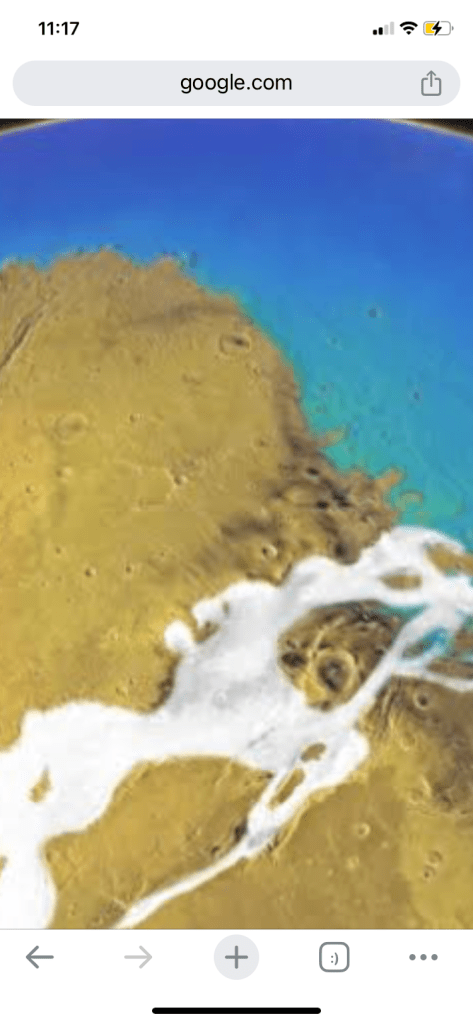
always a cold and dry planet. Scientists believe that about 4 billion years ago, Mars had a warmer and wetter climate, with rain falling near the equator and carving out valleys with flowing water. The late Noachian period is considered the most habitable time on Mars when life could have emerged. However, this favorable climate did not last long, and Mars gradually lost its atmosphere and water, becoming the barren world we see today. The new study suggests that the habitable period on Mars lasted longer than previously thought, by about 500 million years, until the late Hesperian age.

Many individuals exhibit a keen interest in Martian water due to its potential implications for the existence of past or current life forms, potentially in the form of bacteria, as explained by Kletetschka. Applying this gravity-based method to search for water on Mars draws inspiration from its prior successful implementation on Earth.
What kind of water mars has
The red planet once had a global ocean, rivers, and lakes. Then, the solar wind — charged particles from the Sun — stripped away the Martian atmosphere. As the planet’s protective shield faded, all liquid water on the surface evaporated into space, merged with minerals, or fled underground to become water ice.
Best tablets on discount on Amazon
https://293a7fql36p4ayml3k0c4hwi65.hop.clickbank.net Universe discoveries