
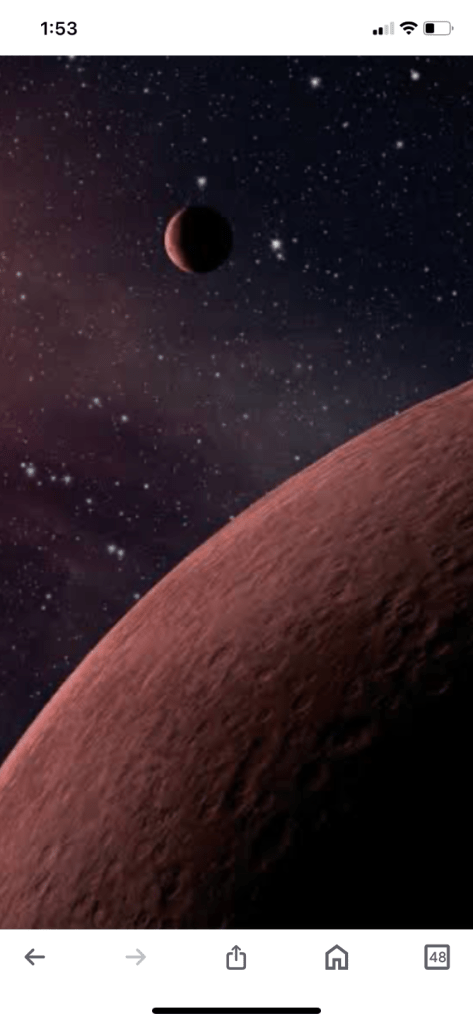
The Kepler-385 system was identified using data from NASA’s retired Kepler space telescope. The system has seven planets that are all larger than Earth but smaller than Neptune. The planets are so close to their star that they’re bathed in its heat. Each planet receives more radiant heat from their host star per area than any planet in our solar system.
The star, Kepler 385, is about 4,670 light-years away. It’s similar to the Sun but a little larger and hotter, being 10% larger and about 5% hotter.
Some of the planets in the Kepler-385 system were confirmed back in 2014, while some remained as candidates.
The Kepler mission revealed that there are more planets than stars in our galaxy. It also showed that small planets are common.
The Kepler space telescope discovered more than 2,600 planets during its 9.6 years in orbit. This was about two-thirds of all planets known at the time. As of June 16, 2023, the Kepler space telescope had detected 2,778 confirmed planets. These include hot Jupiters, super-Earths, circumbinary planets, and planets located in the circumstellar habitable zones of their host stars.
Kepler observed more than half a million stars. It transmitted data to Earth, which was then analyzed to detect periodic dimming caused by exoplanets that cross in front of their host star. Only planets whose orbits are seen edge-on from Earth could be detected.
Kepler also discovered that stars are more jittery than astronomers had expected, complicating the problem of discerning planet transits from random fluctuations in the stars.
The Kepler mission’s results include:
- Planets outnumber stars The Kepler mission proved that there are more planets than stars in our galaxy.
- Small planets are common The Kepler mission observed more than half a million stars and discovered that small planets are common.
- Kepler-22b This planet has a radius 2.4 times that of Earth and was the first planet found within the habitable zone of a star like the Sun.
- Earth-like conditions may be rare A new analysis of known exoplanets has revealed that Earth-like conditions on potentially habitable planets may be much rarer than previously thought.
- Diverse worlds The Kepler mission opened our eyes to diverse worlds, some entirely unlike planets found in our solar system.
The Kepler mission was designed to find thousands of planets around various star types. The mission results provided data on a wide range of planet and planetary systems orbiting both single and multiple stars of differing sizes, temperatures, and ages.
The most common type of planet detected by the Kepler mission are super-Earths and mini-Neptunes, which are between 1 and 4 Earth radii. These planets are a population that does not exist in our own solar system.
Other types of planets discovered by the Kepler mission include:
- Gas giants: Like the outer planets in our solar system
- Hot Jupiters: Large gas giants orbiting very close to their star
- Neptune-size planets: Among the most common classes of exoplanet in our galaxy
- Kepler-16b: A Saturn-mass exoplanet orbiting a binary (two-star) system
- Kepler-1649c: Similar in size to Earth and orbiting in its star’s habitable zone
- Kepler-20e and Kepler-20f: The first Earth-size planets to be found
The Kepler-11 system has six planets: Kepler-11b, Kepler-11c, Kepler-11e.
The planets are all larger than Earth, with the largest ones comparable in size to Uranus and Neptune. The planets are made of a mix of rock and gases.
The Kepler-11 system is located about 2,000 light-years away. The planets are all but one huddled closer to their parent star than the distance between Mercury and our own Sun.
The Kepler-11 system was originally discovered by the Kepler telescope in 2011. NASA considers it to be the most compact and flattest planetary system yet discovered.
https://c60a9ccid6t0ct98uj-js03r3u.hop.clickbank.net Universe discoveries