
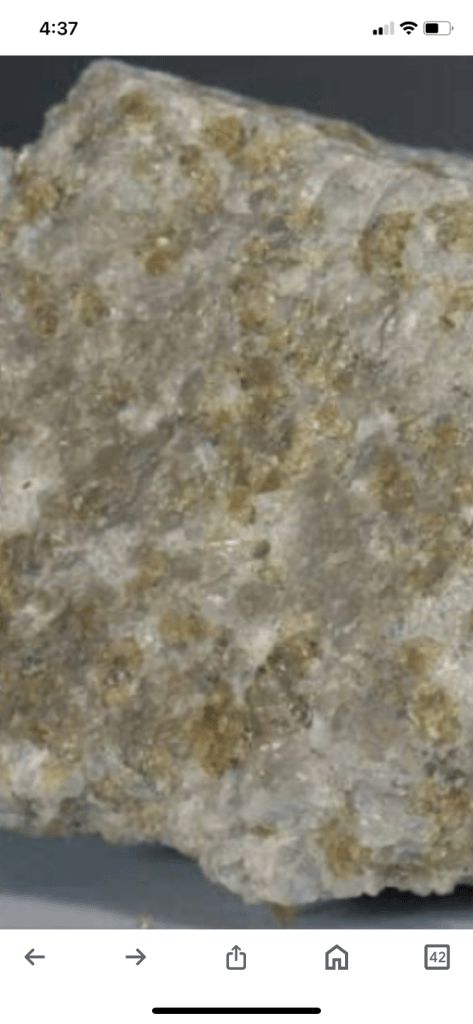
A fresh analysis of moon rocks brought home during the Apollo missions has, for the first time, revealed the presence of hydrogen. This finding suggests future astronauts could someday use water available right on the moon for life support and rocket fuel.
Yes, scientists have found hydrogen in Apollo moon rocks, which suggests that astronauts could harvest lunar water. This discovery could lead to new possibilities for future astronauts, such as using water for life support and rocket fuel.
Researchers at the US Naval Research Laboratory (NRL) identified hydrogen in moon rocks collected during the Apollo missions. The presence of hydrogen in the moon rocks suggests that water could be used for life support and rocket fuel.
However, technical limitations made it impossible to know if the hydrogen was actually water or hydroxyl molecules. Hydroxyl molecules consist of one oxygen atom and one hydrogen atom.
Yes, there is water on the moon. Scientists have confirmed that water exists on the moon in the following forms:
- Water ice: NASA confirmed the presence of water ice at the moon’s poles in 2018.
- Water molecules: NASA’s SOFIA mission confirmed the presence of water molecules in the sunlit areas of the moon’s surface in 2020.
- Water in glass beads: Scientists found water trapped inside tiny glass beads in lunar dirt.
Water is found all over the moon’s surface, but it’s mainly in the form of ice. The moon’s non-polar regions are constantly bombarded by protons emitted by the sun. Some of these protons interact with oxygen molecules in the lunar soil to produce water.
The moon’s poles are extremely cold because they never receive any sunlight. These permanently shadowed regions could have a lot of ice mixed in with the lunar soil.
Lunar water could be used for drinking, oxygen, and rocket fuel. However, the water in lunar soil is in such small amounts that it’s hundreds of times drier than Earth’s deserts. The lunar soil also contains nasty particles that can cause respiratory issues. To drink lunar water, it would need to be processed and purified.
Lunar water could come from:
- Ice deposits
- Water vapor from ancient volcanoes
- Water molecules in sunlit areas
NASA’s Artemis program is looking for ice in craters near the moon’s south pole.
The Apollo 11 mission collected two main types of rocks: basalts and breccias. The basalts formed between 3.6 and 3.9 billion years ago and are rich in titanium. The breccias are made up of fragments from other rocks.
The Apollo 11 mission also found evidence of a magma ocean on the moon. The mission showed that the moon formed hot and was magmatically active for at least 800 million years.
Other discoveries from the Apollo missions include:
- Lunar surface composition: The lunar surface is rich in minerals. The composition depends on whether the rocks came from the lunar highlands or lunar maria.
- Moon’s age: Lead isotopes in lunar dust samples indicate that the moon is at least 4.46 billion years old.
- Water: Traces of water have been found in moon rocks.
Scientists use radiometric dating to determine the age of moon rocks. This method involves measuring the amount of certain isotopes in the rock and comparing it to the known rate of decay of those isotopes.
Some other methods used to date moon rocks include:
- Potassium-argon dating
- Uranium-lead dating
- Rubidium-strontium dating
- Studying impact craters on the surface of the moon rocks
- Analyzing crystals within the rocks
The age of moon rocks ranges from about 3.16 billion years old for the basaltic samples derived from the lunar maria, up to about 4.44 billion years old for rocks derived from the highlands
Yes, moon rocks can be used as evidence of the age of Earth. The oldest moon rocks are between 4.4 and 4.5 billion years old. This helps to constrain the age of Earth, which is generally accepted to be around 4.6 billion years old.
The moon has no geological activity, so it recycles very little. The age of the moon’s rocks is relative to the moon’s actual age. The moon was created when a protoplanet hit Earth, so knowing the age of the moon helps date Earth.
Other evidence for the age of Earth includes:
- Meteorites
- Asteroids
- Lead isotopes in meteorites and ancient lead ores
- The isotopic composition of rubidium–strontium and uranium–lead in moon rocks
- Lunar craters
 Universe discoveries