
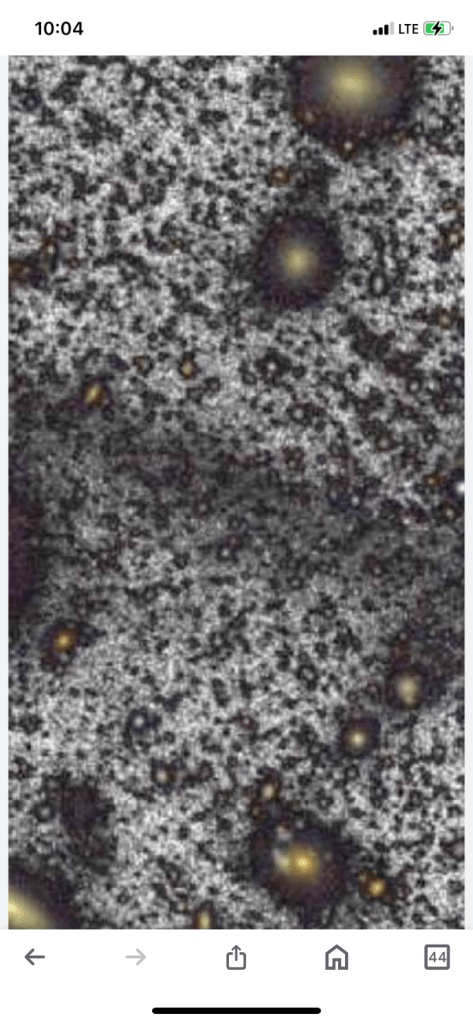
Scientists have discovered a river of stars flowing through intergalactic space. The river is located in a cluster of galaxies about 300 million light years away.
The stream was discovered using data from the European Space Agency’s Gaia satellite. Scientists are calling the phenomenon a river of star formation.
The Giant Coma Stream is a river of stars that flows through a cluster of galaxies about 300 million light-years away. The stream is 1.7 million light-years long, making it the longest stellar stream ever observed. It’s also the first time a stellar stream of this kind has been seen outside of a galaxy
The Giant Coma Stream is named after its proximity to the Coma Cluster. The Coma Cluster is one of the most studied galaxy clusters. It’s located in the direction of the northern constellation Coma Berenices and contains thousands of galaxies. The cluster is centered on two giant ellipticals that are each about 400 billion times as luminous as the Sun
The Giant Coma Stream is a 1.7 million light-year-long stellar stream that’s located between galaxies. It’s the longest stellar stream ever observed. The Giant Coma Stream is ten times longer than the Milky Way.
The Giant Coma Stream was discovered using the Jeanne Rich (HERON) and William Herschel (WHT) telescopes. It’s considered a testament to the complexity of celestial phenomena.
The Giant Coma Stream is thought to be a recently accreted, tidally disrupting passive dwarf.
Named the Giant Coma Stream, it appeared to float in the middle of the cluster environment, not associated with any galaxy in particular, said the researchers in the paper published in the journal Astronomy & Astrophysics
The discovery of the Giant Coma Stream is remarkable because it is a rather fragile structure amid a hostile environment of mutually attracting and repelling galaxies
The discovery is a huge surprise. In such a dynamic and gravitationally complex environment as a galaxy cluster, something as tenuous as a stellar stream isn’t expected to last very long at all.
Yet here we are. The find can be used to study galaxy clusters in more detail, and the mysterious clumpy dark matter therein
In addition to providing crucial restrictions on dark matter features, the study of dynamically cold stellar streams provides insights into the gravitational potential in which they live. Nevertheless, these streams are intrinsically faint, making it extremely difficult to detect them outside local contexts
The scientists expect giant telescopes in the future, not just to find new huge streams. In addition, they wish to zoom in on the image of the Giant Coma Stream
Stellar streams are bands of stars that are located far away in intergalactic space. They are the result of tidal interactions between a central galaxy and lower mass systems such as satellite galaxies or globular clusters
Here are some stellar streams:
- Giant Coma Stream: This stream is more than 10 times the length of the Milky Way. It was discovered by accident while studying the Coma Cluster of galaxies.
- Virgo Stellar Stream: This stream resembles the Monoceros Ring, which is attributed to the Canis Major Dwarf Galaxy merging with the Milky Way.
- Ophiuchus and Elqui: These are the only two stellar streams found on radial orbits.
Stellar streams are the shredded remains of neighboring small galaxies and star clusters that are torn apart by the Milky Way.
It is the largest stream detected to date. The astronomers publish their findings in the journal Astronomy & Astrophysics. The black streak is the newly discovered Giant Coma Stream. This line is ten times as long as our Milky Way and is located about 300 million light years away between galaxies (the yellow spots(full article source google)
Best desktops on heavy discount on Amazon
https://19b9dnhp62u-irkj5jcy-8dhft.hop.clickbank.net Universe discoveries