
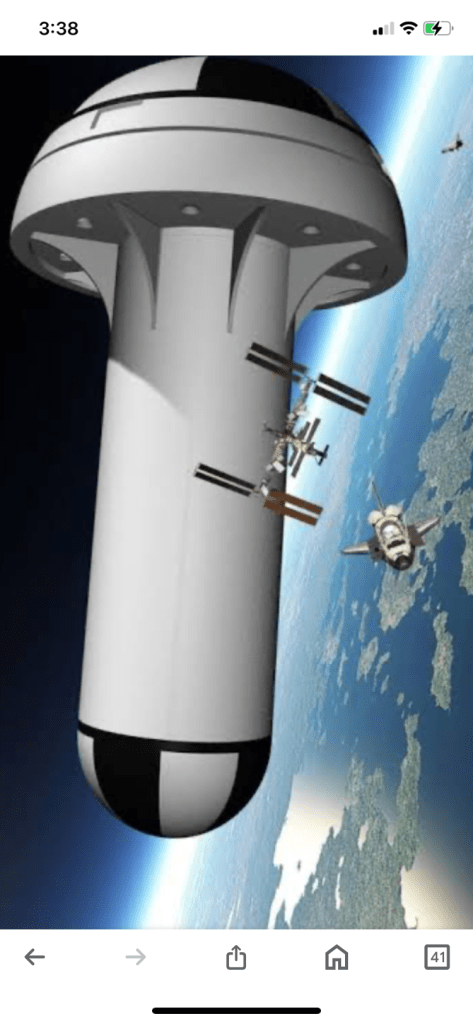
Preliminary Research Shows Artificial Gravity Can Help Mitigate Muscle Problems Resulting From Spaceflight. While humans have been living and working on the International Space Station (ISS) for decades now, deeper space exploration has been constrained by both technology and the human body
Artificial gravity (AG) can help mitigate muscle problems that arise from spaceflight. AG can:
- Maintain protein synthesis
- Prevent muscle atrophy
- Mitigate muscle function deterioration
AG can also help prevent other conditions that arise from microgravity, such as: Bone loss, Fluid shift.
According to NASA, AG could be a good way to keep astronauts healthy during long trips, such as a trip to Mars. AG could also provide short-term protection from space-induced neurological deficits. However, long-term solutions are still needed for long-duration missions.
A centrifuge is a machine that simulates gravity on the human body. It rotates at high speeds to create a force that mimics Earth’s gravitational pull. Centrifuges are often used in medical testing, scientific research, and space exploration
Centrifuges are especially helpful for astronaut training. They can apply forces that are multiple times the force of Earth’s gravity. This helps astronauts get used to the intense forces they experience during rocket launches and returning from space.
Other machines that simulate gravity include:
- Gravity offload systems Use an overhead crane-type device to simulate zero gravity, lunar gravity, and Mars gravity
- Multi-User Variable-Gravity device Spins two carousels at different speeds to simulate different gravity forces
- Human centrifuges Test the tolerance and reactions of astronauts and pilots to acceleration above Earth’s gravity
Gravity simulators work by replacing the force of gravity with a reaction force to centripetal force. This creates a sensation of weight.
Here are some ways to simulate gravity:
- Spinning spacecraft: Spinning a spacecraft creates enough centrifugal acceleration to simulate gravity.
- Gravity offload systems: These systems use an overhead crane-type device to offload the weight of a human or equipment.
- ARGOS system: This system attaches to a human subject in a harness or gimbal through a cable. The system then offloads a portion of the subject’s weight to simulate reduced gravity.
- Parabolic flights: These flights simulate zero gravity without going to space.
- Ballistic flight path: This flight path simulates microgravity.
- Amusement ride: This ride consists of a circular platform attached to a motor on a hydraulic arm. The platform spins until the centripetal force pushes riders against the wall.
Artificial gravity, also known as rotational gravity, is created by applying an acceleration to an astronaut. This acceleration produces the same force as Earth’s gravity, which is 9.8 meters/sec2.
Here are some ways to create artificial gravity:
- Spinning spacecraft: Spinning a spacecraft creates centrifugal acceleration, which simulates gravity. The rate of rotation needed to simulate Earth’s gravity depends on the radius of the circle. For example, a rotation rate of 15 rpm at a radius of 4 m would produce Earth gravity at the feet.
- Bungee chords: Bungee chords can supply a force on an astronaut.
- Body restraints: Body restraints can supply a force on an astronaut.
Researchers are currently working on methods to create artificial gravity in space. One method involves discovering a type of negative gravitational mass.
The rotational speed of artificial gravity depends on the radius of the object creating the artificial gravitational field. For example, a rotation rate of 5 rpm at a radius of 4 m can create an artificial gravity level of 0.1 g. To produce Earth gravity at the feet at a radius of 4 m, a rotation rate of 15 rpm is required.
According to a Reddit post, most people would perceive a rotation of 2 rpm or less as artificial gravity. However, a vessel over 1/4-mile in diameter would be required to simulate 1G at 2 rpm or less.
NASA Ames Research Center has developed a system that uses a non-rotating spacecraft with connected moving modules to create artificial gravity.
According to NASA, research into human tolerance of artificial gravity (AG) has been limited to rotation rates below 10 rpm. It’s generally assumed that 4-6 rpm is the threshold for human comfort.
However, some people can adapt to higher rotation rates. In one experiment, people were able to handle rotation rates of up to 10 rpm. However, many people couldn’t adapt and frequently used sick bags.
There are concerns that using centripetal force to create AG could cause nausea and disorientation.
Yes, it’s possible to create artificial gravity by rotating a space station or spacecraft. The centrifugal force created by the spin pulls people and things to the outside. The centripetal force of the floor pushing up feels similar to Earth’s gravity
To create artificial gravity, you can:
- Spin a spacecraft: A small ship rotating very fast or a large ship rotating slowly can create artificial gravity.
- Use an O’Neill cylinder: This technology can create artificial gravity in space.
- Stretch, compress, and twist elastic material: This can create negative and positive pressures and shears to create an artificial gravity field.
However, there is no known way to have artificial gravity. Gravity is tied to mass. Simulated gravity is only local and won’t affect external objects.(full article source google)
https://19b9dnhp62u-irkj5jcy-8dhft.hop.clickbank.net
 Universe discoveries