
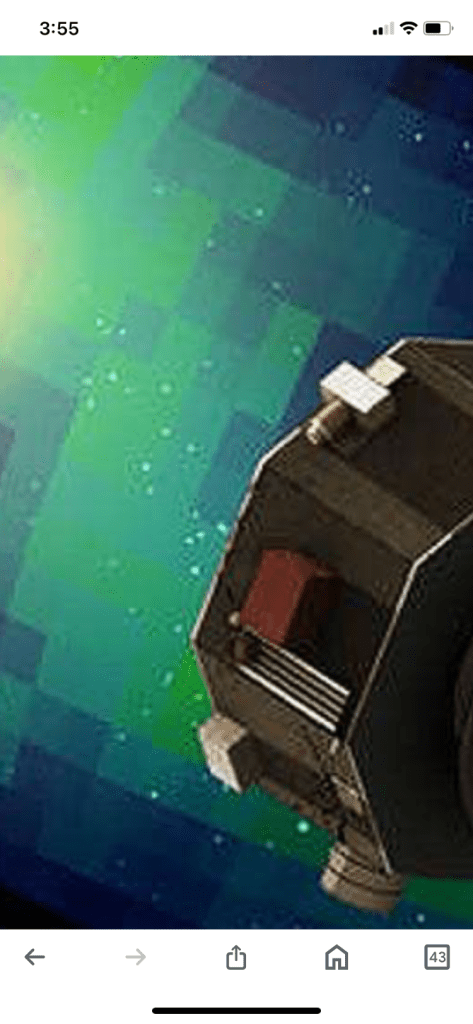
It’s now moving from development and design to the assembly, testing, and integration phase, targeting a launch in late Spring 2025. After launch, the spacecraft will fly to the Earth-Sun L1 Lagrange Point and analyze how the Sun’s solar wind interacts with charged particles originating from outside the Solar System
NASA’s Interstellar Mapping and Acceleration Probe (IMAP) is scheduled to launch in late spring 2025. The IMAP mission will study the Sun’s heliosphere, which is the volume of space filled with particles from the Sun. The mission will also investigate how the heliosphere interacts with the local galactic neighborhood.
The IMAP mission will address two important issues in space physics:
- Acceleration of energetic particles
- Interaction of the solar wind with the interstellar medium
The IMAP spacecraft has reached a significant milestone, transitioning from design to assembly. The instruments and support systems are delivered to different facilities for testing. The facilities include:
- Los Alamos, New Mexico
- San Antonio, Texas
- Princeton, New Jersey
The IMAP mission has the following facts:
- Launch: February 2025
- Principal Investigator: David McComas, Princeton University
- Project Manager: John Scherrer, Johns Hopkins APL
- Project Scientist: Joe Westlake, Johns Hopkins APL
As of 2023, there are five interstellar probes: Voyager 1, Voyager 2, Pioneer 10, Pioneer 11, New Horizons.
All five probes were launched by NASA.
Only two of the probes have reached interstellar space: Voyager 1, Voyager 2.
Voyager 1 was the first to reach interstellar space in August 2012. Voyager 2 joined it on December 10, 2018.
Interstellar probes are probes that can reach other star systems.
The Voyager program has two robotic interstellar probes: Voyager 1 and Voyager 2. The twin probes were launched in 1977 from Cape Canaveral, Florida. They were originally designed to study Jupiter, Saturn, Saturn’s rings, and the larger moons of the two planets
The Voyagers have traveled well beyond their original destinations. Voyager 1 is currently the farthest spacecraft from Earth at about 15 billion miles (24 billion kilometers) away. Voyager 2 has traveled more than 12 billion miles (20 billion kilometers) from Earth.
The Voyagers are still in operation beyond the outer boundary of the heliosphere in interstellar space. They are the only spacecraft that have ever operated outside the heliosphere, which is considered to be the border of our solar system.
The Voyagers continue to gather valuable data deeper in space than any probes have before them. Ongoing investigations include:
- Examining the sun’s magnetic field
- The energy of the solar wind emanating from our sun
- Radio emissions in interstellar space
NASA’s Interstellar Probe (ISP) is a proposed space probe that would explore the heliosphere and interstellar space. The ISP was originally proposed in 2018 by NASA for the Applied Physics Laboratory. The baseline launch is between 2036 and 2041
The ISP mission would launch on a Space Launch System (SLS) Block 2 heavy rocket in the mid-2030s. The mission would travel twice as fast and far as the Voyagers. The primary mission would last 50 years, and the extended mission could run much longer if the hardware survives.
The ISP mission would:
- Explore the heliosphere
- Travel almost three times farther from the Sun than the Voyager probes
- Operate and communicate at 1000 AU
- Have a design life of no less than 50 years
According to NASA, sending humans to interstellar space is currently only possible in science fiction. Physicists generally believe that faster-than-light travel is impossible. Albert Einstein’s theory of special relativity states that the speed of light is the cosmic speed limit. Nothing can travel faster than light, which is 300,000 kilometers per second. It would take an infinite amount of energy to accelerate a material object to the speed of light.
Intergalactic travel is even further beyond humanity’s current capabilities. Intergalactic distances are about 100,000 times greater than interstellar distances(full article source google)
Best men woman clothing on heavy discount on Amazon Universe discoveries