
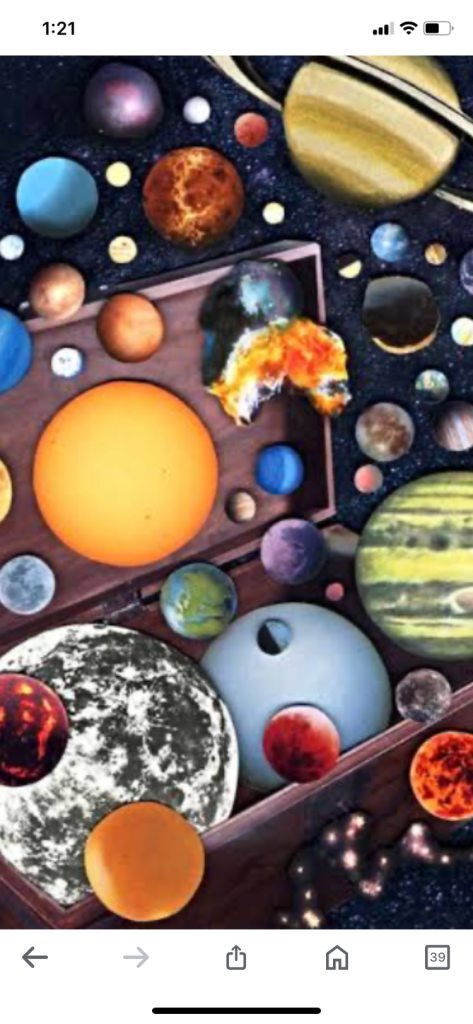
According to a study, misaligned binary star systems can create rogue planets. If the binary stars orbit each other in an elliptical orbit, then the presence of a super-Earth is enough to generate rogue planets.
Rogue planets, also known as “free-floating” planets, are solitary worlds that drift freely through space. They do not orbit around a star, and they are not gravitationally bound to one.
Rogue planets may originate from planetary systems in which they are formed and later ejected, or they can also form on their own, outside a planetary system.
The Milky Way alone may have billions to trillions of rogue planets. However, astronomers can only estimate the mass of these dark, Jupiter-mass balls of gas, and their origins remain mysterious
They were discovered in the Orion Nebula but more recently, JWST has been exploring the region too. Back in December 2021, JWST was launched atop an Ariane 5 rocket from French Guiana
The James Webb Space Telescope (JWST) has been exploring the Orion Nebula and discovered more than 500 Jupiter-mass planet-like objects. The telescope has also found at least 40 pairs of rogue gas giant planets in the nebula
The Orion Nebula is a glowing cloud of gas and dust that is one of the brightest nebulae in the night sky. It is a young star-forming region that is only one million years old and contains thousands of new stars.
The JWST is a telescope that was launched in December 2021 and orbits the Sun at a point 1.5 million kilometers away. The telescope has also observed the four most distant galaxies known, which are also the oldest
The Orion Nebula is one of the most studied celestial features and is one of the most photographed and scrutinized objects in the night sky. It’s one of the most important constellations for astronomers because it contains one of the closest and most active stellar nurseries in the Milky Way.
The Orion Nebula is a popular stargazing target for astronomers because it’s easy to locate and visible from both the Northern and Southern Hemispheres. The nebula is 1,500 light-years away, which is close enough for telescopes like the Hubble Space Telescope to examine it in detail.
The Orion Nebula is a magnitude 4 interstellar cloud of ionized atomic hydrogen that contains a young open cluster of four primary stars known as the Trapezium. The nebula’s reddish hue comes from hydrogen gas, which is energized by radiation from newborn stars. The blue-violet regions in the nebula reflect radiation from hot, blue-white O-type stars.
The Orion Nebula’s bright, central region is home to four massive, young stars that shape the nebula. The nebula has revealed much about the process of how stars and planetary systems are formed from collapsing clouds of gas and dust.
The Orion Nebula’s colors come from different chemical elements. The Hubble telescope has captured images of the nebula that show different colors attributed to different elements
Here are some of the colors and elements associated with the Orion Nebula:
- Orange: Hydrogen
- Green: Oxygen
- Red: Sulfur and infrared light
- Greenish tint: Oxygen
- Red hue: Hα recombination line radiation at a wavelength of 656.3 nm
The Orion Nebula’s light comes from a process similar to how a neon sign works. The nebula’s bright, colorful appearance comes from the light from young, hot stars inside the nebula. The light makes the gas in the nebula glow.
Rogue planets, also known as free-floating planets, are planets that don’t orbit a star and aren’t gravitationally bound to one. They are also known as interstellar, orphan, or nomad planets.
Rogue planets may have formed in a planetary system and been ejected, or they may have formed on their own outside a planetary system. The Milky Way may have billions to trillions of rogue planets.
Rogue planets are dark, isolated orbs that roam the universe without revolving around a host star. For example, if Earth stopped revolving around the sun and didn’t revolve around another host star, it would be considered a rogue planet
(Full article source google)
https://e620boms0zo1c1jbmj3qz81y3n.hop.clickbank.net Universe discoveries