
In the dense galaxy clusters found on the Supergalactic Plane, galaxies experience frequent interactions and mergers with other galaxies. This transforms spiral galaxies into elliptical galaxies – smooth galaxies with no apparent internal structure or spiral arms – and leads to the growth of supermassive black holes
Astrophysicists have discovered that the Supergalactic Plane lacks spiral galaxies because of frequent interactions and mergers between galaxies. These interactions transform spiral galaxies into elliptical galaxies, which are smooth galaxies without spiral arms or internal structure. This process also contributes to the growth of supermassive black holes
The researchers suggest that the low density of spiral galaxies in the Supergalactic Plane is due to the contrasting environments inside and outside the Plane.
The revelation was made possible through the SIBELIUS (Simulations Beyond the Local Universe) supercomputer simulation, which tracks the evolution of the universe over 13.8 billion years.
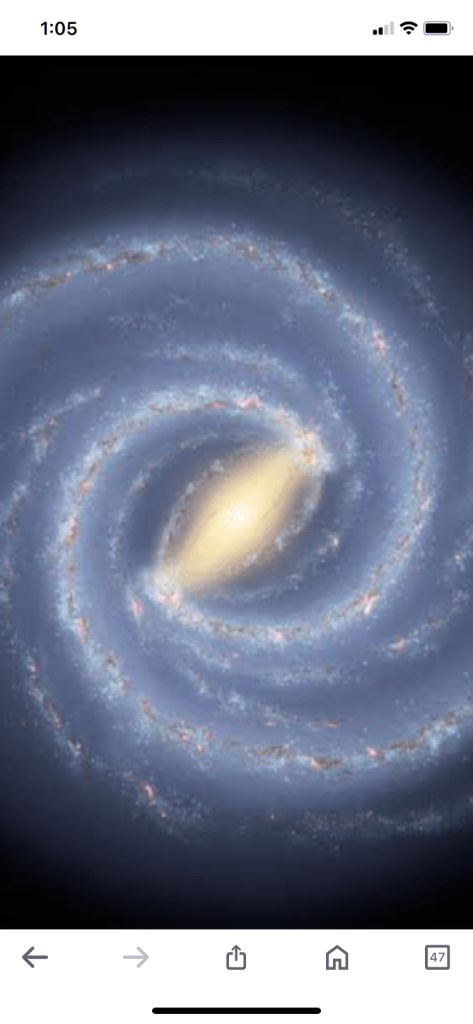
Galaxies are classified by shape, and there are three general types: elliptical, spiral, and irregular. Spiral galaxies are perhaps the most familiar kind of galaxy, with a distinctive shape with spiral arms in a relatively flat disk and a central “bulge”.
While elliptical galaxies are thought to be the most common type of galaxy, spiral galaxies are the most commonly observed. This is because elliptical galaxies are dimmer and made up of older stars, making them harder to spot
Spiral galaxies are bright because of the active formation of stars. Scientists believe that spiral galaxies make up nearly 60% of all galaxies in the universe.
Spiral galaxies are thought to form due to density waves that travel through the outer disk. The formation of spiral galaxies is a complicated process that involves the formation of disks, bulges, and halos.
Spiral arms are persistent and can exist for an extended period due to self-perpetuating mechanisms.
According to a 2023 study, frequent interactions and mergers between galaxies in the Supergalactic Plane (SGP) transform spiral galaxies into elliptical galaxies. The study used the SIBELIUS supercomputer simulation to show that galaxies in dense clusters on the Plane often merge.
The collisions disrupt the spiral galaxies’ arms, transforming them into smoother elliptical galaxies. Elliptical galaxies are smooth galaxies with no apparent internal structure or spiral arms.
The research also found that these interactions and mergers contribute to the growth of supermassive black holes.
Elliptical galaxies are thought to be the result of major mergers between galaxies that consume most of the gas during the merger. This quenches further star formation after the merger
Here’s some more information about these galaxies:
- Spiral galaxies: Galaxies like the Milky Way that have arms.
- Elliptical galaxies: Galaxies that are oval-shaped, not quite a circle or a sphere, and look like a cloud of stars. They are made up of mostly old stars, and do not have much gas and dust. There is very little new star formation in these galaxies.
- Major mergers: Mergers that destroy the galactic disks and create a kinematically hot, r1/4-law spheroid.
- Galaxy harassment: Processes inside the cluster that alter the spiral galaxies.
During the merger, the stars become scattered and their orbits become random. This results in a single, football-shaped elliptical galaxy with stars orbiting the center in all planes.
Elliptical galaxies are more commonly found around clusters and groups of galaxies.
When two spiral galaxies collide, they typically merge into a single elliptical galaxy. This is due to the galaxies’ mutual gravity and the star formation that occurs during the merger.
The stars that previously orbited in two thin disks become scattered in all directions, forming a football-shaped elliptical galaxy. The delicate spiral structure of both galaxies is destroyed as they become a single, giant, elliptical galaxy.
Some astronomers hypothesize that this is the primary mechanism that creates elliptical galaxies. Elliptical galaxies show evidence of being formed by mergers of large galaxies.
Galaxy mergers are important because they can impact galaxies in a number of ways, including:
- Morphology
- Sizes
- Motion of their stars and gas
- Gas content
- Star formation rates
- Nuclear activity
Galaxy mergers can also trigger star formation, which may be the origin event for how stars including our own Sun formed. Mergers are also thought to trigger periods of extreme star formation: starbursts.
Galaxy mergers are also important because the merger rate is a fundamental measurement of galaxy evolution. The merger rate also provides astronomers with clues about how galaxies bulked up over time.
Researchers study merging and interacting galaxies to understand how they form and evolve
(Full article source google)
https://theikariajuice.com?shield=a808bddj1x-vjxdcqd47pa1nc0 Universe discoveries