
Sanskrit is not considered the “language of the universe” in a literal or scientific sense. However, in ancient Indian culture, Sanskrit was believed to be an eternal language that existed in the universe’s innermost realms. Some believe that Sanskrit is the language closest to the Divine Word, the original Cosmic Sound and Light vibration behind the entire universe.
Sanskrit is also believed to contain all the potentials of cosmic sound. It links the human brain and mind to the vibratory field of Cosmic Intelligence that guides the universe
In Hinduism, it is believed that the sounds of Sanskrit represent the vibrations of the universe and are considered to be the language of the gods. The ancient texts of India, including the Vedas and Upanishads, are written in Sanskrit and are highly revered for their spiritual and philosophical teachings
According to Hindu scripture, the word Om is the original vibration of the universe, and from this vibration all other vibrations manifest. The sacred sound symbol Om (or Aum, ॐ) represents the universe and the ultimate reality (Brahman). It is often said to represent God in the three aspects of Brahman (A), Vishnu (U), and Shiva (M).
Sanskrit is a ceremonial language used in Hindu religious rituals and Buddhist practice. It is made up of primordial sounds and is developed systematically to include the natural progressions of sounds as created in the human mouth.
The Sanskrit language is called Devavani, which means “divine language”. It is considered the most poetic and musical language because it was used by many people who were full of inner harmony.
According to World History Encyclopedia, Indian sages with spiritual hearing formulated the elusive vibrations in the Sanskrit language about 3,200 years ago. The Vedas are thought to reproduce the exact sounds of the universe.
Some say that Sanskrit is a vibrational language. According to HUM Yoga and Meditation Essentials, Sanskrit is more vibrational than modern languages because it has more soft sounds. Soft sounds are more resonant than hard sounds.
Sanskrit is also considered the oldest language based on sounds and vibrations. Linguists have identified 54 basic vibrations, and Sanskrit stems from these original sounds. According to Yogi Times, all other languages emerged from these sound patterns, but eventually became more and more removed from the source.
Some say that Sanskrit mantras are powerful vibrational fields of sounds. Chanting Sanskrit mantras can help calm the mind, reduce stress and anxiety, and create positive energy. In yogic practices, the sound vibrations of Sanskrit are said to heal the body through the divine vibrational frequencies.
Sanskrit is the oldest language that was based on sounds and vibrations. Every alphabet and its pronounciation have specific meaning; like ku is earth, khE is sky etc. OM is the first and foremost of all mantras. OM is the sound of cosmic energy and contains all the sounds in itselfमाँ
Sanskrit evolved from Proto-Indo-European languages and was used to write the Vedas, the Hindu religious texts compiled between 1500-500 BCE.
Sanskrit is thought to have originated around the Helmand Basin, which is located on the border of Afghanistan and Iran. This area was home to the Helmand Culture, a highly advanced bronze age civilization.
Sanskrit is also known as Deva-Vaniv, which means “the language of God”. Some believe that Lord Brahma created Sanskrit and gave it to the Rishis, or sages, who lived in celestial abodes.
The first text written in Sanskrit was Rig Veda, a collection of sacred Hindu hymns written around the 2nd millennium BCE. However, the original creation date of Rig Veda was much earlier because it was passed down for centuries through oral tradition.
Sanskrit died out around 600 BCE and is used for mainly religious and literature purposes today.
According to World History Encyclopedia, the god Brahma created Sanskrit and gave it to the Rishis, or sages, who lived in celestial abodes. The sages then communicated the language to their earthly disciples, and it spread from there
According to Hindu Janajagruti Samiti, Lord Datta re-created Sanskrit to enable embodied souls to attain final liberation (moksha) through the medium of words.
According to Indian tradition, Sanskrit is eternal and has no beginning or ending
Here are some Sanskrit words related to God:
- Bhagavan An epithet used in Indian religions to refer to figures of religious worship. It can be translated as “Lord” or “God”.
- Deva A masculine term that means “shiny”, “exalted”, “heavenly being”, “divine being”, or “anything of excellence”. It is also used in Hinduism to indicate a deity. The feminine equivalent is Devi.
- Ishvara A title used in Hinduism to refer to God as a person. It is particularly favored by devotees of the god Shiva.
- Khuda or Khoda Means “Lord” or “God”.
- Suratrana A Sanskrit word that can be interpreted to mean “protector of gods”. It is made up of the words “sura” (सुर) and “trana” (त्राण). “Sura” means “deva, gods, deity”, and “trana” means “protect, preserve, defend
The Sanskrit word for worship is upasana (उपासना), which literally means “worship” and “sitting near, attend to”.
The Sanskrit word for devotion is bhakti (भक्ति), which comes from the verb root bhaj-, which means “to worship, have recourse to, betake onself to”. Bhakti also means “attachment, devotion to, fondness for, homage, faith or love, worship, piety to something as a spiritual, religious principle or means of”.
In Hinduism, bhakti is a movement that emphasizes the mutual intense emotional attachment and love of a devotee toward a personal god and of the god for the devotee
In Sanskrit, bhakt is a term for someone who is devoted to God.
The Sanskrit word bhakti (भक्ति) means devotion, attachment, participation, fondness for, homage, faith, love, worship, and purity. It can refer to devotion to God or to someone important in one’s life. In Hinduism, bhakti is a main idea that describes the devotion of a devotional god as the essence of religious life.
Bhakti ideas have inspired many popular texts and saint-poets in India. Bhakti yoga is a spiritual practice within Hinduism that focuses on loving devotion towards any personal deity
The Sanskrit word Om is a sacred, spiritual symbol and mantra used in Buddhism, Hinduism, Jainism, and esoteric religions. The word is a combination of the three letters a, oo, and m
The Devanagari symbol ॐ is a cursive ligature that combines a, u, and the chandrabindu (ँ, ṃ).
Om is known by various names with different contextual meanings, including:
Vedic-Pranava, Tantric-Pranava, Akshara, Ekakkshara, Sukshma-Panchakshari, Omkara.
Om is symbolic of the past, present, and future. The four syllables are symbolic of the past (A), the present (U), the future (M), and the place where time cannot flow (silence)
In the Upanishads, the Vedas describe Om as the source of all knowledge, sound, and vibration. Om is also described as a signifier of the divine and absolute reality
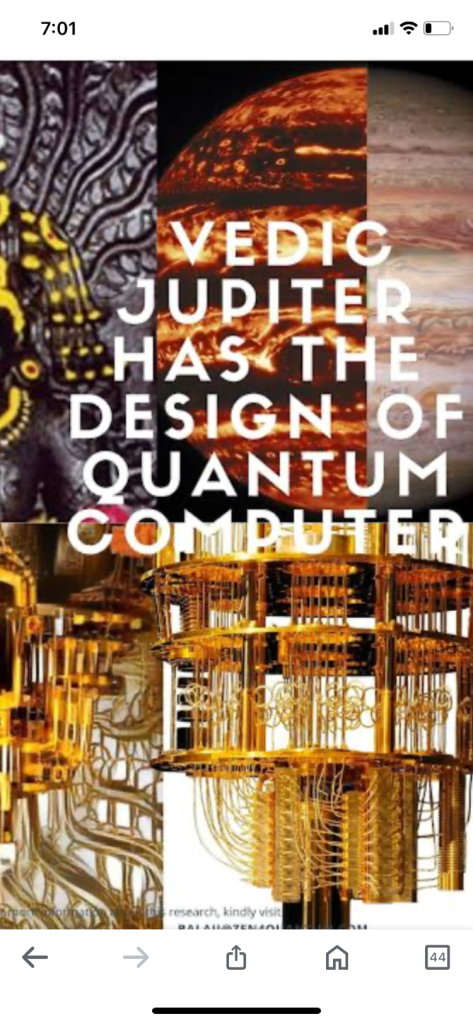
Sanskrit is not used in quantum computers. However, some say that Sanskrit grammar could be useful for quantum computing researchers.
Sanskrit has attributes that fit the requirements of quantum computing, as its scripts resemble circuits and gates. Sutras are strands of circuits, where the logic gates (Sutra Script) connects.
The connection between Sanskrit and quantum computing could have significant implications for quantum computing development and wave function comprehension.
In the 1920s, quantum mechanics was created by Werner Heisenberg, Niels Bohr, and Erwin Schrödinger. They all read from and greatly respected the Vedas, the ancient Indian Sanskrit texts on spirituality.
Sanskrit is not commonly used for artificial intelligence (AI) programming. However, some say that Sanskrit’s rules-based grammatical foundation makes it an ideal language for knowledge representation in AI.
NASA claims that Sanskrit is the most suitable language for developing computer programming for their AI program. Sanskrit is considered to be the most appropriate language for algorithm programming science research. It provides meaning and variety in the least amount of words, giving it precise meaning.
Sanskrit has one key application in AI and natural language processing (NLP): sentiment analysis. Sentiment analysis involves analyzing large amounts of text data to determine the overall sentiment or emotion expressed in the text.
In 2017, a team of researchers at the Indian Institute of Technology Bombay developed a Sanskrit natural language processing toolkit called SanskritNLP
Please subscribe like comment your precious thoughts on my blogs on universe discoveries
(Full article source google)
https://66567ljfz81wbshny7cnm-kodp.hop.clickbank.net Universe discoveries