
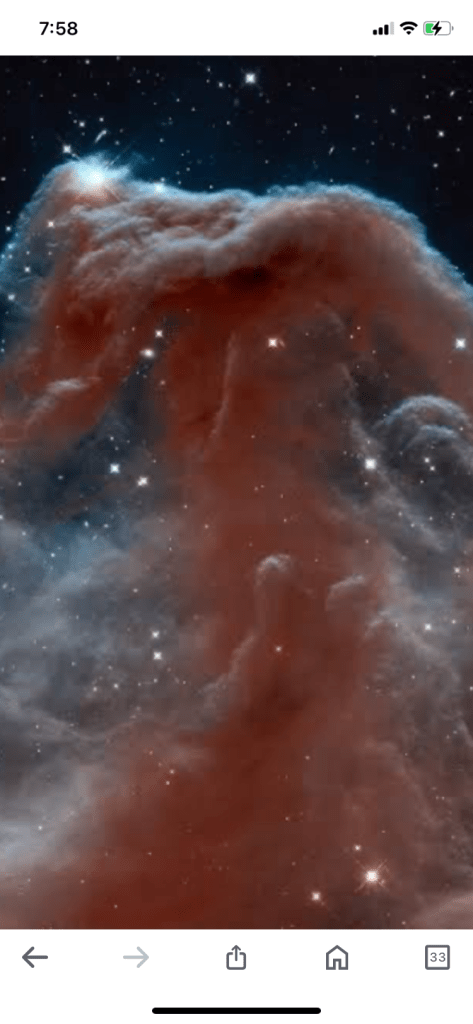
The Panspermia hypothesis suggests that life can exist throughout the universe and can be spread from one planet to another through cosmic dust and other celestial objects.
Panspermia comes from the Ancient Greek words πᾶν (pan) and σπέρμα (sperma), which mean “all” and “seed”. The theory is based on the idea that microorganisms and the chemical precursors of life can survive being transported from one star system to the next.
Cosmic dust is made up of tiny particles of solid matter in space, such as the remnants of asteroids, comets, or interstellar dust clouds.
New research suggests that life could spread via cosmic dust. However, life would need to be very hardy to survive on a dust grain as it travels through interstellar space.
New research examines the idea that cosmic dust could be responsible for spreading life throughout the galaxy by panspermia. Life arose elsewhere, and was delivered to the young Earth. This is not a new idea, but in this work, the author calculates how quickly it could happen
Cosmic dust travels through space due to a variety of factors, including:
- Comets: Comets that pass the sun replenish the dust in our solar system.
- Asteroid collisions: Asteroid collisions leave behind cosmic dust.
- Gravity: The gravity of planets and the pressure of sunlight move dust around.
- Star explosions: Dust is formed in stars and blown off in star explosions.
- Interstellar dust: Interstellar dust sweeps through the solar system. Cosmic dust particles are small, so other forces besides solar and planetary gravity affect their trajectories. Cosmic dust particles travel at an average speed of about 45,000 miles per hour, or 20 kilometers per second
Dust is formed in stars and is then blown off in a slow wind or a massive star explosion. The dust is then ‘recycled’ in the clouds of gas between stars and some of it is consumed when the next generation of stars begins to form
The Panspermia hypothesis suggests that life can exist throughout the universe and can be spread from one planet to another through cosmic dust and other celestial objects.
The theory argues that life did not originate on Earth, but instead evolved somewhere else and seeded life as we know it.
Panspermia is a fringe theory with little support amongst mainstream scientists. Some critics argue that the theory overlooks the resilience required for life to survive the harsh conditions of space, including extreme temperatures, cosmic radiation, and the re-entry process.
The idea of Panspermia was revived in the nineteenth and twentieth centuries by scientists like J. J. Berzelius (1834), W. T. Kelvin (1871), and H..
Spontaneous generation is an obsolete theory that suggests life can arise from nonliving matter. Panspermia, on the other hand, suggests that life exists throughout the universe and can be spread from one planet to another.
If life originated on Earth and evolved here, it would be spontaneous origin. If life came to Earth from elsewhere in the universe, it would be panspermia.
Some scientists also believed in the model of spontaneous regeneration, where early life forms were thought to have come from decaying and rotting inorganic matter
If life first started on Earth and evolved here it would be spontaneous origin initially. If life came to Earth from elsewhere in the universe it would be panspermia but would have had to initially start with spontaneous origin somewhere in the universe
The divine origin theory
The Divine Origin Theory is a theory about the origin of the state. It’s also known as the theory of divine right of kings. According to this theory, the state is the work of God, not the work of people.
The Divine Origin Theory and Panspermia both involve the idea of transportation. The Divine Origin Theory involves the transportation of life by kings. Panspermia involves the transportation of life by extraterrestrial beings or supreme beings
It is the idea of the transportation from an extraterrestrial being or a supreme being from one place to another. The Divine Origin has this theory that meant for the Kings to “transport” the life. This is the relationship that may found on Divine Origin and Panspermia
Life was put on earth by divine forces
Creationism is the religious belief that life, the universe, and Earth were created by divine forces. It’s a response to modern evolutionary theory, which explains the diversity of life without divine power.
Creationism is often used to refer to the belief in special creation. The theory of special creation is the idea that God created all living organisms, including the first man, Adam. It’s at the core of most major religions and is the oldest and most widely accepted hypothesis about the origins of life
Consequently, studying the origin and earliest evolution of life, along with the long-term evolution of the Earth’s environments, helps us understand why the Earth became habitable and why terrestrial life has persisted for billions of years.
The panspermia theory argues that life originated in space and was transported to planets by comets and meteorites. The theory also proposes that organisms like bacteria could be transported through space to planets like Earth by comets.
The theory of cometary panspermia suggests that comets contain bacteria and viruses that led to the origin and evolution of life on Earth.
The panspermia theory is also known as the cosmozoic theory
The panspermia theoryargues that life is originated in space, in spatial ices, and continuously distributed to the planets by comets and meteorites
Other civilisation may have seeded life on earth
The panspermia theory suggests that life could be distributed across the galaxy, but doesn’t address how life actually began.
The directed panspermia theory suggests that other civilizations deliberately seeded life on Earth. In 1966, Shklovskii and Sagan, and in 1973, Crick and Orgel, both hypothesized that other civilizations may have seeded life on Earth
The panspermia theory suggests that life exists throughout the universe and is distributed by space dust, meteoroids, asteroids, comets, and planetoids.
The theory also suggests that living organisms could survive the harsh conditions of space. It also suggests that life could have originated elsewhere and was “seeded” onto Earth.
The panspermia theory has been a topic of philosophical debate for millennia. However, due to lack of any validation, it remained merely speculative until few decades ago
The panspermia theory suggests that life exists throughout the universe and can be spread through space. The theory also proposes that organisms like bacteria could be transported through space to planets like Earth by comets
The directed panspermia theory details the manner in which the last humans, upon discovering that the Solar System will soon be destroyed, send microscopic “seeds of a new humanity” towards potentially habitable areas of the universe
Please like subscribe comment your precious thoughts on universe discoveries
Full article source google
Best pet supplies on discount on Amazon Universe discoveries