
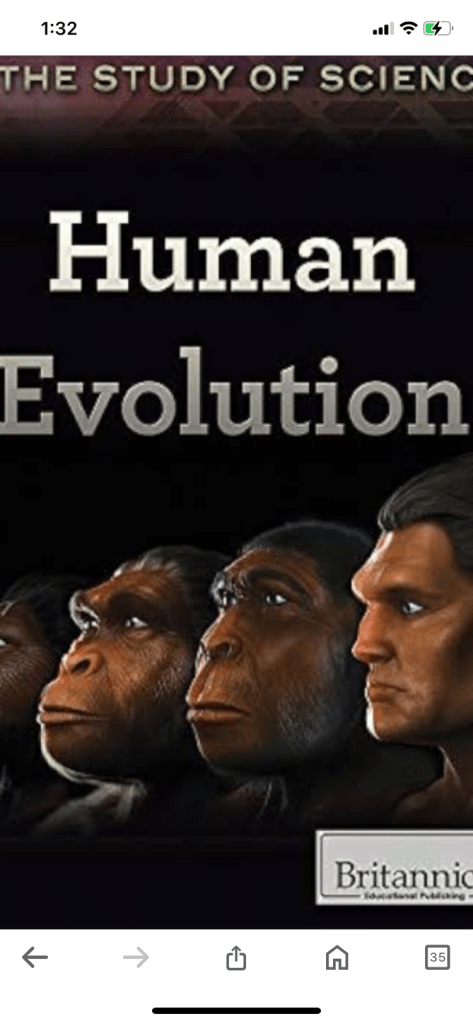
The study found that unlike other vertebrates where competition generally suppresses speciation after ecological niches are filled, the Homo lineage shows an unusual trend where increased competition coincides with an increase in the formation of new species
The Many Humans of the Globe
As our species (Homo sapiens)evolved and spread across the globe, they were contemporary with several other hominins. These include the best known of our evolutionary cousins, the Neanderthals, but also Denisovans, Homo floresiensis (mainly in Indonesia), Homo luzonensis(discovered in the Philippines), and Homo naledi (known from South Africa).
Perched from atop our ivory tower, it’s easy to think that we’ve always dominated this planet, taming beasts and molding the environment to do our bidding — and that we were alone on this journey. Not so. It’s astounding that not one, but at least five other species of humans were at some point sharing this pale blue dot of ours.
For years, scientists assumed the main driver of the rise and fall of hominin species (which includes humans and our direct ancestors) was climate change. It is known, however, that interspecies competition is also at play as it is in most vertebrates
New research published in Nature Ecology & Evolution examines the rate at which new species of hominin emerged over 5 million years. This speciation in our lineage, they found, is unlike almost anything else
We have been ignoring the way competition between species has shaped our own evolutionary tree,” says lead author Dr Laura van Holstein from the University of Cambridge, UK. “The effect of climate on hominin species is only part of the story.”
What ancestor did humans evolve from?
The ‘out of Africa’ model is currently the most widely accepted model for how and where humans evolved. It proposes that Homo sapiens evolved from the earlier species Homo erectus in Africa, before migrating across the world.
What animal did humans evolve from timeline?
Strong evidence supports the branching of the human lineage from the one that produced great apes (orangutans, chimpanzees, bonobos, and gorillas) in Africa sometime between 6 and 7 million years ago
What is the human evolution theory?
Human evolution is the lengthy process of change by which people originated from apelike ancestors. Scientific evidence shows that the physical and behavioral traits shared by all people originated from apelike ancestors and evolved over a period of approximately six million years
Who was the first human ancestor?
The earliest fossils argued by some to belong to the human lineage are Sahelanthropus tchadensis (7 Ma) and Orrorin tugenensis (6 Ma), followed by Ardipithecus (5.5–4.4 Ma), with species Ar. kadabba and Ar. ramidus
What are the 7 stages of human evolution?
- 7 Stages Of Human Evolution. …
- Dryopithecus (Dryopithecine) …
- Ramapithecus (Syn: Sivapithecus) …
- Australopithecus (Southern Apes) …
- Homo Habilis (Able Man) …
- Homo Erectus (Upright Man) …
- Homo Sapiens Neanderthalensis (New Human Species) …
- Homo Sapiens (Wise Men
Did all humans come from one person?
The published conclusion was that all current human mtDNA originated from a single population from Africa, at the time dated to between 140,000 and 200,000 years ago. The dating for “Eve” was a blow to the multiregional hypothesis, which was debated at the time, and a boost to the theory of the recent origin model.
What are the 8 types of human evolution?
The following are the stages of human evolution:
- Dryopithecus. These are deemed to be the ancestors of both man and apes. …
- Ramapithecus. …
- Australopithecus. …
- Homo Erectus. …
- Homo Sapiens Neanderthalensis. …
- Homo Sapiens Sapiens.
What did humans look like 1000000 years ago?
Originally Answered: What did our parents look like 1 million years ago, 10 million, 100 million, 250 million, and 500 million? One million years ago, our ancestors were Homo erectus, basically looking like us, but more robust, with smaller brains, no chins, and projecting brow ridges
Who is the first human?
The earliest record of Homo is the 2.8 million-year-old specimen LD 350-1 from Ethiopia, and the earliest named species are Homo habilis and Homo rudolfensis which evolved by 2.3 million years ago
What is the last stage of human evolution?
There are four stages of human evolution. Over time Australopithecus evolved into Homo habilis. Homo habilis evolved into Homo erectus which evolved into Homo Neanderthalensis. Finally, Homo Neanderthalensis evolved into Homo sapiens
What are the 3 major changes in human evolution?
The evolution of modern humans from our hominid ancestor is commonly considered as having involved four major steps: evolving terrestriality, bipedalism, a large brain (encephalization) and civilization
What is the oldest human species?
Homo erectus characteristics
Homo erectus characteristics
H. erectus is the oldest known species to have a human-like body, with relatively elongated legs and shorter arms in comparison to its torso. It had an upright posture. By studying the remains of the very complete skeleton known as Turkana Boy, scientists have concluded that H
Did humans evolve from fish?
Several hundred million years ago, fish began to grow limbs that enabled them to walk across the bottom of the water. Modern mammals, including humans, evolved from these fish
Who is scientific Adam?
In human genetics, the Y-chromosomal most recent common ancestor (Y-MRCA, informally known as Y-chromosomal Adam) is the patrilineal most recent common ancestor (MRCA) from whom all currently living humans are descended
Who was the first human couple?
Adam and Eve
Adam and Eve, according to the creation myth of the Abrahamic religions, were the first man and woman. They are central to the belief that humanity is in essence a single family, with everyone descended from a single pair of original ancestors
Who discovered human evolution?
Charles Darwin
Free Public Lecture. Charles Darwin is commonly cited as the person who “discovered” evolution. But, the historical record shows that roughly seventy different individuals published work on the topic of evolution between 1748 and 1859, the year that Darwin published On the Origin of Species.
evolution a fact or a theory?
Evolution is both a fact and a theory. Evolution is widely observable in laboratory and natural populations as they change over time. The fact that we need annual flu vaccines is one example of observable evolution
Did we evolve from monkeys?
But humans are not descended from monkeysor any other primate living today. We do share a common ape ancestor with chimpanzees. It lived between 8 and 6 million years ago. But humans and chimpanzees evolved differently from that same ancestor
human evolution finished?
The question is: will evolution stop altogether for humans? Has it stopped already? Genetic studies suggest that the answer is no – and that humans are still evolving
Will human evolution ever stop?
We have evolved in our recent past, and we will continue to do so as long as we are around. If we take the more than seven million years since humans split from our last common ancestor with chimpanzees and convert it to a 24-hour day, the past 30,000 years would take about a mere six minutes
How will humans evolve physically?
We will likely live longer and become taller, as well as more lightly built. We’ll probably be less aggressive and more agreeable, but have smaller brains. A bit like a golden retriever, we’ll be friendly and jolly, but maybe not that interesting
Why are humans getting taller?
Human height has steadily increased over the past 2 centuries across the globe. This trend is in line with general improvements in health and nutrition during this period. Historical data on heights tends to come from soldiers (conscripts), convicted criminals, slaves, and servants.
How tall were humans 10,000 years ago?
5 ft 4 inches
10,000 years ago: European males – 162.5cm (5 ft 4 inches). A dramatic reduction in the size of humans occurred at this time. Many scientists think that this reduction was influenced by global climatic change and the adoption of agriculture
Who came before humans?
We are now the only living members of what many zoologists refer to as the human tribe, Hominini, but there is abundant fossil evidence to indicate that we were preceded for millions of years by other hominins, such as Ardipithecus, Australopithecus, and other species of Homo, and that our species also lived for a time …
A Shift in Evolutionary Dynamics
The consensus among paleontologists is that climate change is the primary factor that shapes the emergence and extinction of hominin species. However, a new study from the University of Cambridge has unveiled a strikingly unconventional pattern in human evolution. Researchers found that the rate of emergence of new species in our lineage is unparalleled among vertebrates — and it’s all got to do with interspecies competition
The study found that unlike other vertebrates where competition generally suppresses speciation after ecological niches are filled, the Homo lineage shows an unusual trend where increased competition coincides with an increase in the formation of new species
We have been ignoring the way competition between species has shaped our own evolutionary tree,” said lead author Dr. Laura van Holstein, a University of Cambridge biological anthropologist
The Homo lineage shows an unusual trend where increased competition coincides with an increase in the formation of new species
Yes, the Homo lineage shows an unusual trend where increased competition coincides with an increase in the formation of new species. This is a complete reversal of the trend seen in almost all other vertebrates. For example, in many early hominins, speciation rates increase and then flatline, at which point extinction rates start to increase
Speciation is the formation of new species from pre-existing species. It occurs when one species changes over time and branches to form more than one new species. For example, climate change can lead to structural changes in a population, and a series of mutations can occur so that an organism becomes different from the others in population.
The Homo lineage includes modern humans, as well as Homo habilis, Homo rudolfensis, Homo erectus, Homo antecessor, Homo heidelbergensis, Homo floresiensis, Homo neanderthalensis, and Homo naledi
The study found that unlike other vertebrates where competition generally suppresses speciation after ecological niches are filled, the Homo lineage shows an unusual trend where increased competition coincides with an increase in the formation of new species
What are the trends in human evolution
Two main trends in hominin evolution are:
- Bipedalism: The ability to walk upright on two feet. This ability increased over time.
- Increased brain size: Fossil evidence shows that this trend had a major impact on the structure and function of the hominin skull
Other trends in hominin evolution include: civilization, evolving terrestrially, and large brain.
These traits do not occur all at once, but over millions of years.
Homo habilis, also known as “handy man,” was a turning point in human evolution because brain enlargement was truly dramatic. Homo heidelbergensis, who lived between about 600 000 and 1 million years ago, continue the trends seen in earlier forms. They are characterized by larger brains, faces and teeth, with more robust bodies.
Shortening of the jaws, erect posture, binocular vision, loss of body hair, devlopment of opposable thumb etc., are some of the other trends observed in the evolution of humans
Please like subscribe comment your precious thoughts on universe discoveries ( our main website is Sk-mania-blogs.in)
(We also cover history blogs)
Full article source google
Best pet supplies on discount on Amazon
https://www.amazon.in/b?_encoding=UTF8&tag=555101-21&linkCode=ur2&linkId=ff74c1040ede9fe5a6888ed894d0e4b2&camp=3638&creative=24630&node=2917484031 Universe discoveries