
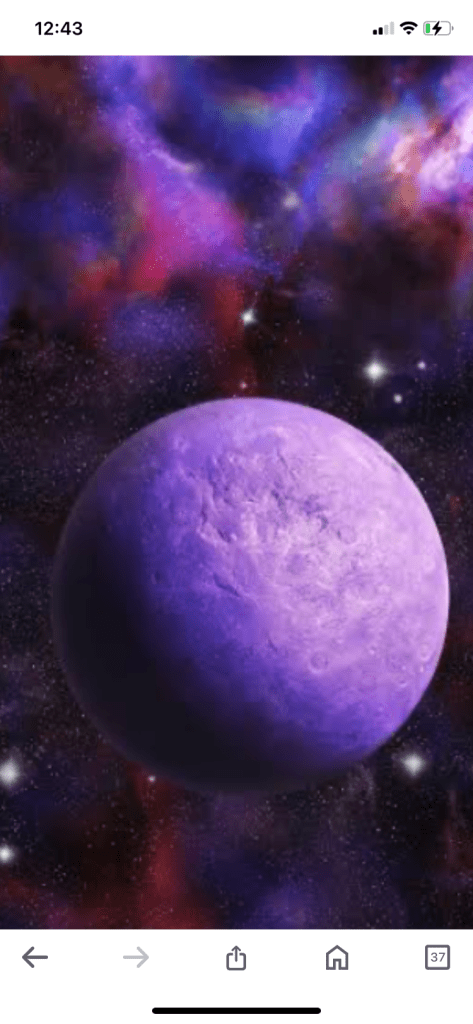
According to the report published in the Monthly Journal Notice of the Royal Astronomical Society, the world of aliens is not as green as our world. Rather its color may be purple
एलियन्स (Alien) का विषय कुछ ऐसा है कि न चाहते हुए भी इसमें दिलचस्पी आ जाती है. दूसरी दुनिया के वो लोग कैसे होते होंगे. क्या वो हमारी तरह होंगे या जैसे फिल्मों में नजर आते हैं वैसे होंगे. और, उनकी दुनिया कैसी होगी. ये सवाल भी हमेशा ही रोमांचित करता है. अब एक नए स्टडी में एलियन वर्ल्ड से जुड़ा दिलचस्प खुलासा हुआ है. रॉयल एस्ट्रॉनॉमिकल सोसायटी के मंथली जर्नल नोटिस में छपी रिपोर्ट के अनुसार एलियन्स की दुनिया हमारी दुनिया की तरह हरी भऱी नहीं है. बल्कि उसका रंग पर्पल हो सकता है. ये भी संभावना जताई गई है कि एलियंस का कलर भी कुछ और हो.
The subject of aliens is such that one gets interested in it even without wanting to. What would those people from the other world be like? Will they be like us or like the ones seen in the movies? And, what will their world be like. This question always fascinates me. Now a new study has revealed interesting facts related to the alien world. According to the report published in the Monthly Journal Notice of the Royal Astronomical Society, the world of aliens is not as green as our world. Rather its color may be purple. It has also been suggested that the color of the aliens may also be different
Researchers from Cornell University propose that alien hunters should focus on purple-colored planets in their quest for extraterrestrial life. Their study indicates that planets hosting ETs may display a unique purple hue, attributed to the existence of purple bacteria
These bacteria, known as purple bacteria, demonstrate remarkable adaptability to diverse environmental conditions, raising the prospect of their existence in distant worlds
We are just opening our eyes to these fascinating worlds around us,” said study co-author Dr. Lisa Kaltenegger, as quoted in a report by The Dailystar. “Purple bacteria can survive and thrive under such a variety of conditions that it is easy to imagine that on many different worlds, purple may just be the new green”, as quoted in the DailyStar report
Purple Bacteria may be indicative of extraterrestrial life, Researchers Claim
Dr. Lisa Kaltenegger, co-author of the groundbreaking study, underscored the importance of recognizing the diverse forms of life on alien planets. She stressed the need for a comprehensive database to identify signs of life, acknowledging the potential departure from Earth-based norms. The detection of purple bacteria on other planets, Dr. Kaltenegger asserted, marks a significant milestone in the quest for extraterrestrial life.
Study suggests red dwarf stars may be well suited for purple bacteria
The study also suggests that purple bacteria could be particularly well-suited to the planets that orbit red dwarf stars, which are cooler and the most common ones in our galaxy. This is because a red sun would create the “most favourable conditions for photosynthesis
Meanwhile, astrobiologist Adam Frank has suggested that alien life, including animals, could exist on Jupiter’s moon Europa and Saturn’s moon Enceladus. According to Frank, there could be “entire ecosystems” living in the “dark watery depths” of the moon.
However, he notes that extraterrestrial life within our own solar system will have to wait until probes can get underneath the 10-mile-thick ice which could have life trapped below it.
Which bacteria is purple?
Purple bacteria, also known as proteobacteria, are phototrophic organisms capable of generating their own food through photosynthesis. They are pigmented with bacteriochlorophyll and various carotenoids, which contribute to their distinct purple coloration
The Evolution of Life on Earth: From Purple to Green
Life on Earth provides valuable insights into the possible evolution of life on other planets. Our planet’s history reveals a transition from purple-pigmented microorganisms to green chlorophyll-based organisms dominating the biosphere
Retinal: A Unique Signature for Alien Life Detection
Before the emergence of chlorophyll-based photosynthesis, microorganisms relied on a purple-pigment molecule called retinal for energy production. Researchers believe that this molecule, if present on other planets, could leave a unique signature detectable by advanced telescopes
In fact, there are such locations on Earth, where the bacteria have purple pigments to help absorb the energy from invisible infrared radiation to power their photosynthesis. If there is a distant world where such bacteria dominate, they might generate a distinct “light fingerprint” that our cutting edge space telescopes, like Webb, might be able to detect.
According to co-author Lisa Kaltnegger, director of CSI, there is a need to create a database of signs of life so that our telescopes do not miss life if it does not look like something we would expect.
Astronomers have already discovered over 5,500 exoplanets, or planets outside our solar system, and 30 of these are thought to host Earth-like conditions. Planned future observatories like the Habitable Worlds Observatory and the Extremely Large Telescope will look to study the chemical makeup of the planets that exist in the “Goldilocks zone” of star systems, where conditions are warm enough for liquid water to exist while not being so warm that it boils off into vapour. In other words, conditions conducive to life.
Please like subscribe comment your precious thoughts on universe discoveries
Full article source google
Best shoes for man and women on heavy discount on Amazon
Best clothes for men and women on heavy discount on Amazon
https://4e029dqh81xrcse6jok99nsq51.hop.clickbank.net
Best woman and men wear on heavy discount on Amazon Universe discoveries