
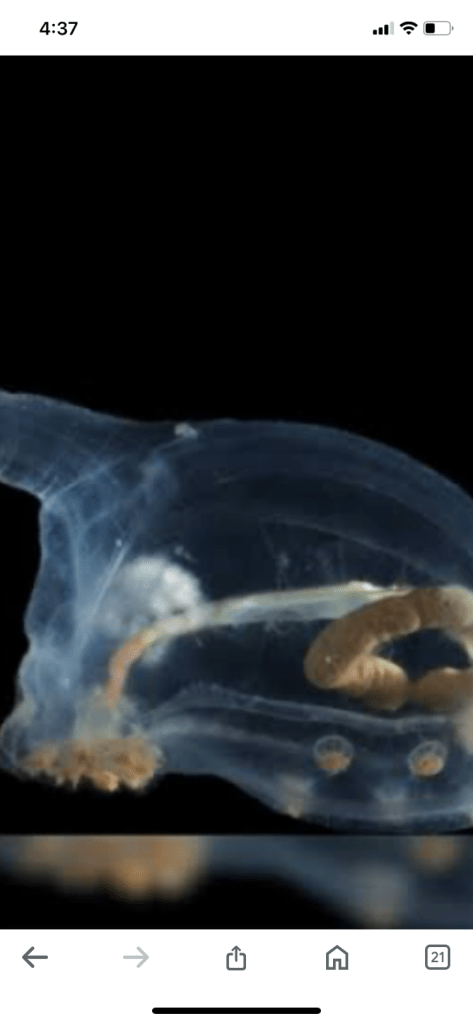
The creatures were spotted by the scientists after a remotely operated vehicle (ROV) was sent in the Clarion-Clipperton Zone between 3,500 and 5,500 meters (11,480 and 18,045 feet) by the UK National Oceanography Centre’s Seabed Mining And Resilience To EXperimental impact (SMARTEX) mission
The strange and lesser-known world of oceans has always remained a place of mystery for scientists. Now, a newfound collection of rarely-seen and alien-looking species lurking on the seafloor, has left the scientists dumbfounded
The marine scientists, who were researching the Clarion-Clipperton Zone of the Pacific Ocean between Mexico and Hawaii, found marine animals which were never seen before.
These creatures have been living a very different and unknown life which was covered by the permanent darkness of the abyssopelagic.
“These areas are the Earth’s least explored. It’s estimated that only one out of ten animal species living down here has been described by science,” said marine ecologist Thomas Dahlgren of the University of Gothenburg in Sweden, as reported by Science Alert.
What lives in the deepest ocean?
In the abyssal plains, unique forms of life develop. Animals that live in this deep-sea zone include basket stars, seapigs, and seaspiders. Some crustaceans living at these depths have evolved without eyes, since they must rely on other senses to survive due to the absence of sunlight
A collection of new species discovered lurking on the seafloor exemplifies exactly how alien this strange world is.
In the Clarion-Clipperton Zone of the Pacific Ocean between Mexico and Hawaii, marine scientists have discovered animals humanity has never seen before: creatures who live very different lives, in the permanent darkness of the abyssopelagic
Below a certain depth, the ocean becomes extremely hostile to humanity. The weight of the water creates crushing pressures; sunlight can’t penetrate that far into the water, resulting in permanent darkness; and temperatures are cold, just a few degrees above freezing. But where humans can’t go, our technology can.
Scientists will be hard at work to learn more about all these amazing creatures, but we already know one thing: the diversity of life at the bottom of the ocean needs more attention, and more protection
The lack of food causes individuals to live far apart, but the species richness in the area is surprisingly high. We see many exciting specialised adaptations among the animals in these areas,” says Dahlgren.
“These sea cucumbers were some of the largest animals found on this expedition. They act as ocean floor vacuum cleaners, and specialise in finding sediment that has passed through the least number of stomachs,” says Dahlgren.
Ocean Creatures That Live in Total Darkness
Alien-like animals that live 1000s of feet below the surface have adapted to hostile environments by taking on the most curious physical traits
Anglerfish
There are more than 200 species of anglerfish, which live in the dark depths of the Atlantic and Antarctic Oceans as far as a mile below the surface. These carnivores are usually brown or gray and can grow up to 3 feet long, though most are around a foot long.
Anglerfish have giant heads, big mouths, and sharp teeth that make them look like something straight out of a horror film. Only female angler fish have the appendage that tells the story of their name. They have a section of their spine that juts out above their mouth and acts as a fishing pole. The very tip has bioluminescent bacteria that light up when the angler fish wiggles it to attract prey.
Chambered Nautilus
The home range of the nautilus is generally deep-water marine areas in the Western Pacific, American Samoa, and the coastal Indian Ocean. During the day, the nautilus can be found up to 2,000 feet deep, but the animals move to shallower water at night to feed on hermit crabs and fish. Like octopus and squid, this gorgeous chambered nautilus is a cephalopod, meaning its “feet” (in this case tentacles) are attached to its head. The nautilus has terrible vision, as its primitive eyes have no lenses. Instead, it works like a pinhole camera.
Its protective brown-and-white striped shell has chambered compartments called camerae. The chambers are closed except for the large outermost one: that section contains the animal with up to 90 tentacles. The nautilus fills the 30 or more inner camerae with gas to stay in place or adds liquid to the chambers to dive.
Is there a Life Below the Ocean floor?
Why does the seafloor contain so much life? It’s not altogether surprising that so much biodiversity lies deep beneath the ocean’s surface. The seafloor is a more complex environment than the ocean above it, with microhabitats like deep coral reefs and underwater volcanoes for species to adapt to.
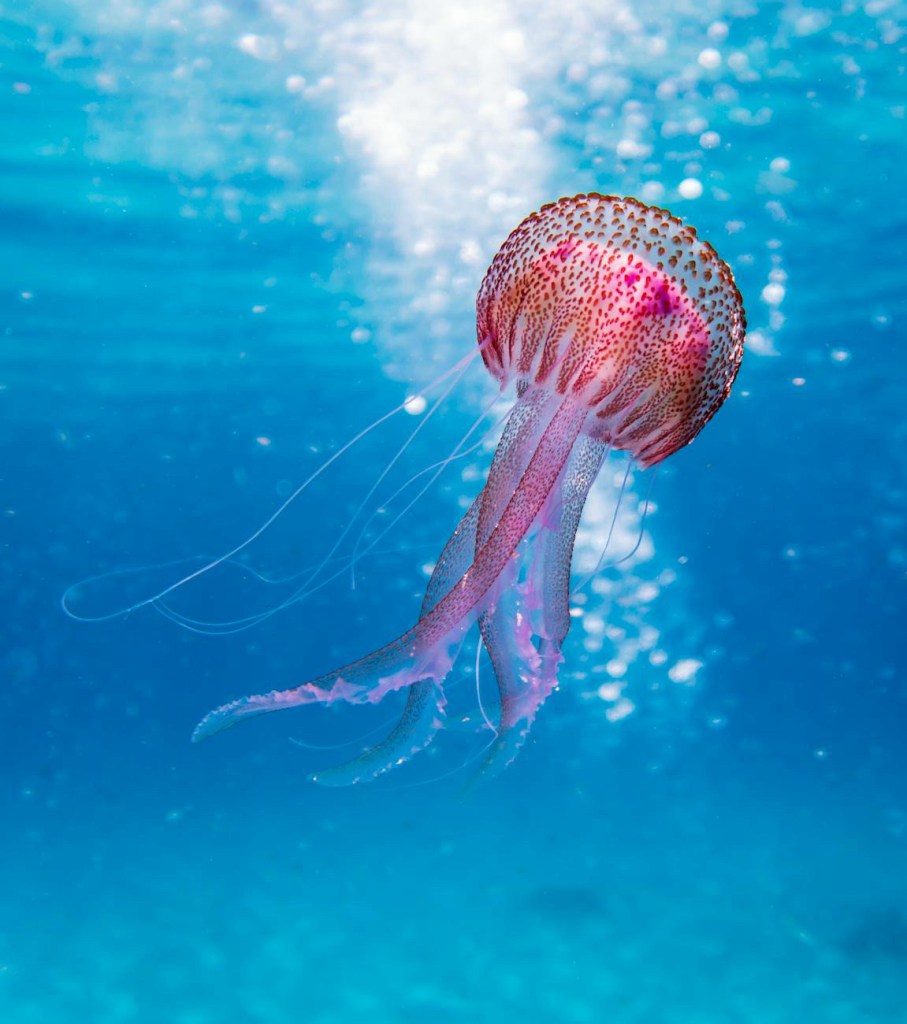
there a real city under the sea?
Thonis-Heracleion, Egypt
Thonis-Heracleion was one of the most important port cities of the Mediterranean. It was once the official port of entry for Egypt, but it now lies beneath the sea.
Did NASA find a ocean world?
An ‘hycean’ or a world of water under a hydrogen-rich atmosphere has been found on a sub-Neptune distant exoplanet. It contains an ocean of boiling water and its temperature could be as high as 100 degree Celsius. James Webb Space Telescope has discovered what could be a ‘Waterworld with a boiling ocean
Please like subscribe comment your precious thoughts on universe discoveries
Full article source google
https://www.amazon.in/b?_encoding=UTF8&tag=555101-21&link Universe discoveries
Interesting article. Colorful and unique creatures in the oceans. Thanks for sharing.
LikeLike