
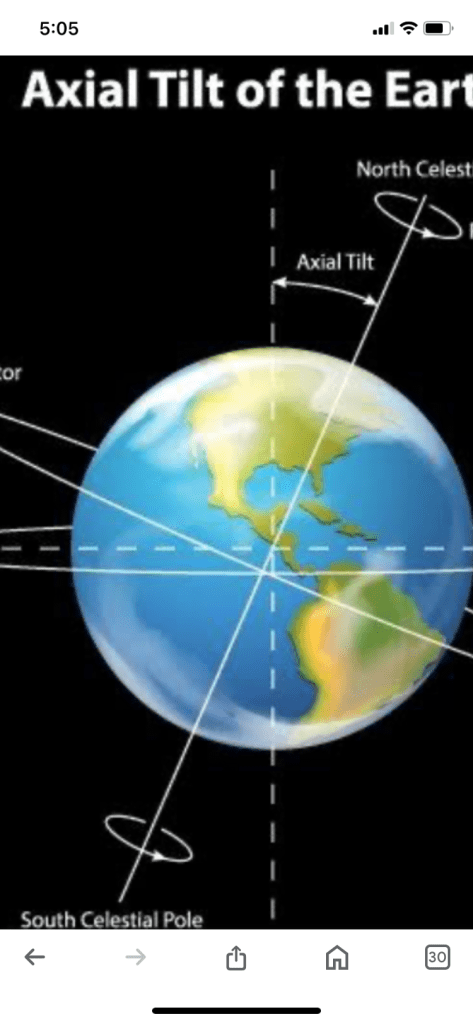
You may not realize it, but the hours of your day are increasing. Because the speed of rotation of our earth is changing. The earth is shaking. It is becoming unbalanced. Just like when the alignment of the wheel of a car gets disturbed, it moves wobbly. Who is responsible for this big incident?
When the alignment of the car’s wheels deteriorates while moving on the road, it starts to wobble. Similarly, the earth is also moving wobbly. The earth’s balance is disturbed. The speed of its rotation on its axis has changed. This has been revealed in a new research. Climate change is being said to be the reason for this.
Earlier, there was a chance to improve these changes taking place on earth. But now things have gone out of hand. Bad days are coming due to climate change. Anyway, due to the change in the speed of rotation of the Earth on its axis, humans have added one negative leap second. Because the impact of climate change has reached the center of the Earth
There are approximately 86,400 seconds in a day on our Earth. But exact calculations cannot be done. Because every rotation of the Earth changes by a few milliseconds. This is due to movement in tectonic plates, changes in the Earth’s core and gravitational pull with the Moon. along with climate change
Climate change caused by humans is changing the time of day.
Climate change caused by humans is continuously changing the time of day on Earth. Is increasing it. Its impact will be clearly visible in the next few years. When the day will be a few more seconds longer. In the last few decades, the rate of melting of ice in the polar regions of the Earth has increased. Especially in Greenland and Antarctica. Because global warming is happening. Due to this the sea level is increasing.
The belly of our earth is overflowing with extra water, it is becoming difficult to move around.
Whatever extra water is coming, it is getting accumulated around the Equator line. This is just like a person’s belly coming out. Earth’s oceans are becoming larger. See for yourself how a big fat person keeps on wobbling when he moves around. Balance is reduced. Whereas when a physically fit person moves around, he is able to do this with precise speed and balance.
Will one day the earth stop rotating… then there will be neither day nor night
Having excess water means weight gain. Due to this the speed of the earth is slowing down. Therefore the time of day is increasing. The study in which this was revealed has recently been published in the PNAS journal. In this, scientists have taken the help of Artificial Intelligence. Also enter all the current data. After investigation, it was found that the Earth’s rotation time will continue to increase. A day will come when the earth will stop rotating. The clocks will change time. The sleeping and waking time of animals will change.
The earth has been slowing down for the last three decades, the reason is increasing heat.
According to a report published in Nature Geoscience on July 12, due to increasing heat, more water is accumulating near the Earth’s equator from melting glaciers. Because of this the Earth is not able to rotate on its axis. His pace is slowing down. Both the magnetic poles of the earth have also shaken. Because of this, the speed of Earth’s rotation has been slowing down for the last three decades
100 crore years ago the earth used to complete one rotation in 19 hours
100 crore years ago, our Earth had a day of 19 hours. Later the earth gradually started slowing down. Due to which this time increased to 24 hours. This time also changes at a very subtle level. If we compare 1960 with the year 2020, the Earth was rotating faster. This pace started slowing down in 2021. The shortest day was also recorded in June 2022. Anytime you look, our daylight hours are increasing by 2.3 milliseconds every century
Climate change is a serious threat that affects many aspects of life around the world. It’s a defining issue of our time that refers to long-term shifts in temperatures and weather patterns. These shifts can be natural, but human activities have been the main driver since the 1800s. The impacts of climate change are global in scope and unprecedented in scale
Some of the consequences of climate change include:
- Extreme weather events: Such as heatwaves, wildfires, floods, tropical storms, and hurricanes
- Rising sea levels: Polar ice shields are melting and the sea is rising
- Food and water insecurity: Floods may destroy homes and livelihoods, heat can make it difficult to work in outdoor jobs, and water scarcity may affect crops
- Displacement of people: Weather-related events displaced an estimated 23.1 million people on average each year between 2010–2019, and the number of people displaced is expected to rise in the future
- Increased risk of poverty: Climate change increases the factors that put and keep people in poverty
Some of the most vulnerable to climate change impacts include people living in small island nations and other developing countries. Areas with weak health infrastructure, mostly in developing countries, will be the least able to cope without assistance to prepare and respond.
Climate change may aggravate erosion, decline in organic matter, salinisation, soil biodiversity loss, landslides, desertification and flooding. The effect of climate change on soil carbon storage can be related to changing atmospheric CO2 concentrations, increased temperatures and changing precipitation patterns
Everyone can help limit climate change. From the way we travel, to the electricity we use and the food we eat, we can make a difference. Start with these 10 actions to help tackle the climate crisis.
Save energy at home
Much of our electricity and heat are powered by coal, oil, and gas. Use less energy by lowering your heating and cooling, switching to LED light bulbs and energy-efficient electric appliances, washing your laundry with cold water, or hanging things to dry instead of using a dryer.
Walk, cycle, or take public transport
The world’s roads are clogged with vehicles, most of them burning diesel or petrol. Walking or riding a bike instead of driving will reduce greenhouse gas emissions – and help your health and fitness. For longer distances, consider taking a train or bus. And carpool whenever possible
Eat more vegetables
Eating more vegetables, fruits, whole grains, legumes, nuts and seeds, and less meat and dairy, can significantly lower your environmental impact. Producing plant-based foods generally results in fewer greenhouse gas emissions and requires less energy, land, and water.
What are good solutions to climate change?
Switching your home from oil, gas or coal-powered energy to renewable sources of energy, such as wind or solar, can reduce your carbon footprint by up to 1.5 tons of CO2e per year. Learn more about why switching to renewable energy is key to tackling the climate crisis.
How can climate change be stopped?
Stopping the Rise in CO2
We can replace high-emitting fuels like coal, oil and gas with nearly “carbon-free” alternatives, such as solar power, wind power, or nuclear power. We can capture the CO2 from fossil fuel power and manufacturing plants and store it underground.
What is a natural solution to climate change?
Some nature-based solutions, such as conserving existing wetlands, serve mainly to prevent greenhouse gas emissions. Others, such as restorative agriculture and regrowing clear-cut forests, actively remove CO2 from the atmosphere. This makes them a form of carbon removal
Please like subscribe comment your precious thoughts on universe discoveries
Full article source google
https://www.amazon.in/b?_encoding=UTF8&tag=555101-21&link Universe discoveries
This is so true I was seeing the other day in the television… They are saying the same
LikeLike
So beautiful article with sharing information about this 💥
LikeLike