
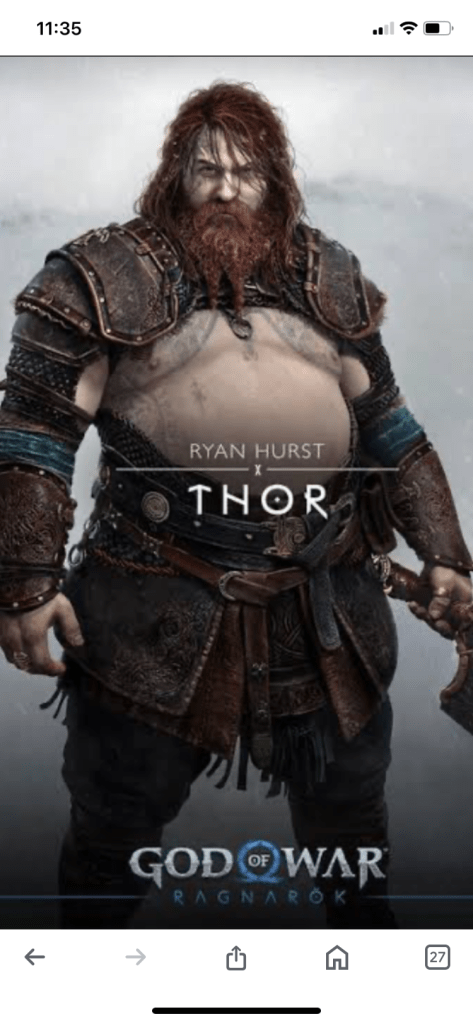
Norse mythology is a collection of myths and beliefs that originated with the Scandinavian people who lived in modern-day Sweden, Norway, and Denmark. It was passed down through generations by storytelling, and was eventually written down in the 13th century
Some key aspects of Norse mythology include:
Realms: The Norse believed in nine realms, including Midgard, the realm of humans, and Asgard, the home of the gods
Origin of humans: Odin created humans from two tree trunks
Ragnarök: The Norse believed that the universe would end in an event called Ragnarok
Valhalla: The Norse believed that half of all slain warriors would go to live in Valhalla, a great hall in Asgard
Gods: The Norse believed in many gods and goddesses, including Odin, the supreme god, and Thor, Loki, and Frigg. The gods were divided into two families: the Æsir, associated with war and government, and the Vanir, associated with fertility.
Bifrost: The gods built a bridge called Bifrost to connect the realms
Norse, Nordic, or Scandinavian mythology, is the body of myths belonging to the North Germanic peoples, stemming from Old Norse religion and continuing after the Christianization of Scandinavia, and into the Nordic folklore of the modern period. The northernmost extension of Germanic mythology and stemming from Proto-Germanic folklore, Norse mythology consists of tales of various deities, beings, and heroes derived from numerous sources from both before and after the pagan period, including medieval manuscripts, archaeological representations, and folktradition. The source texts mention numerous gods such as the thunder-god Thor, the raven-flanked god Odin, the goddess Freyja, and numerous other deities.
Most of the surviving mythology centers on the plights of the gods and their interaction with several other beings, such as humanity and the jötnar, beings who may be friends, lovers, foes, or family members of the gods. The cosmos in Norse mythology consists of Nine Worlds that flank a central sacred tree, Yggdrasil. Units of time and elements of the cosmology are personified as deities or beings. Various forms of a creation myth are recounted, where the world is created from the flesh of the primordial being Ymir, and the first two humans are Ask and Embla. These worlds are foretold to be reborn after the events of Ragnarök when an immense battle occurs between the gods and their enemies, and the world is enveloped in flames, only to be reborn anew. There the surviving gods will meet, and the land will be fertile and green, and two humans will repopulate the world.
Norse mythology has been the subject of scholarly discourse since the 17th century when key texts attracted the attention of the intellectual circles of Europe. By way of comparative mythology and historical linguistics, scholars have identified elements of Germanic mythology reaching as far back as Proto-Indo-European mythology. During the modern period, the RomanticistViking revival re-awoke an interest in the subject matter, and references to Norse mythology may now be found throughout modern popular culture. The myths have further been revived in a religious context among adherents of Germanic Neopaganism.
Central to accounts of Norse mythology are the plights of the gods and their interaction with various other beings, such as with the jötnar, who may be friends, lovers, foes, or family members of the gods. Numerous gods are mentioned in the source texts. As evidenced by records of personal names and place names, the most popular god among the Scandinavians during the Viking Age was Thor the thunder god, who is portrayed as unrelentingly pursuing his foes, his mountain-crushing, thunderous hammer Mjölnir in hand. In the mythology, Thor lays waste to numerous jötnar who are foes to the gods or humanity, and is wed to the beautiful, golden-haired goddess Sif
Who is the main god of Norse?
The supreme god is Odin. He has just one eye as he gave the other to Mímir in order to be allowed to drink from the source of wisdom – “Mímir’s well”. Odin is the god of war and of the dead.
What is the main belief of Norse mythology?
Old Norse religion was polytheistic, entailing a belief in various gods and goddesses. These deities in Norse mythology were divided into two groups, the Æsir and the Vanir, who in some sources were said to have engaged in an ancient war until realizing that they were equally powerful
What is the purpose of Norse myths?
The stories of Norse mythology, like the stories of any religion, were used by believers to help to organize and understand the world. The characters in those stories are the gods, living, breathing deities that were a major part of life among the northern Germanic peoples
Who’s stronger Zeus or Odin?
So while Zeus’ best feat is defeating a mountain-sized monster, Odin’s best feat is defeating a monster as big as nine worlds. Odin outclasses Zeus in intelligence, versatility, strength, and weapons. Zeus simply can’t compete. The winner is Odin, All-Father of the Æsir
What type of god is Loki?
What is Loki the god of? Loki is considered a trickster god, known for being neither fully good nor evil since his main aim was always to create chaos
Is Norse myth real?
No, Norse mythology is not real, any more than another religion’s mythology can be considered real
What is the oldest mythology in the world?
The oldest mythology that has been discovered and recorded is that of the Sumerians, which dates back to around 4500 BCE in ancient Mesopotamia (present-day Iraq). The Sumerian religious system was polytheistic, with a complex pantheon of deities who controlled various aspects of nature and human society
Who killed Loki in Norse mythology?
The chaos the deities face, such as the destabilization of the world-tree and Fenrir’s escape, leads to Loki freeing himself. During the battle, Loki eventually begins to fight Heimdall, who guards the entrance to Asgard. The two ultimately engage in a battle to the death, killing each other during the conflict
What are the Norse gods’ powers?
The Norse Gods in the Norse Mythology
- Odin: God of War, Wisdom and Poetry.
- Frigg: Goddess of Prophecy and Clairvoyance.
- Thor: God of Thunder and Strength.
- Baldur: God of Light and Courage.
- Freya: Goddess of Love and Fertility.
- Freyr: God of Rain and Sun.
- Heimdall: Watchman of the Gods.
- Týr: God of War and Justice
Norse mythology connection to marvel universe
Yes, Norse mythology is a source of inspiration for Marvel’s Thor, Thor: Ragnarok, and the Loki series
Thor: Ragnarok
The movie’s setting, characters, and themes are based on Norse mythology
Loki
The character’s cunning nature comes from Norse mythology, but in the Marvel universe, Loki is Thor and Odin’s adopted son and brother
Odin
In the Marvel universe, Odin is portrayed as one-eyed, which is in line with the Norse myth that Odin gave his eye for wisdom
Loki’s role in Ragnarok
In Norse mythology, Loki leads an army of giants, monsters, and the dead against the Aesir gods after causing Balder’s death
Norse mythology is a rich source of adventure, tragedy, and wisdom, and explores themes of power, loyalty, and the end of the world known as Ragnarok. The main sources for Norse mythology are medieval Icelandic texts, including the two Eddur and the Sagas
The cinematic portrayal of characters such as Thor, Loki, and Hela takes creative liberties, adapting their mythological counterparts to fit the narrative and tone of the Marvel Cinematic Universe (MCU). In Norse mythology, Thor is indeed the god of thunder, known for his strength, bravery, and his hammer, Mjolnir
There are some differences between Marvel’s Thor and the Norse god of thunder
Family
In Norse mythology, Thor’s father is Odin, the chief of the gods, and his wife is Jord (Earth). In the Marvel Cinematic Universe (MCU), Loki is Thor’s adopted brother, but in Norse mythology, Loki was Odin’s sworn blood-brother
Weapon
In Norse mythology, Thor’s hammer represents the thunderbolt. In the Marvel universe, Thor’s hammer, Mjolnir, can summon rain, wind, lightning, and thunder, and can also blast or contain energy beams. Only those worthy of its power can lift Mjolnir
Powers
In the Ultimate Marvel series, Thor’s physical powers were initially dependent on his belt because he had no access to his divine powers
Name
Thor’s name comes from the Germanic word for thunder
Please like subscribe comment your precious thoughts on universe discoveries
Full article source google and Wikipedia
https://ef319omq1vrt6xbghnm0-e-nfe.hop.clickbank.net/
https://www.amazon.in/b?_encoding=UTF8&tag=555101-21&link Universe discoveries
Religions are fascinating. The show, Vikings, repeated stories of Norse mythology. Thank you for explaining more about it.
LikeLike