
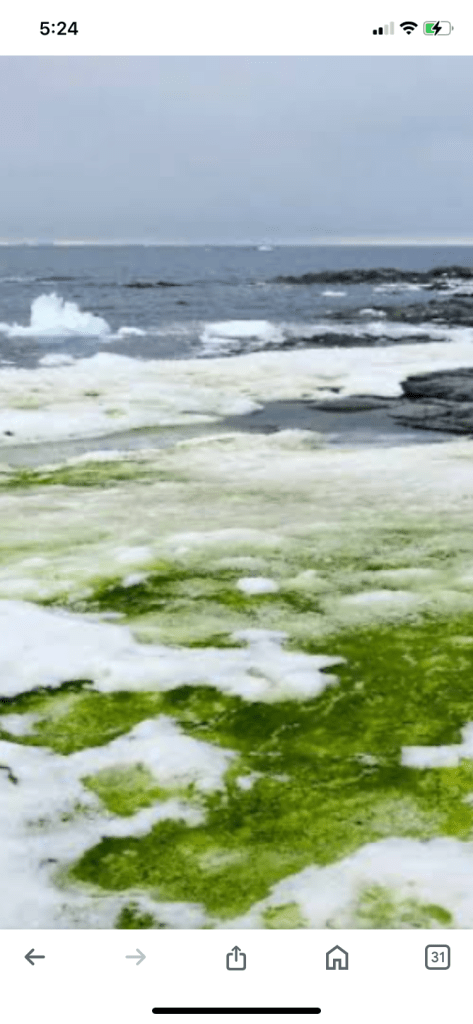
There is a widespread greening trend in the Antarctic Peninsula and it is accelerating. The Antarctic is warming faster than the global average. Extreme heat events are becoming common there. In one part in particular, the maximum number of vegetation is growing
Washington: Greenery is growing very fast in Antarctica. A new study shows that the pace of growth of green area has increased unexpectedly in the last few years. The research, published in Nature Geoscience, says vegetation cover in the Antarctic Peninsula has increased dramatically over the past four decades. This has created a new problem for environmentalists. Some experts are also seeing this as an alarm bell for the earth in the coming times
Researchers at the Universities of Exeter and Hertfordshire used satellite data to assess the extent of ‘greening’ in response to climate change in conjunction with the British Antarctica Survey. They found that vegetation cover in the region increased from less than one square kilometer in 1986 to 12 square kilometers by 2021. This represents an increase of more than ten times.
Greenery is increasing, snow is decreasing
This trend has accelerated in recent years in Antarctica. The greening rate has increased by more than 30 percent between 2016 and 2021. Dr Thomas Rowland of the University of Exeter says most of the area is still ice and rock but a small patch of plant life has increased dramatically. Plants and algae are thriving in what are considered the harshest conditions on Earth.
The greening uptick coincides with a decline in sea ice extent in Antarctica, pointing to climate change impacts in the region. The Antarctic Peninsula is warming faster than the global average and rapid warming events are becoming more frequent. In such a situation, this rapid vegetation growth raises concerns about changes in the ecosystem
Why are experts worried
Dr Ollie Bartlett of the University of Hertfordshire warns about this change, saying that the increase in plant life will make it easier for soil to form and will clear the way for other plants to grow. This will increase the risk of introduction of non-native and invasive species. Researchers emphasize examining the specific climate and environmental mechanisms driving this greening trend.
Experts have warned that the future may see fundamental changes in the biology and landscape of the Antarctic Peninsula. New research shows the sensitivity of Antarctic vegetation to climate change. It calls for protecting this sensitive area and paying attention to the forces reshaping its ecology
Antarctica’s Greening: A Cause for Concern
The increasing greenery in Antarctica is a stark indicator of global climate change. This phenomenon, seemingly counterintuitive for a frozen continent, is a result of rising temperatures. As the average temperature in Antarctica increases, it creates a more favorable environment for plant growth.
Why is this alarming?
- Disruption of the delicate ecosystem: Antarctica’s pristine ecosystem is highly specialized to survive in extreme conditions. The introduction of new plant species can disrupt the food chain and harm native organisms.
- Impact on ice sheets: Increased vegetation can absorb more sunlight, potentially accelerating the melting of ice sheets. This could lead to rising sea levels and coastal flooding.
- Positive feedback loop: As more plants grow, they release more heat-trapping gases into the atmosphere, further contributing to global warming.
It’s crucial to address climate change to mitigate these risks. This includes reducing greenhouse gas emissions, promoting sustainable practices, and investing in renewable energy sources.
That’s correct. The increasing greenery in Antarctica is a direct consequence of climate change. As global temperatures rise, the Antarctic environment becomes more conducive to plant growth. This shift is a clear indicator of the significant impact human activities are having on our planet.
Potential Effects of Climate Change in the Coming Years
Climate change is already having a significant impact on our planet, and these effects are expected to intensify in the coming decades. Here are some of the potential consequences:
Rising Sea Levels
- Coastal flooding: Low-lying coastal areas will be more vulnerable to flooding as sea levels rise.
- Loss of coastal habitats: Wetlands, mangroves, and beaches could be lost due to rising sea levels.
- Displacement of populations: Millions of people living in coastal areas may be forced to relocate.
Extreme Weather Events - More frequent and intense storms: Hurricanes, cyclones, and typhoons are expected to become more powerful and destructive.
- Droughts and heatwaves: Extreme heat events and droughts will become more common in many regions.
- Wildfires: Increased temperatures and dry conditions will contribute to more frequent and severe wildfires.
Impacts on Agriculture and Food Security - Crop failures: Changing weather patterns can disrupt crop growth and lead to lower yields.
- Water scarcity: Agricultural production relies heavily on water, and water shortages will become more common in many regions.
- Food price increases: As food production becomes more challenging, prices are likely to rise.
Biodiversity Loss - Habitat destruction: Climate change can lead to habitat loss for many species.
- Extinction of species: Many species may not be able to adapt to changing conditions and face extinction.
- Disruption of ecosystems: Climate change can disrupt the delicate balance of ecosystems.
Health Risks - Heat-related illnesses: Extreme heat can lead to heatstroke, dehydration, and other health problems.
- Vector-borne diseases: Mosquitoes and other disease-carrying insects may expand their range, increasing the risk of diseases like malaria and dengue fever.
- Mental health impacts: Climate change-related disasters and disruptions can have a significant impact on mental health.
These are just a few examples of the potential effects of climate change in the coming years. It is important to take action to mitigate these impacts and build resilience to the changes that are already underway.
Reversing Climate Change: A Collective Effort
While completely reversing climate change might be challenging, we can significantly mitigate its effects through collective action. Here are some key strategies:
Reduce Greenhouse Gas Emissions
- Transition to renewable energy: Invest in solar, wind, hydro, and geothermal power to reduce reliance on fossil fuels.
- Improve energy efficiency: Upgrade buildings and appliances to use energy more efficiently.
- Promote sustainable transportation: Encourage walking, cycling, and public transport, and invest in electric vehicles.
- Reduce deforestation: Protect forests, which absorb carbon dioxide from the atmosphere.
Adapt to Climate Change - Build climate-resilient infrastructure: Design buildings, roads, and other infrastructure to withstand extreme weather events.
- Promote sustainable agriculture: Develop farming practices that are more resilient to climate change.
- Protect coastal areas: Implement measures to protect coastal communities from rising sea levels.
International Cooperation - Implement global agreements: Support international agreements like the Paris Agreement to reduce greenhouse gas emissions.
- Share knowledge and technology: Foster collaboration between countries to develop and share climate-friendly technologies.
- Provide financial assistance: Support developing countries in their efforts to transition to low-carbon economies.
Individual Actions - Reduce energy consumption: Turn off lights and appliances when not in use, and conserve water.
- Choose sustainable products: Opt for products with minimal environmental impact.
- Support climate-friendly policies: Vote for politicians who prioritize addressing climate change.
- Educate others: Spread awareness about climate change and its consequences.
By taking these steps, we can work towards a more sustainable future and mitigate the worst effects of climate change.
Please like subscribe comment your precious thoughts on universe discoveries
sk-mania-blogs.in
Full article source google
https://www.buymeacoffee.com/Satyam55
Buy me a coffee!” (your opportunity to say thanks for the free stuff and to encourage me to do even more)
<!– /wp:heading https://www.amazon.in/b?_encoding=UTF8&tag=555101-21&link
“If you like my work or the free stuff on this website and want to say thanks, or encourage me to do more, you can buy me a coffee!
Contribute to my coffee fund with any amount you are comfortable to pay.
The coffee will give me the ‘kick’ to work even harder to empower creative entrepreneurs
 Universe discoveries
🙏🌹
Aum Shanti
LikeLike
Aum shanti
LikeLiked by 1 person
It’s a cause of concern. Well written!
LikeLike