
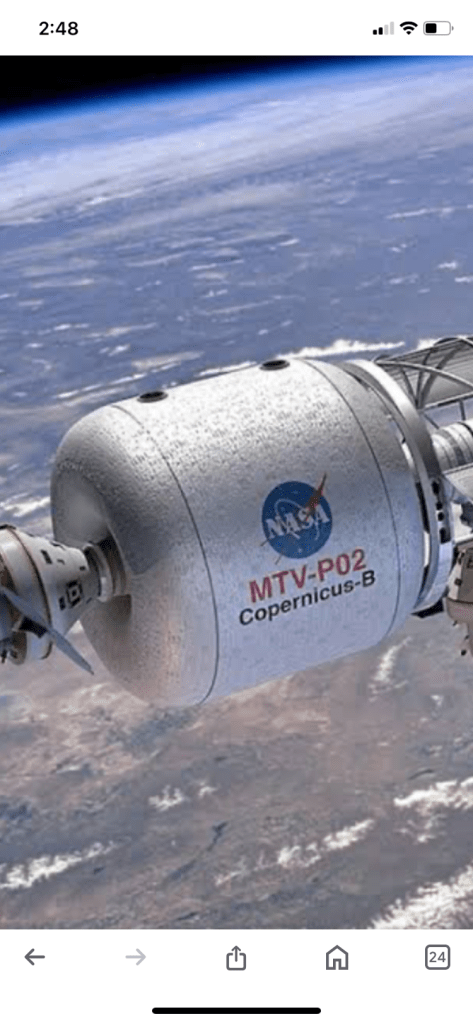
मंगल ग्रह पर जाना आसान नहीं है. यहां पर खास समय पर पृथ्वी से निकलना होगा जब वह मंगल ग्रह के पास आने वाली होगी. ऐसा समय कुछ हफ्तों के लिए दो साल में एक बार आता है. इसमें भी अगर हम आज की तकनीक का इस्तेमाल करें तो मंगल पर पहुंचने में 7 से 8 महीनों का वक्त लगेगा. पर वैज्ञानिक इससे भी जल्दी वहां पहुंचने के उपाय तलाश रहे हैं. इसके लिए बहुत सारी ऊर्जा की जरूरत होगी और अगर ऐसा ईंधन मिल भी गया तो उसकी मात्रा वाहन का भार बढ़ा देगी, जिससे ईंधन की जरूरत और बढ़ जाएगी. इसलिए वैज्ञानिक जगत इस दिशा में बहुत ही गंभीरता से रिसर्च कर रहे हैं. अमेरिकी स्पेस एंजेस, नासा और अमेरिकी रक्षा विभाग की एजेंसी डार्पा मिल कर नई न्यूक्लियर थर्मल प्रपल्शन (एनटीपी) तकनीक पर काम कर रहे हैं जिससे मंगल पर मानव अभियान तेजी से पहुंच सकें. उम्मीद की जा रही है कि इस तकनीक से मंगल ग्रह पर जाने वाला समय आधा हो जाएगा.
Going to Mars is not easy. Here it will have to leave the Earth at a special time when it is about to come near Mars. Such a time comes once in two years for a few weeks. In this also, if we use today’s technology, it will take 7 to 8 months to reach Mars. But scientists are looking for ways to reach there even faster. This will require a lot of energy
And even if such fuel is available, its quantity will increase the weight of the vehicle, which will further increase the fuel requirement. Therefore, the scientific world is doing research in this direction very seriously. American Space Agency, NASA and US Defense Department agency DARPA are working together on new Nuclear Thermal Propulsion (NTP) technology so that human missions can reach Mars faster. It is expected that with this technology the time taken to go to Mars will be halved.
Which technology will be used
Nuclear fission or nuclear fission will be used in this technology. It is expected that it can be demonstrated by the year 2027. At present, research is focusing on its effectiveness, safety, etc. In this technology, the tremendous energy released from nuclear fission will be used in which a neutron breaks an atom.
Challenge of design and testing
Along with power generation, many nuclear submarines in the world are also operated with this technology. It is expected that this will make the rockets faster and more powerful. Dan Kotlyar, associate professor of nuclear engineering at the Georgia Institute of Technology, is part of a research group that creates models and simulations to design and improve NTP systems. Through an article published in The Conversation, he has explained the role of this group.
better than traditional system
NTP system gives much better expectations than traditional system. There is no need of additional oxygen along with fuel. Nor does it require any kind of ignition system. They are powered by a nuclear fission reaction which heats the propellant and produces a force or thrust as it flows out of the nozzle.
What is the science behind it?
Where in a nuclear power plant, uranium 235 collides with a neutron due to which uranium changes into substances with lighter nuclear weight. Also a lot of energy is released and some fine particles are also produced. All these reactions take place in a light water reactor. Due to which the generator runs the turbine and electricity is generated. But in NTP all this is a little different.
need more power
The fuel of NTP systems contains more uranium 235. These work at higher temperatures. Their power density is 10 times more than that of conventional nuclear power plants. In this situation they can move at double the speed. NASA and DARPA are working on the Demonstration Rocket for Agile Cislunar Operations (DARCO) program which will use High Assay Low Enriched Uranium (HALEU) fuel. In which highly enriched or enriched uranium will be converted into such fuel. But it takes more fuel and will make the engine heavie
various challenges
Must be able to handle things like starting the engine, shutting it down, etc. Due to which there will be rapid changes in temperature and pressure. For this, we will start with models and simulations. Along with the new engine, software tools to reduce the emissions will also have to be created separately.
Kotlyar’s group will design and analyze NTP reactors through models. By making models of these complex reactor systems, he will see how changes in temperature etc. will affect the reactor system and its safety. Kotlyar is hopeful that his team’s research will soon yield good results.
NTP can refer to both Nuclear Thermal Propulsion and Network Time Protocol
Nuclear Thermal Propulsion (NTP)
A propulsion system that uses nuclear fission to heat a low molecular weight fuel, like hydrogen, to create thrust. NTP is considered a promising option for space exploration missions to Mars and beyond. Here are some features of NTP
High energy density: NTP has a high energy density and specific impulse, which is a measure of rocket engine efficiency
Faster transit: NTP could enable faster travel between Earth and Mars
Onboard power generation: NTP can be used to generate electricity for a spacecraft
In an NTP system, that heat is generated by flowing hydrogen through a reactor that is enriched with the fissile nucleus Uranium-235 in order to achieve fission. During the past NERVA Rover NTP development, highly enriched uranium (HEU) was used in order to achieve fission
Yes, NASA is developing a new rocket technology called the Pulsed Plasma Rocket (PPR) that could reduce the time it takes to travel to Mars to two months. The PPR could make it possible to travel to and from Mars more efficiently than current spacecraft
Here are some other ways that travel time to Mars could be reduced:
Nuclear Thermal and Nuclear Electric Propulsion (NTNEP): This technology could reduce travel time to Mars to 45 days
On-orbit staging: A fast Mars mission of 245 days (8.0 months) round trip could be possible with on-orbit staging
The time it takes to travel to Mars depends on several factors, including the positions of Earth and Mars, and the technology used to travel there. With current technology, a round-trip to Mars would take nearly two years
NASA is investing in a revolutionary rocket technology that has the potential to revolutionize human space exploration by reducing the time it takes to reach Mars to just two months
Please like subscribe comment your precious thoughts on universe discoveries
sk-mania-blogs.in
Full article source google
https://www.buymeacoffee.com/Satyam55
Buy me a coffee!” (your opportunity to say thanks for the free stuff and to encourage me to do even more)
<!– /wp:heading https://www.amazon.in/b?_encoding=UTF8&tag=555101-21&link
“If you like my work or the free stuff on this website and want to say thanks, or encourage me to do more, you can buy me a coffee!
Contribute to my coffee fund with any amount you are comfortable to pay.
The coffee will give me the ‘kick’ to work even harder to empower creative entrepreneurs
 Universe discoveries
🙏
Aum Shanti
LikeLike