
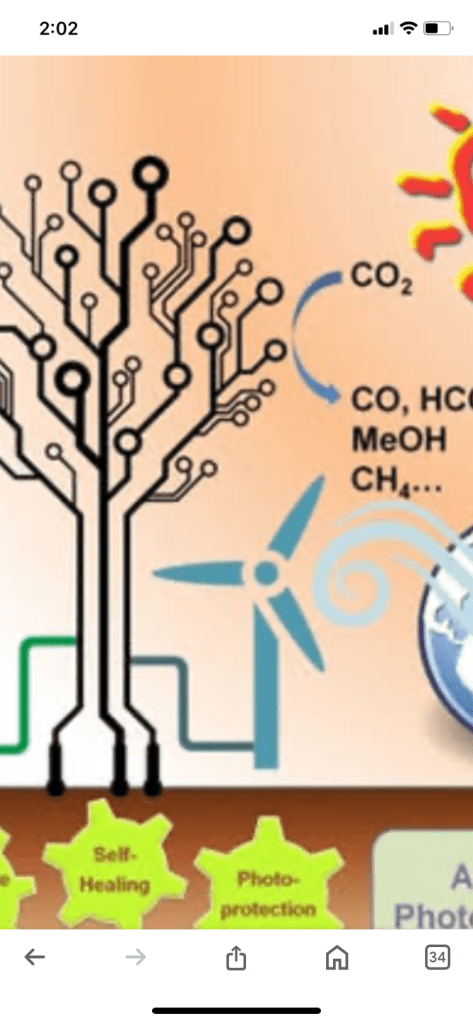
Artificial photosynthesis, a technology that mimics the natural process of photosynthesis, has been a long-standing goal for scientists. Recent breakthroughs have brought us closer to realizing this dream, with the development of new materials and systems that can efficiently convert sunlight into clean fuels.
One such breakthrough involves the use of a revolutionary gel that can directly convert sunlight into hydrogen gas, a clean and versatile fuel source. This gel, developed by Japanese scientists, is made of a bio-inspired hydrogel that mimics the light-harvesting and energy-conversion processes of plants. The gel absorbs sunlight and uses it to split water molecules into hydrogen and oxygen, releasing the hydrogen gas as a fuel source.
This development is significant because it offers a more efficient and cost-effective way to produce hydrogen fuel. Traditional methods of hydrogen production, such as electrolysis, require large amounts of energy and often rely on fossil fuels. Artificial photosynthesis, on the other hand, harnesses the abundant and renewable energy of sunlight to directly produce hydrogen, making it a more sustainable and environmentally friendly option.
The potential applications of this technology are vast. Hydrogen fuel can be used in various sectors, including transportation, power generation, and heating. It can also be used as a feedstock for the production of other fuels and chemicals. By harnessing the power of the sun to produce clean fuels, artificial photosynthesis could play a crucial role in addressing our energy needs and reducing our reliance on fossil fuels.
While significant progress has been made, there are still challenges to overcome before artificial photosynthesis can be widely implemented. One major challenge is the efficiency of the process, as current systems still have relatively low conversion rates. Researchers are actively working on improving the efficiency and scalability of these systems to make them commercially viable.
Another challenge is the stability of the materials used in artificial photosynthesis. Many materials degrade over time when exposed to sunlight and water, which can limit the lifespan of the systems. Developing more durable and long-lasting materials is crucial for the widespread adoption of this technology.
Despite these challenges, the potential benefits of artificial photosynthesis are immense. It offers a clean, renewable, and sustainable way to produce energy and fuels. As research continues to advance, we can expect to see further breakthroughs that will bring us closer to a future powered by the sun.
A new hydrogel developed by Japanese scientists uses sunlight to efficiently produce hydrogen from water, mimicking natural photosynthesis. This innovation promises to enhance clean energy production by improving efficiency and reducing costs, potentially replacing current technologies with a more sustainable solution.
Artificial Photosynthesis Renewable Energy Technology
Scientists have long aspired to replicate how plants convert sunlight into energy, hoping to create sustainable energy solutions. Artificial photosynthesis, the process of using sunlight to drive clean energy-producing reactions, aims to imitate this natural method. Yet, achieving a synthetic system that functions as smoothly as photosynthesis has been a major challenge—until now
Design and Mechanics of Bioinspired Hydrogels
The research team, led by Associate Professor Kosuke Okeyoshi, along with his doctoral student Reina Hagiwara at JAIST, and Professor Ryo Yoshida at the University of Tokyo, designed these hydrogels with carefully structured polymer networks. These networks help control the transfer of electrons, which is crucial for splitting water into hydrogen and oxygen. The hydrogels are packed with functional molecules, such as ruthenium complexes and platinum nanoparticles, which work together to simulate the natural process of photosynthesis.
Artificial photosynthesis is a chemical process that mimics the natural process of photosynthesis in plants. It aims to harness solar energy to convert water and carbon dioxide into fuels like hydrogen or hydrocarbons. This technology holds promise for sustainable energy production and reducing greenhouse gas emissions.
Key components of artificial photosynthesis:
- Light-harvesting system: Similar to chlorophyll in plants, this system captures sunlight and converts it into electrical energy.
- Water oxidation catalyst: This component splits water molecules into oxygen and hydrogen ions.
- Reduction catalyst: This component combines hydrogen ions with electrons from the light-harvesting system to produce hydrogen gas or other fuels.
Potential benefits of artificial photosynthesis: - Renewable energy source: It could provide a sustainable and clean alternative to fossil fuels.
- Carbon capture: It could help reduce carbon dioxide levels in the atmosphere.
- Versatile fuel production: It could produce a variety of fuels, including hydrogen, methane, and ethanol.
Challenges in artificial photosynthesis: - Efficiency: Current systems are not as efficient as natural photosynthesis.
- Stability: The materials used in artificial photosynthesis systems can degrade over time.
- Cost: The technology is still in its early stages of development and is expensive.
Current research and development:
Scientists are actively working on improving the efficiency, stability, and cost-effectiveness of artificial photosynthesis systems. Some promising approaches include: - Nanomaterials: Using nanomaterials to improve the light-harvesting and catalytic properties of the system.
- Biomimetic systems: Designing systems that mimic the structure and function of natural photosynthetic proteins.
- Integrated systems: Combining different components into a single, efficient device.
While artificial photosynthesis is still in its early stages of development, it holds the potential to revolutionize the way we produce energy and fuels.
Please like subscribe comment your precious thoughts on universe discoveries
sk-mania-blogs.in
Full article source google
https://www.buymeacoffee.com/Satyam55
Buy me a coffee!” (your opportunity to say thanks for the free stuff and to encourage me to do even more)
<!– /wp:heading https://www.amazon.in/b?_encoding=UTF8&tag=555101-21&link
“If you like my work or the free stuff on this website and want to say thanks, or encourage me to do more, you can buy me a coffee!
Contribute to my coffee fund with any amount you are comfortable to pay.
The coffee will give me the ‘kick’ to work even harder to empower creative entrepreneurs
Any freinds who love my article can have drink 🍸 me coffee to encourage me I will be obliged that they love my work and I am successful in spreading universe discoveries knowledge and educate new kid’s going in school and become future scientists and contribute in our species become interstellar
 Universe discoveries
🙏🌹
Aum Shanti
LikeLike