
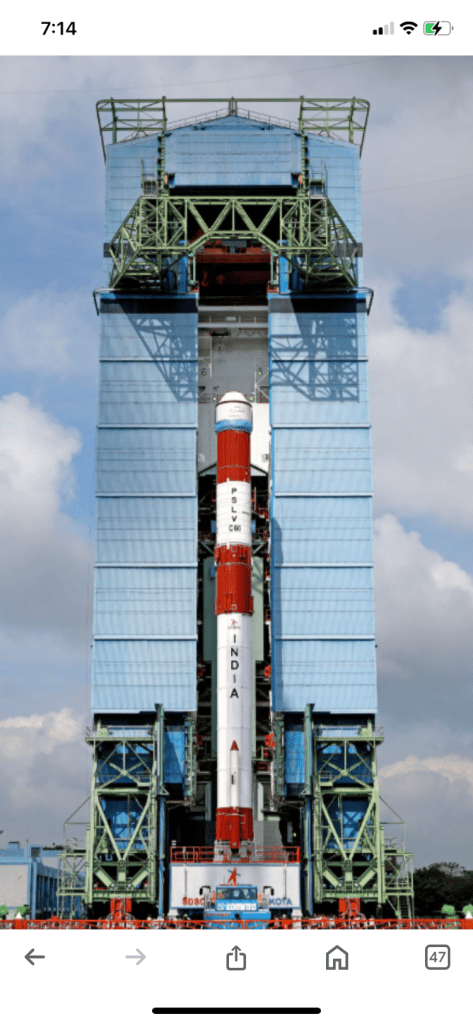
ISRO’s SpaDeX mission is important because it will demonstrate the ability to dock two satellites in space, which is a complex technology that only a few countries have mastered:
- Docking technology is essentialIn-space docking is important when multiple rocket launches are needed to accomplish a mission.
- A vital step toward more complex missionsThe SpaDeX mission will demonstrate the ability to dock two small satellites with advanced propulsion systems and sensors, which is a vital step toward building larger, more complex missions.
- A mission enabler for future missionsThe SpaDeX mission will enable many future missions.
- A statement of technological prowessThe SpaDeX mission will demonstrate India’s technological prowess and innovation.
Here are some more details about the SpaDeX mission:
- The missionThe Space Docking Experiment (SpaDeX) mission will attempt to dock two satellites in space at an altitude of 470 kilometers.
- The satellitesThe satellites will weigh about 220 kg each and will be launched by the Polar Satellite Launch Vehicle (PSLV).
- The docking mechanismISRO developed its own docking mechanism called the “Bhartiya Docking System” to meet the International Docking System Standard (IDSS).
- The spacecraftThe spacecraft were designed and built by ISRO’s UR Rao Satellite Centre in Bengaluru.
- The radiation monitorsThe SpaDeX satellites will carry a new type of radiation monitor to test different types of radiation monitors across various missions.
The SpaDeX mission, scheduled for launch on December 30, 2024, is a significant milestone for India’s space program. Here’s a breakdown of its key objectives and significance:
Mission Goals:
- In-Space Docking Technology Demonstration: The primary goal of SpaDeX is to demonstrate the crucial technology of in-space docking. This involves two spacecraft, a “Chaser” and a “Target,” autonomously rendezvousing and docking in orbit.
- Enabling Future Space Missions: Successful docking technology is essential for various future space missions, including:
- Chandryaan-4: India’s upcoming lunar mission, which may involve docking with a lunar lander.
- Sample Return Missions: Bringing back samples from other celestial bodies.
- Building and Operating the Bharatiya Antariksh Station (BAS): India’s planned space station.
- Cost-Effectiveness: SpaDeX is designed to be a cost-effective technology demonstrator, utilizing existing infrastructure and resources.
Mission Components: - PSLV-C60: The Polar Satellite Launch Vehicle (PSLV) will be used to launch both the Chaser and Target spacecraft into a 470 km circular orbit.
- Chaser and Target Spacecraft: These are small, approximately 220 kg each, and will be launched independently and simultaneously.
- Precise Launch and Separation: The PSLV will be utilized to provide a small relative velocity between the spacecraft, allowing them to achieve a 10-20 km separation.
Significance of SpaDeX: - Technological Advancement: SpaDeX represents a significant step forward in India’s space technology capabilities, particularly in autonomous rendezvous and docking.
- Future Space Missions: The successful demonstration of docking technology will pave the way for more complex and ambitious space missions.
- Global Collaboration: SpaDeX could potentially open doors for international collaboration in space exploration.
In essence, the SpaDeX mission is a crucial step towards India’s goal of becoming a major player in space exploration. It demonstrates the nation’s commitment to developing cutting-edge space technologies and expanding its capabilities in areas like lunar missions, sample return, and space station construction.
The successful SpaDeX mission will indeed propel India into an elite club of nations with advanced space docking capabilities. Here’s why:
- Limited Club: Currently, only a handful of countries, including the United States, Russia, China, and Japan, have successfully demonstrated autonomous rendezvous and docking in space.
- Technological Prowess: Mastering in-space docking signifies a significant technological leap. It requires precision engineering, sophisticated guidance and navigation systems, and robust robotics.
- Future Missions: SpaDeX is not just a technological feat; it’s a stepping stone to more ambitious missions like:
- Chandryaan-4: A potential lunar mission involving docking with a lander.
- Space Station Construction: Building and operating the Bharatiya Antariksh Station (BAS).
- Sample Return Missions: Bringing back samples from other celestial bodies.
By joining this elite club, India solidifies its position as a major player in space exploration, opening doors to new scientific discoveries and technological advancements.
Please like subscribe comment your precise comment on unique discoveries
Sk-mania-blogs.in
Full article source google
https://www.buymeacoffee.com/Satyam55
Any freinds who love my article can have drink 🍸 me coffee to encourage me I will be obliged that they love my work and I am successful in spreading universe discoveries knowledge and educate new kid’s going in school and become future scientists and contribute in our species become interstellar
 Universe discoveries
🙏🎅
Aum Shanti
LikeLike