
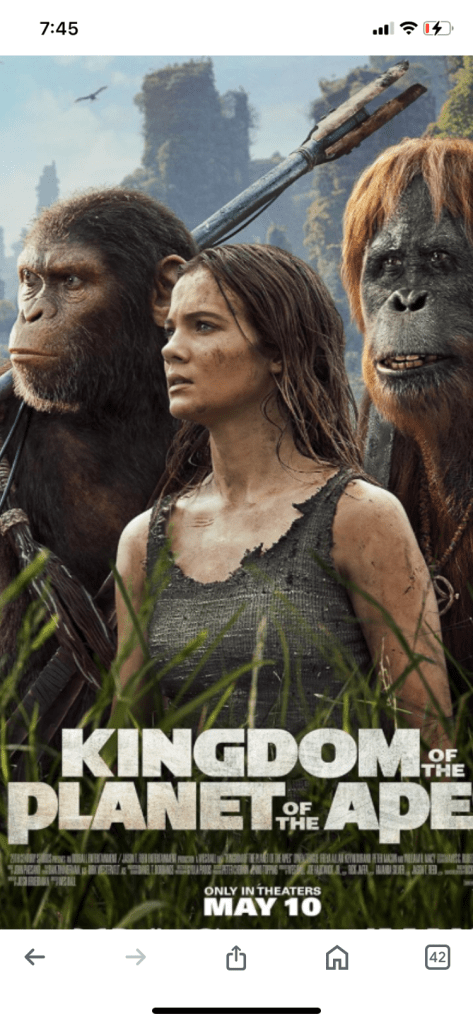
The idea of another animal “ruling” Earth after humans is a fun thought experiment, but it’s important to remember that animals don’t have the same concept of “ruling” as humans do. They operate based on survival and instinct, not on complex social structures or political systems.
That being said, some scientists believe that if humans were to disappear, animals with high intelligence and adaptability might thrive. Some candidates often mentioned include:
- Dolphins: Known for their complex social structures, problem-solving abilities, and tool use, dolphins are often considered strong contenders for a post-human world.
- Crows: These birds are incredibly intelligent, capable of complex problem-solving, tool use, and even abstract thinking.
- Elephants: With their large brains, long memories, and strong social bonds, elephants are also seen as potential successors.
It’s important to note that this is just speculation, and it’s impossible to say for sure which animals, if any, would truly “rule” in a human-free world. The environment would likely change drastically without humans, and new species might evolve to fill the ecological niches we currently occupy.
The idea of chimpanzees “ruling the world” is a fun thought experiment inspired by movies like “Planet of the Apes.” However, it’s highly unlikely for several reasons:
- Brain Capacity: While chimpanzees are highly intelligent, their brains are significantly smaller than human brains. This limits their capacity for abstract thought, complex planning, and the development of advanced technology.
- Dexterity: Chimpanzees have hands that are less dexterous than human hands. This makes it difficult for them to manipulate tools and objects with the same precision as humans.
- Communication: Chimpanzees can communicate with each other through gestures, vocalizations, and facial expressions. However, they lack the complex language skills that humans possess, which are essential for cooperation and organization on a large scale.
- Social Structure: Chimpanzee societies are complex, but they are based on dominance hierarchies and alliances, rather than the complex social structures and institutions that humans have created.
While chimpanzees are fascinating creatures with remarkable cognitive abilities, their limitations in brain capacity, dexterity, communication, and social organization make it unlikely that they could ever “rule the world” in the same way that humans do.
If humans were to go extinct, octopusesare considered a likely contender to rule the Earth. However, it’s impossible to predict how evolution will play out over time.
Explanation
- Octopuses’ intelligenceOctopuses are intelligent, adaptable, and have good problem-solving skills.
- Octopuses’ ability to adaptOxford zoologist Tim Coulson believes octopuses could evolve to adapt to the planet and rule it.
The idea of life continuing on Earth without humans has a way of catching our attention. Our species has spread across land and sea, altering the planet in countless ways.
Natural selection and change
Mutations, in Coulson’s view, drive life forward despite the risks. Yet he reminds readers that no species is permanent.
“Extinction is the fate of all species, including humans, although let’s hope our demise is far in the future.”
That message can feel unsettling. But it also serves as a reminder that every life form, no matter how successful, eventually faces an endpoint.
Coulson’s outlook stems from years of research into how species emerge, survive, and sometimes vanish. “I started to wonder what species might take our place if humans, and our close great ape relatives, were to die out,” he says.
New forms of intelligence emerge
Nobody knows if the next ruling life form would mirror humanity. Coulson proposes that “new forms of intelligence and complexity could emerge in unexpected ways.”
This opens the possibility that a future species might come up with solutions and technologies unlike any we can picture right now.
Impossible to know, fun to think about
“The future of life on Earth is shaped by countless variables,” he points out. The path of evolution might take strange turns. Some scenarios might never pan out. Others could surprise us by unfolding in real time.
Imagining Earth without humans
Coulson does not claim that this outcome is inevitable. Instead, he suggests it as a lesson in how nature might rearrange itself without us.
Earth’s past is packed with examples of life enduring massive upheavals. It’s possible that intelligence, in some form, might spring up long after humans are gone.
Please like subscribe comment your precise thoughts on universe discoveries
sk-mania-blogs.in
Full article source google
https://www.buymeacoffee.com/Satyam55
If you like my website unique discoveries please donate me a coffee freinds
 Universe discoveries
🙏🌹
Aum Shanti
LikeLike
Interesting speculation. I once read a science fiction called Midsummer Century by James Blish, titled “the World of the Birds” in Swedish, the language in which I read it. In that book the rulers of the future world (20,000 years into the future) were the crows aided by other intelligent birds. I just thought it was interesting that crows were mentioned.
LikeLike
Fascinating thought experiment. While it’s impossible to predict, it’s interesting to imagine how other species might evolve in the absence of humans. Nature is full of surprises.
LikeLike