
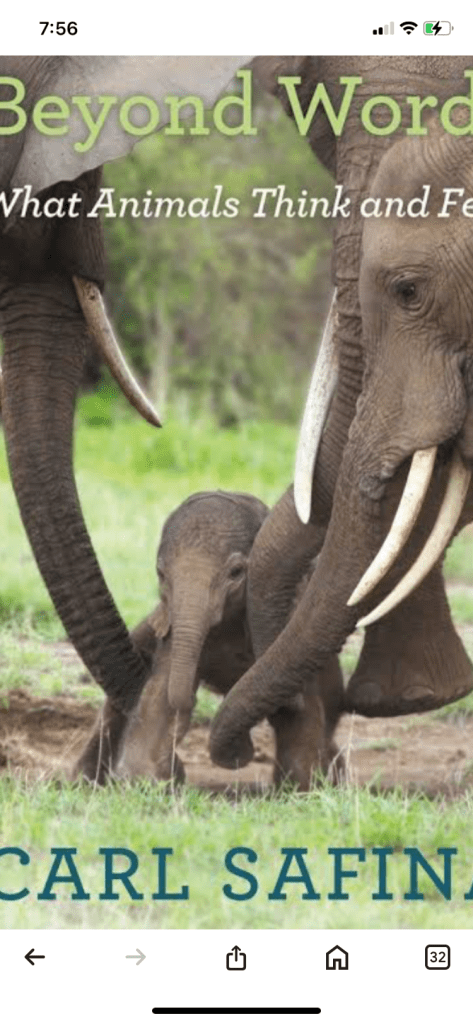
The question of whether animals think and feel like humans is a complex one, and scientific understanding is constantly evolving. Here’s a breakdown of what we know:
- Emotional Complexity:
- It’s increasingly recognized that animals experience a wide range of emotions, including fear, joy, grief, and empathy.
- Researchers have observed behaviors in various species that suggest complex emotional responses.
- Evidence of empathy and compassion has been documented in animals like elephants, primates, and even rodents.
- Cognitive Abilities:
- Many animals possess cognitive abilities that were once thought to be unique to humans, such as problem-solving, tool use, and even forms of communication that resemble language.
- Studies have shown that animals like corvids (crows and ravens) and cetaceans (whales and dolphins) exhibit sophisticated cognitive skills.
- The degree of cognitive complexity varies greatly across different species.
- Consciousness:
- The concept of consciousness is itself a subject of ongoing debate, even in humans.
- Determining the presence and nature of consciousness in animals is a significant challenge.
- However, research suggests that many animals possess some level of awareness of themselves and their surroundings.
- Key points to consider:
- While animals may experience emotions and exhibit cognitive abilities, their subjective experience may differ from that of humans.
- It’s important to avoid anthropomorphism (attributing human-like qualities to animals), but also to recognize the complexity of their mental lives.
- Scientific advancement is constantly providing new information on this topic.
In essence, the scientific consensus is shifting towards a greater recognition of the cognitive and emotional capabilities of animals.
Researchers propose the “marker method” to study animal consciousness by identifying traits linked to human consciousness in other species. Their work builds on growing scientific support for consciousness in vertebrates and many invertebrates. While recognizing the limitations of current evidence, they advocate for further research and an open-minded approach to this evolving field.
Proposed behavioral markers provide a novel approach to accurately understanding both animals and humans.
A team of researchers has introduced a new approach to deepen our understanding of animal consciousness—one that may provide fresh insights into the similarities and differences among living organisms.
Their essay, published in Science, presents a “marker method” for assessing animal consciousness. This approach involves identifying behavioral and anatomical features linked to conscious processing in humans and examining whether similar traits exist in nonhuman species. The authors suggest that advancing the science of animal consciousness could help address fundamental questions about the nature of consciousness itself, ultimately enhancing our understanding of the human mind.
Scientific Support for Animal Consciousness
The publication comes nearly a year after the “New York Declaration on Animal Consciousness,” which demonstrated the scientific backing for consciousness among all vertebrates and many invertebrates, among other species. The declaration, organized by Andrews, Birch, and Sebo, has now been signed by more than 500 scientists and other researchers around the globe.
Evaluating Dimensions of Consciousness
In their essay, Andrews, Birch, and Sebo describe an approach that includes “identifying a particular dimension of consciousness,” such as experiencing pain or seeing an object, and then “seeking evidence that such markers are present (or absent) in the target species.” They then call for new directions of inquiry, including research on dimensions of consciousness other than pain experience and non-invasive research methods.
Do animals have souls

The question of whether animals have souls is primarily a matter of philosophical and religious belief, rather than scientific fact. Here’s a breakdown of different perspectives:
- Religious Perspectives:
- Many religions have varying beliefs about animal souls. Some believe that only humans possess souls, while others believe that animals also have souls, though perhaps of a different nature.
- For example, some interpretations within Christianity differentiate between the “soul” as a life force, which animals possess, and the “spirit,” which is considered unique to humans.
- Other spiritual traditions, like some forms of Buddhism and Hinduism, emphasize the interconnectedness of all living beings and may view animals as having souls or being part of a cycle of reincarnation.
- Jewish Kabbalah for example, teaches that all living things have souls, but that Human souls have a unique divine spark.
- Philosophical Perspectives:
- Philosophers have debated the nature of consciousness and sentience for centuries. Some argue that animals, with their demonstrated capacity for emotions and complex behaviors, must possess some form of inner life or “soul.”
- Others argue that the concept of a soul is inherently tied to human consciousness and self-awareness, and therefore cannot be applied to animals.
- Scientific Perspectives:
- Science focuses on observable and measurable phenomena. While scientists can study animal behavior, cognition, and emotions, the concept of a “soul” is beyond the scope of scientific inquiry.
- Scientists can demonstrate that animals have complex nervous systems and experience emotions, but whether this equates to having a “soul” is a matter of interpretation.
In summary, there is no single answer to the question of whether animals have souls. It depends on one’s personal beliefs and philosophical or religious worldview.
Please like subscribe comment your precious thoughts on universe discoveries
Full article source google
https://www.amazon.in/b?_encoding=UTF8&tag=555101-21&link
This is Amazon link if you want to buy anything from Amazon you can click on that it will help my website grow freinds
https://www.buymeacoffee.com/Satyam55
Please donate me a coffee freinds to help my website grow if you like my website universe discoveries
 Universe discoveries
A wonderful, interesting and insightful post.
LikeLike
Thanks Willie 🙏
LikeLiked by 1 person
🙏🌹👍
Aum Shanti
LikeLike
Very interesting.
LikeLike