

The idea of being “trapped” on Earth can be interpreted in a few different ways, both literally and metaphorically. Here’s a breakdown:
Literal Interpretation:
- Physical Limitations:
- Gravity: Earth’s gravity is a powerful force that keeps us bound to the planet. While we’ve made advancements in space travel, escaping Earth’s gravitational pull requires significant energy and technology.
- Space Debris: The increasing amount of space debris in Earth’s orbit poses a growing challenge to space travel. Collisions with debris can damage or destroy spacecraft, making it potentially more difficult to leave Earth.
- Vast Distances: The vast distances between Earth and other potentially habitable planets present a significant obstacle to interstellar travel. Current technology is far from being able to bridge these distances in a reasonable timeframe.
- Environmental Concerns:
- Climate Change: The effects of climate change, such as rising sea levels and extreme weather events, could potentially limit our ability to explore and inhabit other parts of the planet.
- Resource Depletion: The depletion of Earth’s natural resources could also constrain our ability to develop the technologies necessary for space travel.
Metaphorical Interpretation: - Existential Concerns:
- Some people feel “trapped” by societal pressures, economic constraints, or personal circumstances.
- The feeling of being confined to a single planet can also evoke a sense of existential unease, a longing for something more.
- Spiritual Beliefs:
- Certain spiritual or philosophical beliefs may interpret the human experience on Earth as a form of “trap,” suggesting that our souls are confined to this realm.
In summary: - While we are physically bound to Earth by gravity and face challenges in space travel, human ingenuity continues to push the boundaries of what’s possible.
- The feeling of being “trapped” can also be a metaphorical expression of personal or existential concerns.
- It is also important to remember that the Earth is a very precious place, and that we must take care of it.
Therefore, while there are very real limitations to our ability to leave the earth, there are also many avenues of exploration, and growth that are available to us here.
Will humans eventually leave Earth?
But how long can humans last? Eventually humans will go extinct. According to the most wildly optimistic estimate, our species will last perhaps another billion years but end when the expanding envelope of the sun swells outward and heats the planet to a Venus-like state. But a billion years is a long time
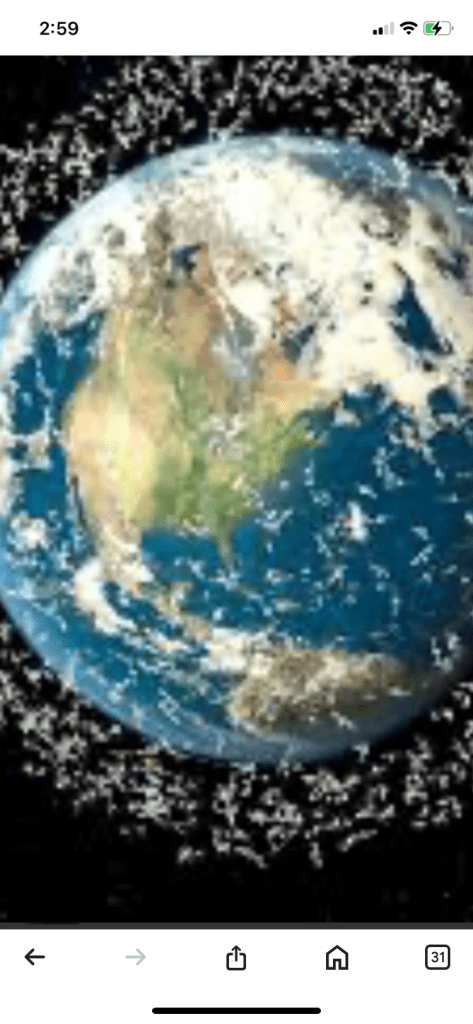
Human society is on the cusp of expanding into space and improving lives on Earth through a host of space-derived innovations. Threatening this revolution is the limited ability of corporations and governments around the world to manage their space traffic and avoid collisions. Kerry Buckley of the MITRE Corporation analyzes the problem and offers solutions.
From our Earthly vantage point in the United States, just how much we depend on space may not be foremost on our minds. But every day, national security satellites protect us from strategic surprise; GPS signals help us navigate our world and keep our bank transactions flowing smoothly; commercial communications satellites give us internet on the go and more. And the space industry here and abroad has barely scratched the surface of what’s possible.
But unless we change our current trajectory, we’re setting ourselves up for a space traffic jam that will literally trap us on Earth. That’s because sometimes satellite paths cross, like cars at an intersection. These “conjunctions” can result in catastrophic collisions — and produce massive amounts of potentially dangerous debris. This is no longer a problem of tomorrow. It’s already beginning. Safe windows for satellite launches are becoming increasingly scarce. And safe opportunities for launching spacecraft with humans aboard to 700 kilometers (within low-Earth orbit, where most Earth-orbiting objects are) or beyond, meaning higher than the International Space Station, are now extremely rare under current safety standards.
Please Like subscribe comment your precious comments petika n universe discoveries
Full article source google
This is Amazon link if you want to buy anything from Amazon you can click on that it will help my website grow freinds
https://www.amazon.in/b?_encoding=UTF8&tag=555101-21&link
https://www.buymeacoffee.com/Satyam55
Please donate me a coffee freinds to help my website grow if you like my website universe discoveries
 Universe discoveries
🙏🌹
Aum Shanti
LikeLike
Very nice
LikeLike
I have always viewed Earth as a school filled with interesting learning experiences. Thanks for sharing.
LikeLike
The idea that we might outgrow Earth or face extinction highlights the need for change, but it’s also important to appreciate the beauty and opportunities Earth offers.
LikeLike