
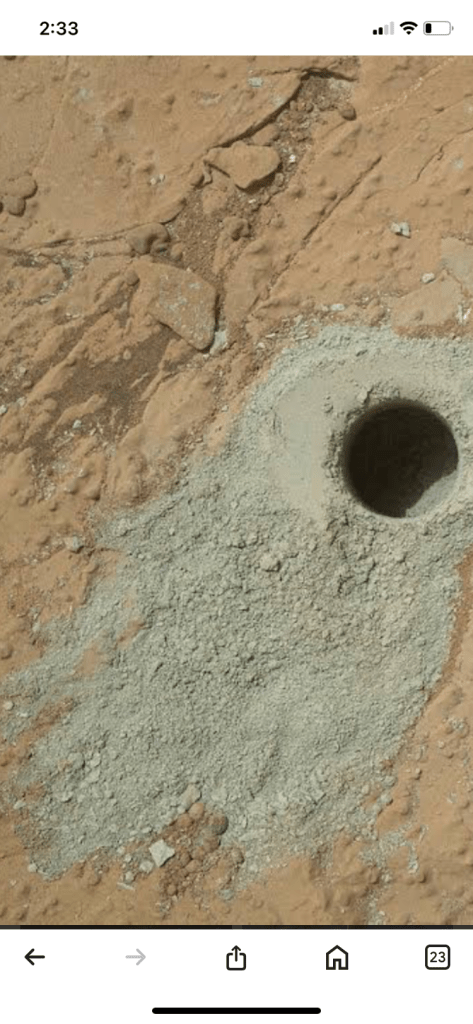
It’s exciting to hear about the ongoing discoveries on Mars! Here’s a breakdown of what we know about NASA’s Curiosity rover’s recent findings:
- Discovery of Large Organic Molecules:
- NASA’s Curiosity rover has detected the largest organic molecules yet found on Mars.
- Specifically, the rover identified long-chain hydrocarbons, including decane, undecane, and dodecane, in a mudstone sample called “Cumberland.”
- Significance:
- These findings suggest that prebiotic chemistry on Mars may have been more advanced than previously thought.
- Organic molecules are the building blocks of life, so their presence is crucial in understanding Mars’ potential habitability.
- These molecules may be the byproducts of fatty acids.
- Curiosity’s Role:
- The rover’s Sample Analysis at Mars (SAM) instrument played a key role in detecting these compounds.
- Curiosity has been exploring Gale Crater since 2012, analyzing Martian rock, soil, and air.
- Future Exploration:
- NASA’s Perseverance rover is also collecting samples in Jezero Crater, with the goal of bringing them back to Earth for further analysis. This will allow scientist to perform more detailed studies of the martian samples.
These discoveries provide valuable insights into the history of Mars and its potential to have supported life.
What does organic compound says about life in mars
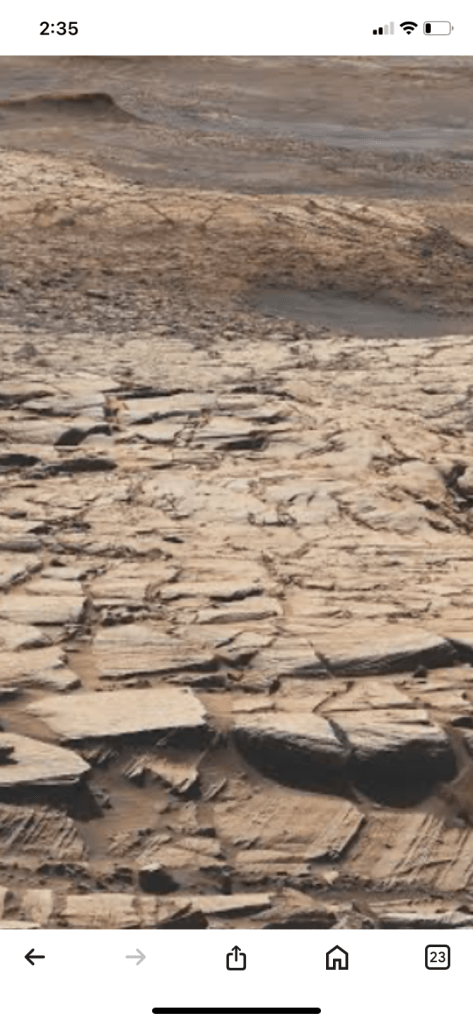
The discovery of organic compounds on Mars is a significant step in the search for potential past or present life on the red planet. Here’s a breakdown of what these findings imply:
- Building Blocks of Life:
- Organic molecules, which contain carbon, are considered the building blocks of life as we know it. Their presence indicates that the necessary chemical ingredients for life could have existed on Mars.
- However, it’s crucial to remember that organic molecules can also be formed through non-biological processes.
- Potential for Past Habitability:
- The detection of complex organic molecules suggests that Mars may have had environments capable of supporting life in the past.
- These findings, combined with evidence of past liquid water, strengthen the possibility that ancient Mars was habitable.
- Not Definitive Proof:
- It’s important to emphasize that finding organic compounds does not definitively prove that life ever existed on Mars.
- Further research is needed to determine the origin of these molecules and whether they were produced by biological or geological processes.
- Future Exploration:
- The ongoing and future missions, such as the Perseverance rover’s sample return mission, aim to provide more conclusive evidence.
- Analyzing Martian samples on Earth will allow scientists to conduct more detailed studies and potentially uncover signs of past or present life.
In essence, the discovery of organic compounds on Mars is an exciting development that fuels the search for extraterrestrial life and deepens our understanding of the red planet’s history.
The finding suggests, at the very least, that organic signatures of life can be preserved in Martian rock for billions of years, bolstering hopes that should life ever have emerged on the planet, its remnants might still be found.
The pressing question is what to do next. Curiosity is carrying a second sample of the rock that scientists want to analyse for even larger organics. This might boost evidence for more fatty acids containing even numbers of carbons. But that would still not be conclusive.
John Eiler, a professor of geology and geochemistry at the California Institute of Technology, said analysing the different isotopes of carbon and hydrogen in the organics could reveal their origins. However, the tests require equipment found in only a handful of labs on Earth. “At present, there is no plausible path to making such measurements using an in-situ instrument on Mars,” he said. That will have to wait for a Mars sample-return mission.
“The findings reported in this paper present the best chance we have seen for identifying the remains of life on Mars,” said Eiler. “But sealing the deal absolutely requires return of such samples to Earth.”
Please like subscribe comment your precious thoughts on universe discoveries
Full article source google
This is Amazon link if you want to buy anything from Amazon you can click on link to help my website universe discoveries grow freinds
https://www.amazon.in/b?_encoding=UTF8&tag=555101-21&link
https://www.buymeacoffee.com/Satyam55
Please donate me a coffee to help grow my website universe discoveries freinds
 Universe discoveries