

It’s exciting to hear about advancements in CO2 conversion, especially with potential applications for Mars missions. Here’s a breakdown of what I’ve found:
- Key Innovation:
- Scientists in China have developed a new electrochemical method that can convert carbon dioxide (CO2) into oxygen with a reported efficiency of 98%.
- This process utilizes a novel catalyst and electrochemical cell, offering a potentially more efficient way to produce oxygen.
- Potential for Mars Missions:
- The Martian atmosphere is primarily composed of CO2, so this technology could be crucial for future human missions to Mars.
- Generating oxygen on Mars would reduce the need to transport it from Earth, making long-term habitation more feasible.
- Environmental Implications:
- Beyond space exploration, this technology could also have significant implications for addressing Earth’s environmental challenges by providing a way to utilize excess CO2.
- Technological Details:
- The process utilizes lithium as a catalyst, and involves CO2 transforming into lithium carbonate, then splitting into carbon and lithium oxide. Finally, the lithium oxide breaks down, releasing pure oxygen and regenerating the lithium for reuse.
- The use of a ruthenium-cobalt (RuCo) nanocatalyst is a key part of the process.
This research represents a significant step forward in developing technologies that could support both space exploration and environmental sustainability.
New method produces 98 percent oxygen
Plants use photosynthesis, converting CO2 into oxygen and glucose. The process depends on hydrogen atoms acting as mediating agents.
For years, scientists have struggled to replicate this reaction artificially under moderate conditions.
Researchers from Nanjing University, in collaboration with Fudan University, have developed a new technique to directly split CO2 into carbon and oxygen. Unlike traditional methods that rely on hydrogen, their process uses lithium as the key intermediary.
The researchers designed a novel electrochemical device to achieve the direct splitting of CO2. The device features a gas cathode with a nanoscale catalyst made of ruthenium and cobalt and a metallic lithium anode.
Here’s how it works. When CO2 is introduced into the cathode, it undergoes a two-stage electrochemical reduction facilitated by lithium. First, the CO2 reacts with lithium to form lithium carbonate (Li2CO3).
Finally, through an electrocatalytic oxidation process, the generated lithium oxide (Li2O) is converted back into lithium ions, releasing oxygen gas (O2) as a byproduct. This process effectively transforms CO2 into usable carbon and oxygen.
The optimized catalyst achieves an oxygenyield of over 98.6 percent.
Ideal for Martian atmosphere
The newly developed CO2 splitting technology demonstrates its versatility by successfully operating not only with pure carbon dioxide but also with a range of mixed gases
This includes simulated flue gas, which mimics industrial emissions, a mixture of CO2 and oxygen, and even a simulated Martian atmosphere.
The thin Martian atmosphere is predominantly composed of CO2 – with a pressure less than one percent of Earth’s atmospheric pressure.
To simulate this environment for testing the CO2 splitting technology, researchers created a gas mixture consisting of argon and a very low concentration (1 percent) of CO2. However, the team hasn’t disclosed the oxygen amount generated under Martian-like conditions.
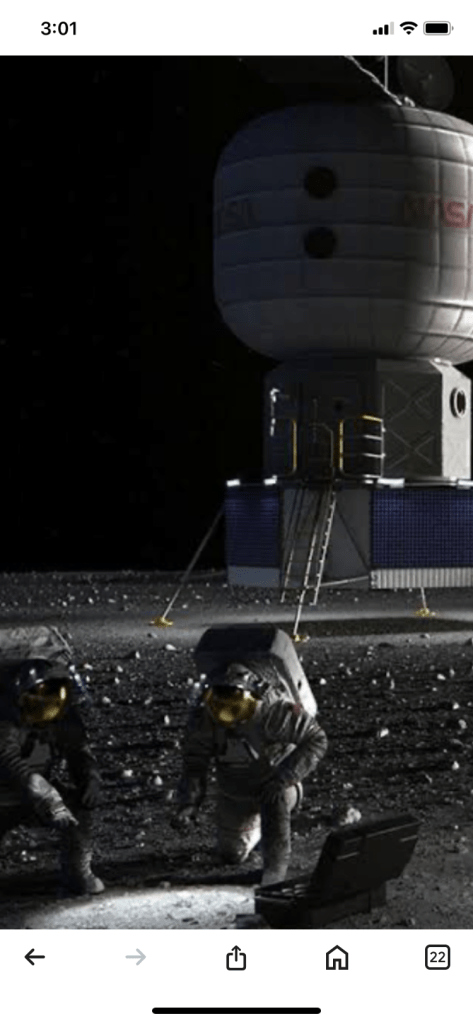
If this tech works out well, it could aid future human explorers on Mars.
Interestingly, this technology has the potential to support underwater habitats as well as the development of advanced air purification systems.
Please like subscribe comment your previous comment on universe discoveries
Full article source google
https://www.amazon.in/b?_encoding=UTF8&tag=555101-21&link
This is Amazon link if you want to buy anything from Amazon you can click on link to help my website universe discoveries grow freinds
https://www.buymeacoffee.com/Satyam55
Please donate me a coffee to help grow my website universe discoveries freinds
 Universe discoveries
🙏🌹
Aum Shanti
LikeLiked by 1 person