
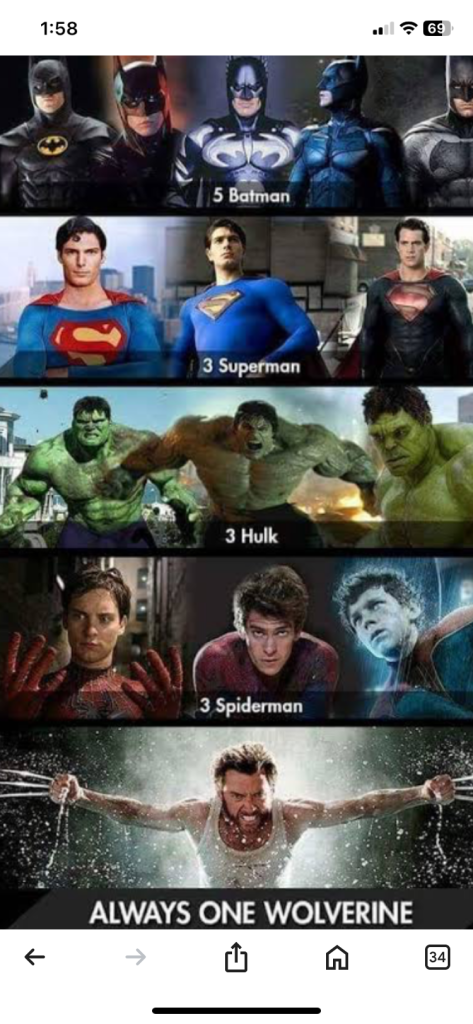
“Evolution of Marvel Characters,” as it encompasses several fascinating aspects:
- Evolution of Power Origins and Types:
- Early Days (Golden Age): Many early Marvel heroes (then Timely Comics) had relatively straightforward origins, often involving scientific accidents (like the Human Torch) or inherent abilities (like Namor).
- Silver Age Revolution: Stan Lee, Jack Kirby, and Steve Ditko introduced more complex and relatable heroes with diverse power origins:
- Scientific Accidents with a Twist: Spider-Man’s radioactive spider bite gave him unique abilities, but also personal struggles. The Fantastic Four’s cosmic ray exposure bonded them as a family. The Hulk’s gamma radiation was tied to Banner’s inner turmoil.
- Mutants: The X-Men introduced the concept of the X-Gene, a natural genetic mutation leading to powers manifesting at puberty. This allowed for a vast array of unique abilities and explored themes of prejudice and societal acceptance.
- Cosmic and Mystical: Characters like Thor (Norse mythology), Doctor Strange (magic), and Captain Marvel (Kree technology) expanded the scope of power origins beyond Earthly science.
- Modern Era: Power origins have become even more varied, including:
- Inhumans: Terrigen Mist unlocking latent Kree genetics.
- Technological Advancement: Iron Man’s armor, War Machine’s arsenal.
- Symbiotes: Venom and Carnage bonding with hosts.
- Multiverse: Characters with alternate reality origins and powers.
- Evolution of Character Complexity and Depth:
- Early Archetypes: Golden Age heroes were often more one-dimensional, clearly defined as good versus evil.
- Silver Age Nuance: Lee, Kirby, and Ditko brought flawed heroes with relatable problems, internal conflicts, and moral ambiguities. Spider-Man’s responsibility, the Hulk’s struggle with his alter ego, and the X-Men’s fight for acceptance resonated with readers.
- Maturation (Bronze and Modern Ages): Characters have become increasingly complex, dealing with darker themes, personal struggles (addiction, mental health), and evolving motivations. Villains also gained depth and more understandable (though not necessarily justifiable) reasons for their actions (e.g., Magneto’s past trauma).
- Evolution Reflecting Societal and Cultural Changes:
- Golden Age Patriotism: Characters like Captain America reflected the World War II era.
- Silver Age Social Commentary: The X-Men were explicitly created to mirror the Civil Rights Movement, with Professor X representing Martin Luther King Jr.’s peaceful approach and Magneto echoing Malcolm X’s more militant stance.
- Modern Relevance: Marvel has continued to address contemporary issues like racism (Miles Morales’ Spider-Man), religious prejudice (Ms. Marvel), and LGBTQ+ representation (various characters). Characters and storylines evolve to reflect changing social norms and promote inclusivity.
- Evolution in Portrayal and Interpretation:
- Comic Book Iterations: Characters have been reinterpreted and reimagined by different writers and artists over decades, leading to variations in their powers, personalities, and backstories.
- Adaptations Across Media: Film (MCU, X-Men movies), television, animation, and video games offer different interpretations and evolutions of classic characters, sometimes streamlining or altering their origins and powers for a new audience.
In summary, the evolution of Marvel characters is a dynamic process influenced by creative vision, storytelling trends, and the changing social landscape. From simple beginnings, they have grown into multifaceted individuals with complex histories, powers, and motivations that continue to evolve and resonate with audiences worldwide.
When was marvel formed and what was the idea
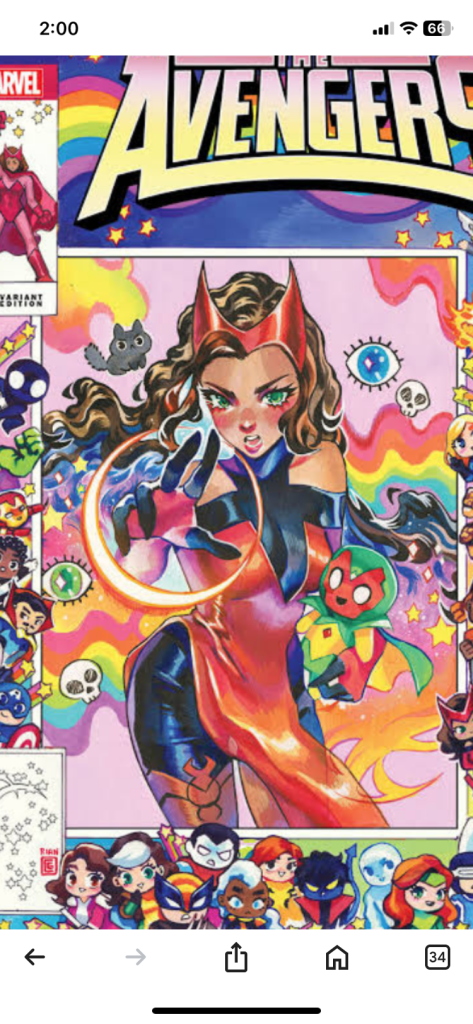
Marvel Comics wasn’t formed under that name initially. Its origins trace back to 1939 when pulp magazine publisher Martin Goodman created a comic book division called Timely Comics.
The initial idea behind Timely Comics was primarily commercial: to capitalize on the growing popularity of the comic book medium, especially the burgeoning superhero genre. Goodman, who already had a successful pulp magazine business, aimed to expand into this new and profitable market.
Timely’s first publication, Marvel Comics #1 (cover dated October 1939), featured the debut of characters like the Human Torch (an android) and Namor the Sub-Mariner. The success of this issue demonstrated the potential of superheroes, and Timely quickly introduced more characters, most notably Captain America in 1941, who became a patriotic symbol during World War II.
While the early focus was on creating popular characters and entertaining stories to drive sales, the groundwork was being laid for something more. In the 1960s, under the guidance of Stan Lee, along with artists like Jack Kirby and Steve Ditko, the company (which had gone through a period as Atlas Comics in the 1950s) rebranded as Marvel Comics.
The “idea” behind Marvel in this transformative Silver Age evolved beyond simple entertainment. Lee and his collaborators aimed to create:
- More relatable and flawed heroes: Unlike the often perfect and distant heroes of the past, Marvel’s characters had real-world problems, insecurities, and inner conflicts. Peter Parker (Spider-Man) worried about his aunt and struggled with social awkwardness, while the Fantastic Four bickered like a family.
- A shared universe: Characters and events in one Marvel comic could affect others, creating a sense of a larger, interconnected world. This was a relatively novel concept at the time and added depth and realism to the storytelling.
- Stories that touched on contemporary issues: While still fantastical, Marvel comics began to subtly address themes like prejudice (X-Men), social responsibility (Spider-Man), and the dangers of unchecked power (Hulk).
So, while the initial formation of Timely Comics in 1939 was driven by commercial opportunity, the later evolution into Marvel Comics in the 1960s brought a more nuanced and ambitious creative vision that focused on character depth, interconnected storytelling, and a reflection of the real world within a fantastical framework.
What is the future of marvel
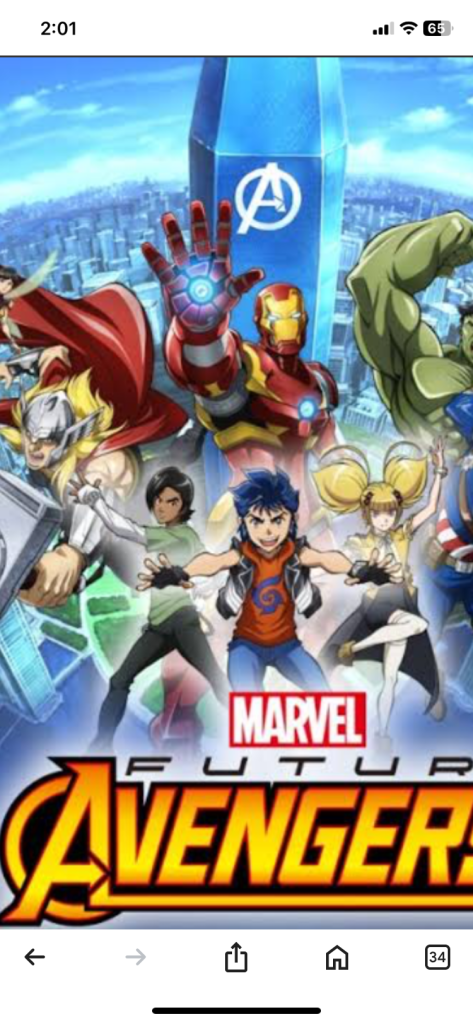
The future of Marvel is vast and multifaceted, encompassing both its comic book origins and its dominant presence in the cinematic and television landscape. Here’s a look at what the future likely holds:
Marvel Comics:
- Continued Storytelling: Marvel Comics will undoubtedly continue to publish a wide array of titles, exploring new storylines, characters, and creative directions within its established universe and beyond.
- Character Evolution: Existing characters will continue to evolve, undergo changes in status quo, and potentially be reimagined for new generations of readers.
- New Characters and Teams: Expect the introduction of new heroes, villains, and teams that reflect contemporary ideas and diversify the Marvel universe.
- Exploring the Multiverse: The concept of the multiverse, which has become prominent in the MCU, will likely continue to be a significant element in the comics, allowing for alternate realities and character variations.
- Addressing Social Issues: Marvel Comics has a history of tackling social and political themes, and this is expected to continue, reflecting current events and promoting diverse perspectives.
- Crossovers and Events: Large-scale crossover events that unite various corners of the Marvel universe will likely remain a staple, driving sales and creating buzz.
Marvel Cinematic Universe (MCU):
The MCU is currently in its Phase Five of “The Multiverse Saga,” which will continue through mid-2025. Phase Six is set to follow from 2025 to 2027, culminating in two epic Avengers films: - Phase Five Highlights (2023 – Mid-2025):
- Captain America: Brave New World (February 14, 2025)
- Thunderbolts* (May 2, 2025)
- Eyes of Wakanda (Animated Series, August 6, 2025)
- Ironheart (Series, December 2025)
- Phase Six Plans (2025 – 2027):
- The Fantastic Four: First Steps (July 25, 2025)
- Avengers: Doomsday (May 1, 2026)
- Spider-Man 4 (July 24, 2026) – Note: This is a placeholder title.
- Avengers: Secret Wars (May 7, 2027)
- Marvel Zombies (Animated Series, October 3, 2025)
- Wonder Man (Series, December 2025)
- Daredevil: Born Again (Series, 2025)
- Agatha All Along (Series, 2024)
- Your Friendly Neighborhood Spider-Man (Animated Series, 2025)
- Key Trends and Potential Future Directions for the MCU:
- Multiverse Exploration: The multiverse will remain a central theme, allowing for the introduction of new versions of beloved characters and the potential for major crossover events.
- Introduction of New Characters and Teams: The X-Men and the Fantastic Four are expected to be more fully integrated into the MCU.
- Legacy Characters: The MCU will likely continue to blend established heroes with newer characters taking on mantles and expanding the universe.
- Interconnectedness: While there might be some shifts towards more standalone stories, the interconnected nature of the MCU across films and Disney+ series will likely persist.
- Experimentation with Genres and Formats: Expect continued exploration of different genres within the superhero framework and the use of both theatrical releases and streaming series to tell diverse stories.
- Addressing Past Criticisms: Marvel Studios has acknowledged some audience fatigue and is expected to adjust its output and focus on higher quality and more impactful storytelling.
- Potential Return of Familiar Faces: There are rumors and fan speculation about the potential return of iconic actors and characters in the context of the multiverse.
- Mature Content: Marvel has indicated a willingness to explore more mature storytelling with projects like Deadpool & Wolverine and the Echo series.
Other Media: - Television: Beyond the MCU Disney+ series, Marvel characters will likely continue to appear in animated shows on various platforms.
- Video Games: The success of games like Marvel’s Spider-Man suggests that Marvel will continue to be a major player in the video game industry, with more high-profile titles on the horizon.
In conclusion, the future of Marvel appears incredibly rich with potential across all its platforms. While the specifics of storylines and character arcs remain to be seen, the commitment to expanding its universe, introducing new and diverse characters, and exploring innovative storytelling methods suggests a vibrant and evolving future for the House of Ideas.
Please like subscribe comment your precious comment on universe discoveries
Full article source google
https://www.amazon.in/b?_encoding=UTF8&tag=555101-21&link
This is Amazon link if you want to buy anything from Amazon you can click on link to help my website universe discoveries grow freinds
https://www.buymeacoffee.com/Satyam55
Please donate me a coffee to help grow my website universe discoveries freinds
 Universe discoveries
🙏🌹
Aum Shanti
LikeLike
As a Marvel fan, this is EPIC 💥… Watching the evolution from Timely Comics to the multiverse madness is like seeing heroes grow with us. From radioactive spiders to cosmic chaos, it’s wild how Marvel keeps pushing boundaries. 🔥 And with the X-Men and Fantastic Four coming soon, the future looks beyond legendary. 🦸♂️🧬✨ Can’t wait to see what the next phase holds….🕷️💥
LikeLike
I Think Freya Allan as Jean Grey & Levi Miller as Cyclops/Scott Summers In MCU
LikeLiked by 1 person
I Think Jayme Lawson would be great choice as Storm/Ororo Munroe In MCU
LikeLike
I Think Taron Egerton would be Great Choice as Wolverine/James Howlett/Logan In MCU
LikeLike
I Think Daniel Day-Lewis would be Great Choice as Professor X/Professor Charles Xavier In MCU
LikeLike
I Think Marion Cotillard would be great choice as Sage In MCU
LikeLike