
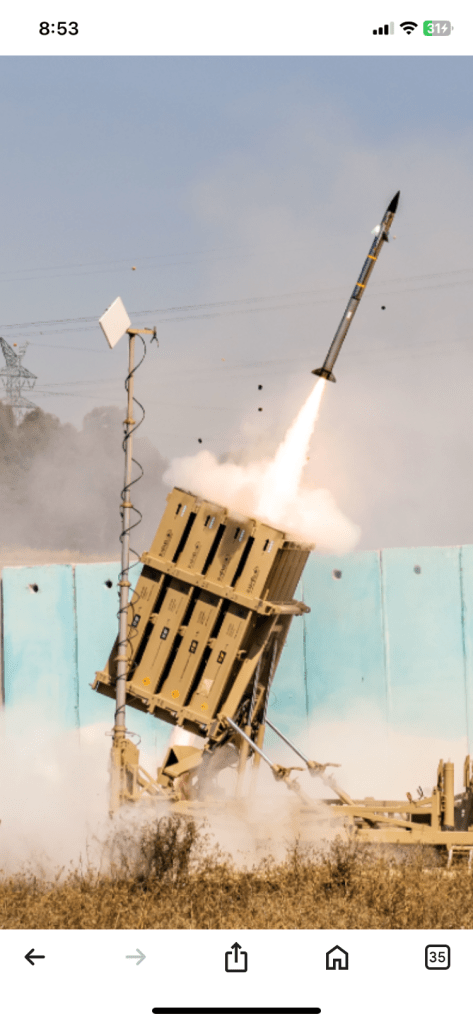
India’s Air Defense Shield:
India has made significant strides in strengthening its air defense capabilities, aiming for a multi-layered and robust shield against various aerial threats. Key aspects include:
- Integrated Systems: India is focusing on integrating various systems, both indigenous and foreign, to create a comprehensive air defense network. This includes long-range interceptors, medium and short-range systems, and very short-range air defenses (VSHORAD).
- S-400 Triumf: A crucial acquisition is the Russian-built S-400 Triumf long-range surface-to-air missile (SAM) system. Several squadrons are now operational along India’s borders.
- Indigenous Development: India is heavily investing in indigenous missile defense systems like:
- Akash and Akash-NG: Medium-range surface-to-air missile systems.
- Barak-8: Developed with Israel, these medium-range SAMs defend key bases.
- Prithvi Air Defence (PAD) and Advanced Air Defence (AAD): These are part of India’s ballistic missile defense program, designed for exo-atmospheric and endo-atmospheric interception, respectively.
- Akashteer: This is India’s fully integrated and automated Air Defence Command and Control capability, a significant step in modernizing its air defense architecture.
- Project Kusha: This DRDO-led initiative aims to develop an advanced indigenous long-range SAM system, with trials expected to begin soon.
- Counter-Drone Systems: India has also deployed indigenously developed anti-drone systems and Man-Portable Counter-Drone Systems (MPCDS) to jam and disable hostile UAVs.
- Recent Demonstrations: Recent reports indicate that India’s air defense ecosystem has effectively thwarted drone offensives, showcasing the system’s formidable strength and readiness.
India’s goal is to achieve greater self-reliance in defense manufacturing, with a significant portion of its defense equipment now being produced domestically.
America’s “Golden Dome”:
The “Golden Dome for America” is a proposed missile defense system, primarily advocated by President Donald Trump, that aims to protect the U.S. from a range of aerial threats, including ballistic, hypersonic, and cruise missiles. While it draws inspiration from Israel’s Iron Dome, it is far more ambitious in its scope: - Multi-layered Defense: The Golden Dome is envisioned as a multi-layered system, incorporating existing and new technologies across land, sea, and significantly, space.
- Space-Based Interceptors: A key aspect of the Golden Dome concept is the deployment of thousands of small satellites with space-based sensors and interceptors. These would aim to detect and destroy missiles early in their flight, even moments after launch.
- Broader Scope than Iron Dome: Unlike the Iron Dome, which primarily defends against short-range rockets and artillery, the Golden Dome aims to cover the entire U.S. mainland and counter more sophisticated, long-range threats, including intercontinental ballistic missiles (ICBMs) and hypersonic weapons.
- Technological Ambition: While the idea of space-based interceptors is not entirely new, the scale and scope of the Golden Dome are unprecedented. Experts note that it is still largely a “concept” and a monumental undertaking, both technologically and financially.
- Cost and Timeline: Proposed costs for the Golden Dome are in the hundreds of billions of dollars, and a timeline for its full operational capability remains uncertain.
Comparison with Iron Dome:
It’s important to note that the “Golden Dome” is a conceptual, much broader system compared to Israel’s Iron Dome. The Iron Dome is a battle-proven, mobile, all-weather air defense system primarily designed to intercept short-range rockets and artillery shells. While the U.S. has provided significant financial support for the Iron Dome, and has its own systems for various air defense needs (like PAC-3 MSE, THAAD, and long-range interceptors for ICBMs), the Golden Dome represents a futuristic vision for a comprehensive, space-integrated national missile defense.
India defence system performance against recent India Pakistan conflict

Recent reports and analyses regarding military confrontations between India and Pakistan, particularly those following the 2019 Balakot airstrikes, suggest a generally strong performance by India’s air defense systems.
Here’s a breakdown of key takeaways:
Post-Balakot Developments and Indian Air Defense:
- Enhanced Capabilities: Since the 2019 Balakot airstrikes, India has significantly bolstered its air defense capabilities through both indigenous development and critical acquisitions. This includes the induction of Rafale fighter jets, S-400 air defense missile systems, Barak 8 air defense systems, and a range of other advanced weaponry.
- Integrated Air Command and Control System (IACCS): India’s air defense network relies heavily on the IACCS, a networked command and control system that integrates various sensors, communication systems, and weapon platforms. This integration has been crucial in improving situational awareness and response times.
- S-400 Triumf Performance: The Russian-made S-400 Triumf system, deployed in India, has reportedly demonstrated high efficacy. Recent reports indicate that the S-400 has successfully intercepted long-range projectiles, drones, and even a Pakistani AWACS aircraft during recent military confrontations, achieving what is claimed to be a world record for the longest SAM kill at 314 kilometers.
- Counter-Drone Systems: India has successfully thwarted drone and missile attacks, including those targeting sensitive areas like the Golden Temple in Amritsar. The Indian Army’s air defense systems, including AKASH missile systems and L-70 Air Defence Guns, played a critical role in repelling these threats.
- Multi-layered Defense: India has implemented a layered air defense system, incorporating a mix of long-range, medium-range, and short-range missile systems, along with close-in terminal weapons and air defense fighters. This layered approach aims to create difficult-to-penetrate anti-access/area-denial (A2AD) zones.
- Effectiveness Against Pakistani Air Force: India’s air defense appears to have performed remarkably well in countering Pakistani aerial threats. While Pakistan claims to have downed Indian jets, Indian sources indicate that its air defenses successfully intercepted numerous drones, missiles, and other munitions, resulting in minimal damage to Indian targets.
- Standoff Strike Capability: India has also acquired long-range air-to-surface missiles like SCALP and BrahMos-A, which allow for precision strikes deep inside Pakistani territory without Indian aircraft needing to cross the Line of Control (LoC), thereby reducing risk to pilots and assets. Pakistani defense analysts have reportedly admitted that their current air defense systems lack the capability to intercept advanced missiles like the BrahMos-A.
Key Incidents and Assessments: - Operation Sindoor: Recent reports refer to “Operation Sindoor” where the Indian Air Force (IAF) allegedly struck key Pakistani aircraft and military targets deep inside Pakistan. During this operation, India’s S-400 system was activated multiple times and reportedly confirmed hits on Pakistani aerial assets, including a SAAB-2000 early warning aircraft.
- Countering Pakistani Responses: After India’s actions, Pakistan reportedly launched “Operation Bunyan al-Marsoos” to target Indian airbases. However, these responses were largely thwarted by India’s air defense systems, leading to a quick de-escalation.
- Demonstration of Prowess: The performance of India’s air defense systems during these confrontations has been highlighted as a demonstration of their growing prowess and readiness, earning praise from both Indian leadership and some defense analysts.
In summary, while specific details of engagements are often subject to varying claims from both sides, the overall consensus from open-source reporting and analysis suggests that India’s air defense systems have shown significant effectiveness and have greatly enhanced the country’s ability to deter and respond to aerial threats from Pakistan.
Please like subscribe comment your precious comment on universe discoveries
Full article source google
This is Amazon link if you want to buy anything from Amazon you can click on link to help my website universe discoveries grow freinds
https://www.amazon.in/b?_encoding=UTF8&tag=555101-21&link
https://www.buymeacoffee.com/Satyam55
Please donate me a coffee to help grow my website universe discoveries freinds
 Universe discoveries
🙏👍🌞🌹🌞
Aum Shanti
LikeLiked by 1 person
Aum Shaanti 🌅🌅
LikeLiked by 1 person
Thanks ☺️ sir
LikeLike
Very detailed information about India’s defence system.
LikeLiked by 1 person
🤝👍👌🎉
LikeLiked by 2 people