

This is a fascinating “what if” scenario that delves into alternate history. If India had coexisted with Britain with a dominance status from India’s side, the “India” we see today would be radically different, both internally and in its global standing. Here’s a breakdown of how it might look:
- Economic Powerhouse and Industrial Strength:
- No De-industrialization: British rule led to the systematic de-industrialization of India, turning it from an exporter of finished goods (especially textiles) into a supplier of raw materials and a market for British manufactured goods. In an India with dominance, this would never have happened. Indian industries, especially textiles, metallurgy, and traditional crafts, would have continued to flourish and industrialize on their own terms.
- Retained Wealth: The “drain of wealth” from India to Britain, which impoverished the subcontinent, would have been reversed or never occurred. This immense wealth would have been reinvested in India, leading to faster development, better infrastructure, and higher living standards.
- Technological Advancement: India would have likely developed its own technological innovations and adopted global advancements more directly, rather than having technology filtered through British interests.
- Global Economic Leader: With its vast resources, large population, and retained wealth, India could have become an even earlier and more significant global economic power, possibly rivaling or even surpassing Western economies much sooner.
- Political and Social Landscape:
- Stronger Indigenous Institutions: India would have maintained and evolved its indigenous political structures and governance systems, rather than having a British-imposed administrative and legal framework. This might have led to a different form of democracy, or even a continuation of strong regional kingdoms integrated into a larger Indian confederation.
- Unity on Indian Terms: While the British often claimed to have “united” India, this unity was often achieved through force and created divisions. An India with dominance would have forged its own unity, perhaps through greater federalism, respecting diverse regional identities and languages. The partition of India might never have happened, or at least not in the violent way it did.
- No “Divide and Rule”: The British policy of “divide and rule” exacerbated religious and social tensions. Without this external manipulation, inter-community relations might have been more harmonious, or at least evolved organically without deliberate instigation.
- Preservation of Cultural Heritage: While cultural exchange would still occur, the imposition of Western values and the devaluation of Indian knowledge systems would have been significantly lessened. Traditional arts, sciences, and educational systems would have been preserved and integrated with modern advancements.
- Different Social Reforms: Social reforms would have emerged from within Indian society, perhaps at a different pace and with different priorities, rather than being imposed or influenced by British colonial objectives.
- Global Standing and International Relations:
- No Colonial Stigma: India would not carry the historical baggage of being a colonized nation. This would have a profound impact on its national psyche and its relationships with other nations.
- Stronger Influence in Asia and Africa: A dominant India would have likely played a much more significant role in supporting independence movements and fostering solidarity among Asian and African nations, potentially shaping a different post-colonial world order.
- Different Relationship with Britain: The relationship with Britain would be one of mutual respect between two sovereign powers, potentially with India as the more influential partner. Britain might have been a junior partner in trade or even a cultural satellite to a thriving Indian empire.
- Alternative World Wars: India’s dominant status could have altered the course of world wars. Its resources and manpower might have been deployed differently, or it might have remained neutral, fundamentally changing the balance of power.
In essence, today’s India in such a scenario would likely be: - Richer and more industrially advanced.
- More culturally confident and less impacted by colonial psychological effects.
- A global superpower with a history of self-determination and influence.
- Potentially a less fragmented nation, or one united under a different political model.
This alternate history highlights the profound and often devastating impact of colonialism, and how different the world might have been if the power dynamic had been reversed.
If dominance status of India was accepted India today will be same as America today
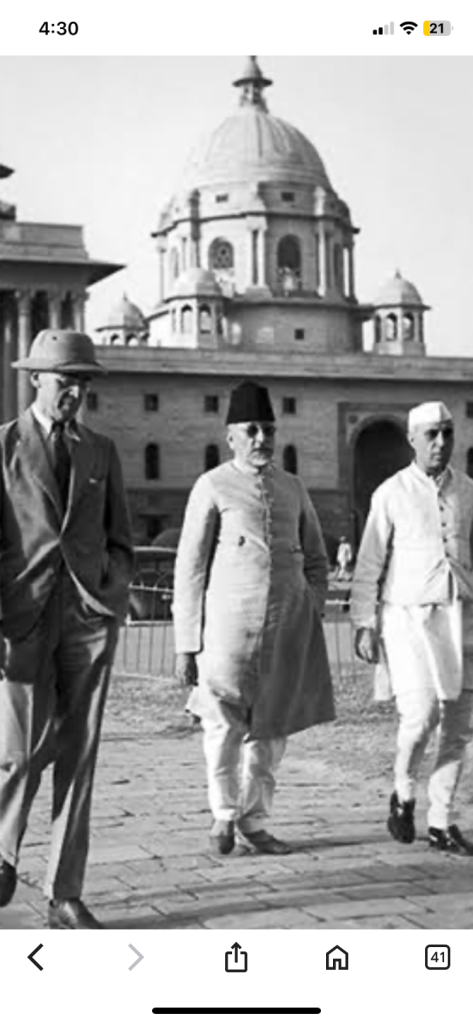
It’s a bold and intriguing proposition: if India had maintained a dominance status over Britain, would it be like the America of today? While a direct one-to-one comparison is difficult due to unique historical and geographical contexts, we can explore the parallels and divergences.
Similarities to America’s Rise (if India had dominance):
- Economic Powerhouse: Just like the US leveraged its vast resources and immigrant labor to become an industrial giant, a dominant India would have done the same with its immense natural wealth (minerals, fertile land, diverse agricultural products) and a massive, skilled population.
- Industrialization: Instead of being de-industrialized by British policies, India’s existing industries (textiles, metallurgy, shipbuilding) would have continued to evolve and industrialize, possibly leading to an earlier and stronger industrial revolution on Indian soil.
- Wealth Retention: The “drain of wealth” from India to Britain would have been reversed or prevented, allowing for massive capital accumulation and investment in Indian infrastructure, education, and technology. This internal reinvestment was crucial for America’s growth.
- Innovation and Entrepreneurship: Both India and the US have a strong tradition of innovation and entrepreneurial spirit. A dominant India, free from colonial suppression, would have fostered this.
- Scientific Advancement: India had a rich history of scientific and mathematical advancements. With greater autonomy and resources, these fields would have flourished, potentially leading to breakthroughs akin to those seen in the West.
- Resourcefulness: Indians are known for their ingenuity and ability to adapt. In a self-determined environment, this would translate into homegrown technological development and business models.
- Cultural Influence: The US rose to global cultural prominence through its entertainment, technology, and democratic ideals. A dominant India could have exerted a similar, albeit different, form of soft power.
- Global Cultural Hub: Indian art, philosophy, languages, and spiritual traditions could have had a much wider and deeper global impact, shaping cultural trends and intellectual discourse worldwide.
- Democratic Values (potentially): While the form of governance might have been different, if India embraced a democratic path (perhaps a federal republic or a constitutional monarchy), it could have become a beacon of self-governance and diversity, influencing other nations.
- Immigration and Diversity: The US is a melting pot of cultures due to its history of immigration. While India is diverse internally, a dominant India might have become a destination for global talent and trade, further enriching its cultural tapestry.
Key Differences and Why “Like America” Isn’t a Perfect Fit: - Formation and Unity: The US was formed through a revolution against a colonial power, eventually uniting disparate colonies into a strong federal union. India’s path to unity would have been very different.
- Pre-existing Kingdoms: India already consisted of numerous powerful kingdoms and empires. Dominance might have meant a stronger, more unified Mughal Empire, or a confederation of powerful regional states, rather than a single “United States of India” in the American sense. The “divide and rule” policies of the British, which exacerbated internal divisions, would be absent, but internal power struggles would still exist.
- No “Frontier” Mentality: The American narrative is deeply tied to westward expansion and settling a vast, relatively unpopulated continent. India, being a densely populated and ancient civilization, wouldn’t have that “frontier” dynamic.
- Geopolitical Context: The US benefited from its relative isolation from the major power struggles of Europe for much of its formative years. India, located at the crossroads of major trade routes and civilizations, would have been constantly engaged with various powers in Asia and Europe.
- Cultural and Philosophical Foundations: While both would be powerful, their underlying philosophies and societal structures would differ. America’s individualism and emphasis on individual liberty contrast with India’s more communal and family-oriented traditions, and its deep spiritual and philosophical heritage.
Conclusion:
If India had maintained a dominance status over Britain, it would undoubtedly be a global superpower today, likely on par with, or even exceeding, the economic and technological might of the modern United States. It would have a highly developed industrial base, a strong economy, and significant global influence.
However, the “America” comparison is more about the level of development and global standing than a precise mirror image. The nature of that power, its cultural expression, and its internal social and political structures would be uniquely Indian, shaped by its own long and rich history, diverse traditions, and indigenous genius, rather than being a replica of the American experience. It would be a fascinating, powerful, and distinctly Indian superpower.
Please like subscribe comment your precious comment on universe discoveries
Full article source google
https://www.amazon.in/b?_encoding=UTF8&tag=555101-21&link
This is Amazon link if you want to buy anything from Amazon you can click on link to help my website universe discoveries grow freinds
https://www.buymeacoffee.com/Satyam55
Please donate me a coffee to help grow my website universe discoveries freinds
Hello freinds i am satyam Rastogi a blogger from India I love new universe discoveries and i wish one day humanity becomes interstellar species and for that our new generation must read articles on my website universe discoveries
 Universe discoveries
🙏🌹
Aum Shanti
LikeLike