
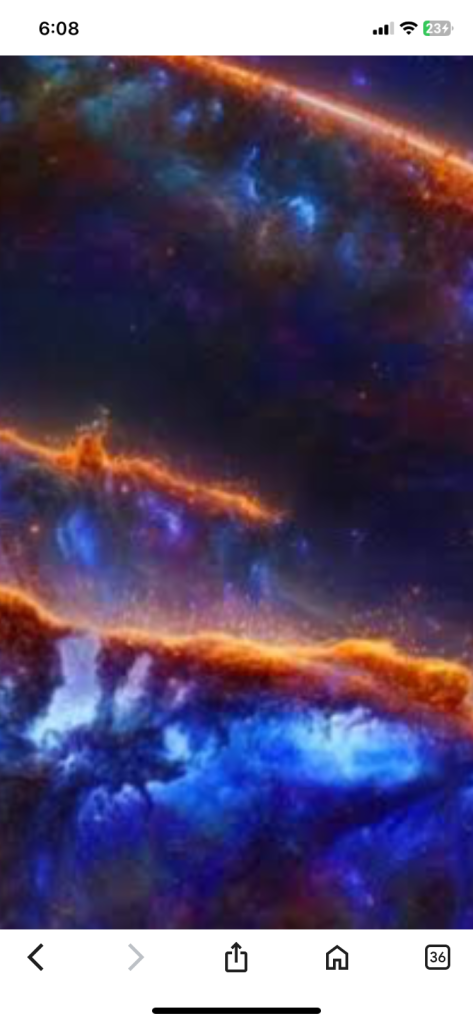
Astronomers have recently made a groundbreaking discovery: a colossal molecular cloud within the Milky Way galaxy, containing the mass of 160,000 Suns. This massive structure, named M4.7-0.8, is located approximately 23,000 light-years away within a dusty lane of the galactic bar, an area crucial for material transport to the galaxy’s core.
Key Details of the Discovery:
- Massive Scale: M4.7-0.8 spans nearly 200 light-years and has a surprisingly cold dust temperature of approximately 20 Kelvin (-423.67°F).
- Unique Structures: The cloud exhibits two primary structures: the ‘Nexus,’ corresponding to the brightest carbon monoxide emission region, and the ‘Filament,’ an elongated morphology. A shell-like structure with a bright ammonia emission edge and a central cavity was also observed, possibly indicating a past supernova explosion.
- Instrumental Tool: The Green Bank Telescope was crucial in identifying this cloud.
- Discovery Date: The research findings were published on arXiv around March-April 2025. News outlets have been reporting on it since then, with some recent articles dated June 23, 2025.
Implications of the Discovery:
This discovery is significant for several reasons: - Star Formation: Giant Molecular Clouds (GMCs) like M4.7-0.8 are essentially stellar nurseries. Studying them provides unprecedented insights into the mechanisms of star formation and how new stellar systems are fueled. The presence of compact zones within M4.7-0.8 suggests it may be a cradle for new stars.
- Galactic Evolution: The unique characteristics of M4.7-0.8 offer a rare opportunity to study the critical role GMCs play in galactic evolution, particularly in understanding how matter is redistributed within the galaxy and how interstellar gas and dust transform into stars and planets.
- Interstellar Medium: This discovery enhances our understanding of the interstellar medium—the gas and dust that fills the space between stars in a galaxy.
Future observations of M4.7-0.8 are expected to unveil even more about the intricate processes of star formation and the lifecycle of galaxies.
IN A NUTSHELL
- 🌌 Astronomers discovered a colossal molecular cloud named M4.7-0.8 in the Milky Way, weighing as much as 160,000 suns.
- 🔭 The Green Bank Telescope was instrumental in identifying this cloud located 23,000 light-years away, revealing its pivotal role in material transport.
- ⭐ Giant Molecular Clouds (GMCs) like M4.7-0.8 are critical for understanding star formation and galactic evolution due to their unique properties.
- 🛰️ Future observations of M4.7-0.8 could unveil more about the mechanisms behind star formation and the lifecycle of galaxies.
The Significance of Giant Molecular Clouds

Giant Molecular Clouds (GMCs) are the largest formations of gas and dust in galaxies, primarily composed of molecular hydrogen. These massive clouds can exceed masses of 100,000 solar masses. Serving as the primary sites for star formation, GMCs offer the low-temperature and high-density environments conducive to the aggregation of atoms into molecules, eventually leading to star birth.
The role of GMCs in galactic evolution is paramount. By analyzing the distribution and properties of these clouds, astronomers gain a deeper understanding of star and galaxy formation and evolution. This understanding is crucial for piecing together the grand puzzle of how galaxies like our Milky Way develop over cosmic time scales.
Decoding the Mysteries of M4.7-0.8
The newly identified cloud, M4.7-0.8, spans nearly 200 light-years and has a notably cold dust temperature of approximately 20 Kelvin (-423.67°F). Within this cloud, two primary structures have been noted: the ‘Nexus’ and the ‘Filament.’ The Nexus is recognized for its bright carbon monoxide emissions, while the Filament exhibits an elongated morphology. These features suggest dynamic processes at play within the cloud, providing a fertile ground for astrochemical and dynamic studies.
Additionally, the discovery of two potential star formation zones, Knot B and Knot E, adds intrigue. Knot E, with its comet-like structure, may represent an evaporating gas globule, though further research is necessary to confirm this hypothesis. Such features underscore the complexity and dynamic nature of these stellar nurseries, offering a window into the initial stages of star formation
Tools and Techniques in Cloud Exploration
Astronomers rely on radiotelescopes to explore molecular clouds, detecting radio waves emitted by gas molecules like carbon monoxide and ammonia. By analyzing these emissions, scientists can determine the clouds’ size, mass, and temperature, and map their structure and star-forming regions
The use of multi-wavelength observations is vital for studying these clouds. By combining data from various instruments, researchers can construct a more comprehensive image of these vast structures. This approach enables them to piece together the physical characteristics and dynamic processes occurring within these cosmic giants, offering a richer understanding of their role in the universe
Unveiling Galactic Evolution
The study of M4.7-0.8 underscores the critical role giant molecular clouds play in galactic evolution. With its unique characteristics, this cloud provides a rare opportunity to study these processes in detail. Future observations promise to reveal more about star formation mechanisms, potentially unveiling new insights into the lifecycle of galaxies
Please like subscribe comment your precious comment on universe discoveries
Full article source google
https://www.amazon.in/b?_encoding=UTF8&tag=555101-21&link
This is Amazon link if you want to buy anything from Amazon you can click on link to help my website universe discoveries grow freinds
https://www.buymeacoffee.com/Satyam55
Please donate me a coffee to help grow my website universe discoveries freinds
Hello freinds i am satyam Rastogi a blogger from India I love new universe discoveries and i wish one day humanity becomes interstellar species and for that our new generation must read articles on my website universe discoveries
Affiliate Disclosure: This blog may contain affiliate links, which means I may earn a small commission if you click on the link and make a purchase. This comes at no additional cost to you. I only recommend products or services that I believe will add value to my readers. Your support helps keep this blog running and allows me to continue providing you with quality content. Thank you for your support!
 Universe discoveries
🙏🌹
Aum Shanti
LikeLike