

Recent reports from China highlight a significant breakthrough in lunar technology: the development of a system that can convert lunar soil into usable fuel and oxygen. This innovation has the potential to revolutionize deep space missions and establish sustainable human presence on the Moon.
Here’s a breakdown of what this game-changing technology entails:
How it Works:
- Water Extraction: The technology focuses on extracting water from lunar soil. While the Moon is generally arid, samples from China’s Chang’e-5 mission have confirmed the presence of water-bearing minerals on its surface.
- Photothermal Catalysis: The core of the technology involves a “photothermal strategy” that converts sunlight into heat. This heat is used to:
- Release Water: Heat the lunar soil, releasing trapped water in the form of steam.
- Convert CO2: In the same integrated system, this extracted water is then used to convert carbon dioxide (CO2), including that exhaled by astronauts, into useful products.
- Fuel and Oxygen Production: The CO2 conversion process yields:
- Carbon Monoxide (CO) and Hydrogen (H2) gas: These can then be used to produce chemical fuels, such as methane.
- Oxygen (O2): Essential for astronauts to breathe.
- Catalytic Role of Lunar Soil: The research suggests that certain minerals present in lunar soil, particularly ilmenite (a heavy black mineral rich in iron, titanium, and oxygen), can act as catalysts in this process, further enhancing efficiency.
Significance for Deep Space Missions: - Reduced Reliance on Earth: This technology significantly reduces the need to transport vital resources like water, oxygen, and fuel from Earth. Transporting supplies to the Moon is incredibly expensive and logistically challenging, costing tens of thousands of dollars per gallon of water.
- Sustainable Lunar Bases: By harnessing the Moon’s own resources, this breakthrough paves the way for the establishment of more self-sufficient and long-term lunar bases. Astronauts could produce their own air and rocket propellants directly on-site.
- Enabling Deeper Exploration: With readily available resources on the Moon, future deep space missions to Mars and beyond become more feasible and cost-effective, as the Moon could serve as a “gas station” or supply depot.
Challenges and Future Outlook:
While the laboratory results are promising, researchers acknowledge several challenges for real-world deployment on the Moon: - Extreme Lunar Environment: The Moon’s surface presents harsh conditions, including drastic temperature fluctuations, ultra-high vacuum, intense solar radiation, and low gravity, which could affect the technology’s performance.
- Inconsistent Soil Composition: Lunar soil does not have a uniform composition, leading to inconsistent properties that might impact the extraction and conversion processes.
- Scalability: The current catalytic efficiency needs to be improved for the technology to be deployed at a scale sufficient to support human life and missions.
- CO2 Supply: It remains to be seen if the amount of CO2 exhaled by astronauts would be enough to generate all the necessary fuel and oxygen.
Despite these challenges, this Chinese breakthrough represents a crucial step forward in making sustained human presence in space a more attainable reality. The focus is now on scaling up the technology and testing its performance in the actual lunar environment to realize its full potential.
IN A NUTSHELL
 Chinese scientists have developed a technology to convert lunar soil into fuel and oxygen, aiding space exploration.
 The technology uses a photothermal strategy to extract water from lunar soil and transform CO2 into usable resources.
 Challenges include overcoming the inconsistent composition of lunar soil and extreme environmental conditions on the moon.
 This breakthrough could reduce reliance on Earth’s resources, paving the way for sustainable living in space.
In a remarkable leap forward for space exploration, Chinese scientists have developed an innovative technology that promises to revolutionize how humans can survive on the moon. By extracting water from lunar soil and transforming it into life-sustaining resources, this breakthrough could significantly reduce the need to transport essential supplies from Earth. Such advancements not only extend the boundaries of human exploration but also pave the way for sustainable living on extraterrestrial terrains.
The Magic of Lunar Soil
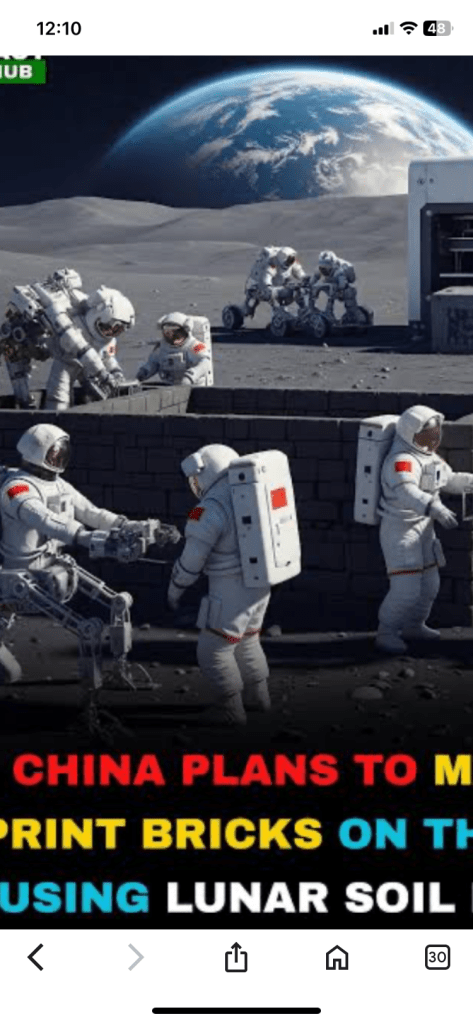
The recent advancements in lunar technology have brought to light the incredible potential of lunar soil. Lu Wang from the Chinese University of Hong Kong emphasized the unexpected capabilities of this celestial resource, stating, “We never fully imagined the ‘magic’ that the lunar soil possessed.” The integration of water extraction from lunar soil and the conversion of carbon dioxide into usable resources marks a significant milestone
Lunar Soil Does Not Have Uniform Composition
One of the critical challenges in utilizing lunar soil lies in its inconsistent composition. The variability in its properties means that it might not always provide a reliable source of water, fuel, and oxygen. Furthermore, the CO2 levels from astronauts’ exhalations may not suffice to meet all their needs. Chinese scientists point out that current catalytic performance is inadequate to support human life fully in extraterrestrial environments.
Addressing these technological limitations is crucial. Overcoming the associated costs and technical hurdles in development and deployment will be vital for realizing the sustainable use of lunar resources. As the study’s researchers noted, achieving this could open new avenues for space exploration and long-term human settlement beyond Earth.
This groundbreaking technology offers a glimpse into a future where humans can live and thrive on the moon. However, significant challenges remain, and continued innovation will be essential. What other innovative solutions will emerge to make the dream of sustainable living in space a reality?
Please like subscribe comment your precious comment on universe discoveries
Full article source google
 Universe discoveries
🙏🌹
Aum Shanti
LikeLike
Amazing post..
LikeLike