
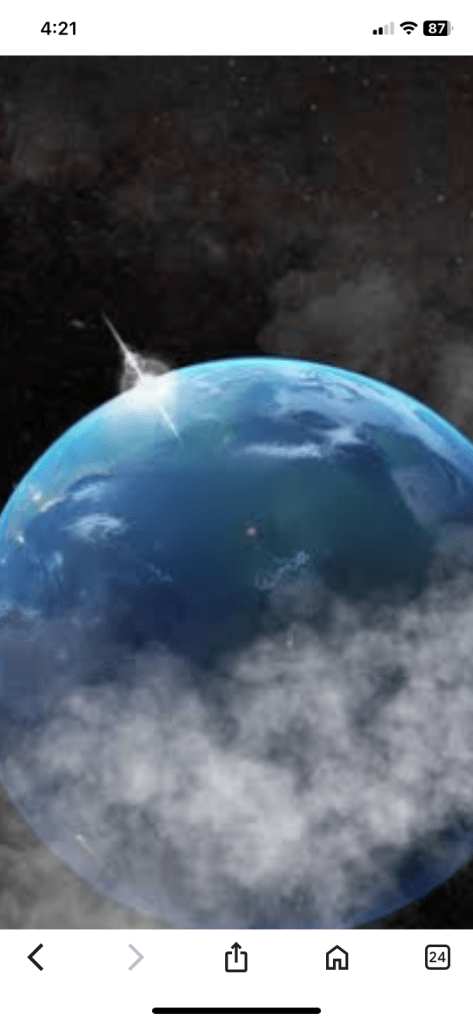
A “steam world” is a type of exoplanet that is smaller than Neptune but larger than Earth, with an atmosphere composed almost entirely of water vapor. These planets are too hot for liquid water to exist on their surfaces. The James Webb Space Telescope (JWST) has been instrumental in detecting these steam worlds, with the first confirmed one being GJ 9827 d.
Why Steam Worlds are Relevant to the Search for Life 🧐
Although steam worlds are not considered habitable themselves, studying them is a crucial step in the search for life. By creating more precise models of these planets, scientists can better understand the composition and evolution of different types of exoplanets. This knowledge, in turn, helps them to more effectively target and study “ocean planets,” which are worlds with liquid water on their surfaces and a much higher potential for life.
A planet’s habitable zone (or “Goldilocks zone”) is the region around a star where conditions are “just right” for liquid water to exist on a planet’s surface. While some planets outside of the traditional habitable zone may have subsurface oceans (like Europa), the focus of the search for life is often on finding planets that have liquid water at the surface. Studying steam worlds provides a deeper understanding of how planetary atmospheres and interiors interact with water, which is essential for identifying and characterizing potentially habitable planets.
What Is the Habitable Zone?
The habitable zone, also known as the “Goldilocks zone,” is the region around a star where conditions are just right for a planet to have liquid water on its surface. This is considered a crucial requirement for life as we know it.
The location and size of a star’s habitable zone depend primarily on the star’s luminosity (brightness) and temperature. 🌡️ Hotter, more luminous stars have a habitable zone that is farther away and wider than cooler, dimmer stars. For example, the habitable zone of a faint red dwarf star is much closer to the star and narrower than the Sun’s.
A planet’s position within this zone doesn’t guarantee habitability. The planet must also have sufficient atmospheric pressure and other characteristics to retain liquid water. For instance, while Mars is on the edge of the Sun’s habitable zone, its thin atmosphere and lack of a strong magnetic field mean it can’t support liquid water on its surface for long periods.
Life can be understood as complexity, and water has a wide range of properties that enable this complexity.”
Scientists have developed a better model to understand “steam worlds,” which are planets smaller than Neptune and larger than Earth that are too hot to have liquid water at their surface and thus have atmospheres filled with water vapor. Though steam worlds are unlikely to harbor life, modeling them more precisely could help scientists better comprehend ocean planets better, which in turn would aid in directing our search for life beyond the solar system
When we understand how the most commonly observed planets in the universe form, we can shift our focus to less common exoplanets that could actually be habitable,” Artem Aguichine, study team leader and a researcher at the University of California, Santa Cruz, said in a statement. “Life can be understood as complexity, and water has a wide range of properties that enable this complexity
Steam world 🌎 become more clearer
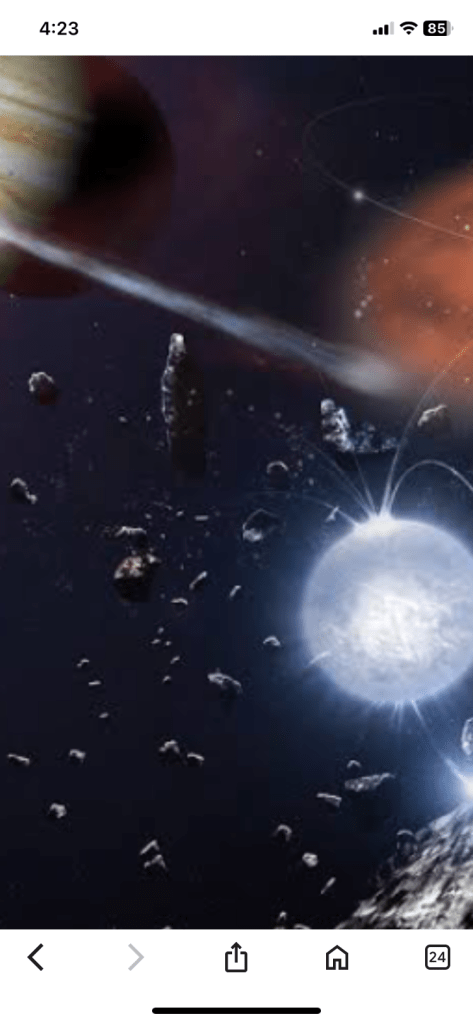
“Steam worlds” have become clearer in recent years thanks to advances in technology, particularly with the James Webb Space Telescope (JWST). 🔭 These exoplanets, which are between the size of Earth and Neptune, are defined by their atmospheres, which are almost entirely made of hot water vapor.
Key Discoveries and Characteristics
- First Confirmed Steam World: The first “steam world” was confirmed in late 2024. The exoplanet, designated GJ 9827 d, is about twice the size of Earth and located approximately 100 light-years away. Observations by the JWST revealed that its atmosphere is rich in water vapor and contains heavy molecules, unlike the hydrogen-dominated atmospheres of most other exoplanets.
- A New Class of Planet: Before this discovery, the existence of such planets was only theoretical. The confirmation of GJ 9827 d provides concrete evidence that steam worlds are a real and distinct class of exoplanet.
- Beyond the Atmosphere: Scientists have developed new models to understand the interiors of these planets, which are thought to contain exotic phases of water, such as supercritical water and superionic ice, due to extreme temperatures and pressures. These states of water behave in ways that are neither liquid nor gas.
Relevance to the Search for Life 🔬
Although steam worlds are too hot to be habitable themselves, their study is a critical step in the search for life. By analyzing their atmospheres, scientists can better understand how planets form and evolve. This information helps them to refine models for detecting and characterizing other types of exoplanets, including the elusive “ocean planets” that are a prime target in the search for extraterrestrial life.
First Ever Steam World Found by JWST
This video features an interview with one of the astronomers involved in the discovery of GJ 9827 d, providing insights into how the steam world was found and what it means for exoplanet research.
Please like subscribe comment your precious comment on universe discoveries
Full article source google
https://www.amazon.in/b?_encoding=UTF8&tag=555101-21&link
https://www.buymeacoffee.com/Satyam55
https://youtube.com/shorts/vPlEehYJ0i8?si=FT1Bb6pIZ958Lo1V
Please click on the above link to watch steam engulfed planets
 Universe discoveries
🙏🌹
Aum Shanti
LikeLiked by 2 people