
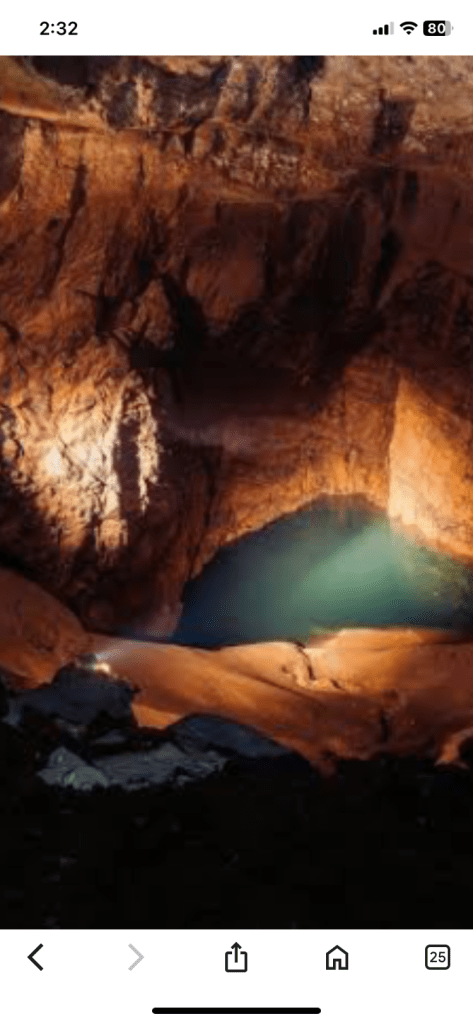
Yes, scientists have discovered a vast, “deep biosphere” of life beneath the Earth’s surface that is larger than the world’s oceans. This discovery was a key finding of the Deep Carbon Observatory (DCO), a global research collaboration that concluded in 2018.
The Deep Biosphere 🌍🔬
The deep biosphere is a subterranean ecosystem that extends for miles below the continents and seafloor. It is primarily composed of single-celled organisms, including bacteria and archaea, that have adapted to extreme conditions of high pressure, intense heat, and a scarcity of nutrients.
Here are some of the key findings about this immense world:
- Size and Volume: The deep biosphere is estimated to occupy a volume of about 2 to 2.3 billion cubic kilometers, which is nearly twice the volume of the Earth’s oceans. This makes it one of the planet’s largest ecosystems.
- Biomass: The total carbon mass of this deep life is estimated to be between 15 and 23 billion tonnes. This is hundreds of times greater than the total carbon mass of all humans on the surface. While the individual organisms are tiny, their sheer numbers make up a significant portion of the Earth’s total biomass. 🤯
- Survival: Life in the deep biosphere survives in ways different from surface life. Instead of relying on energy from the sun, these organisms use chemosynthesis, deriving energy from chemical reactions with rocks and minerals. They are often referred to as “zombie” bacteria because they live incredibly slowly, with some potentially going for thousands of years without dividing.
Significance of the Discovery
The discovery of the deep biosphere has transformed our understanding of the distribution of life on Earth. It has revealed that a significant portion of our planet’s living organisms exist in a realm previously considered sterile and lifeless.
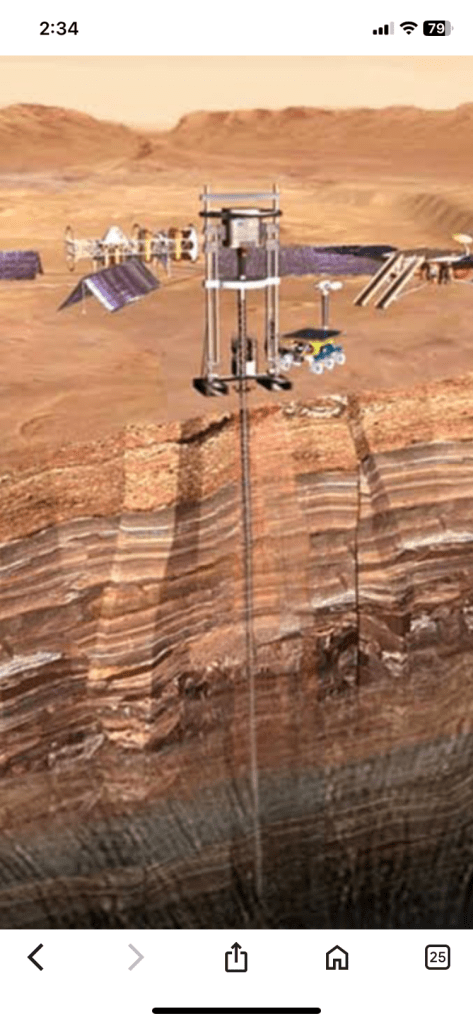
The findings also have implications for astrobiology. The extreme conditions of the deep biosphere—high pressure and temperatures—are similar to what might be found on other planets or moons, like Mars or Europa. Studying these organisms provides a plausible model for what extraterrestrial life might look like and where to search for it.
Beneath the earth 🌍 life is thriving
Beneath the Earth’s surface lies a vast and mysterious ecosystem, home to a staggering number of microorganisms, many of which are newly discovered. A recent study, published by the Marine Biological Laboratory (MBL), revealed that nearly 70% of all life on Earth exists underground, challenging our understanding of where life can thrive. This hidden world, as uncovered by researchers, opens up new possibilities for understanding life’s survival and evolution, both on Earth and potentially on other planets.
The Scale of the Deep Biosphere
In recent years, scientists have made groundbreaking discoveries about the microbial life that exists deep within the Earth. Studies have revealed that the biosphere beneath the surface may be far larger and more complex than anyone previously imagined. According to research presented at the American Geophysical Union’s annual meeting, approximately 70% of Earth’s total microbial population resides miles beneath our feet, out of sight from the surface world. This discovery has led scientists to reconsider the limits of life on Earth and question whether the deep biosphere could harbor even more unknown organisms than we have yet to uncover.
The scale of this subterranean world is immense. Drilling samples taken from between 2.5 and 5 kilometers below the Earth’s surface show that the deep biosphere might actually contain as much as 15 to 23 billion tonnes of carbon—hundreds of times greater than the carbon massof all human life on the surface. This unprecedented amount of carbon, stored in microorganisms and other forms of deep life, suggests that the Earth’s deep ecosystem might rival or even surpass the biological richness of life above ground.
Despite these astonishing findings, scientists admit that we have only begun to scratch the surface of what lies beneath. As Karen Lloyd, a microbiologist from the University of Tennessee, states: “Thanks to ultra-deep sampling, we know we can find them pretty much everywhere, albeit the sampling has obviously reached only an infinitesimally tiny part of the deep biosphere.”This highlights the vast untapped potential for discovery as researchers continue to explore deeper and more remote areas of the planet’s crust.
Life Survives Under Extreme Conditions
One of the most remarkable aspects of the deep biosphere is that life in these environments not only survives but flourishes under extreme conditions. The organisms found in these subterranean ecosystems are exposed to high pressures, intense heat, and a near-total lack of light. What’s even more fascinating is that these microbes, often referred to as extremophiles, manage to extract the limited nutrients available in such inhospitable environments
Implications for Astrobiology and Life Beyond Earth
The implications of discovering such complex ecosystems beneath the Earth’s surface go beyond our understanding of terrestrial life. The study of deep biosphere microbes can provide crucial insights into the potential for life on other planets, such as Mars or Europa, where conditions are similarly extreme. Scientists are now looking at how life in the deep Earth might resemble the kinds of life forms that could exist in harsh, alien environments.
What is the implications of this finding on the other planets of solar system that earth 🌍 has biosphere beneath the surface

The discovery of Earth’s deep biosphere, a massive ecosystem of life thriving miles beneath the surface without sunlight, has profound implications for the search for life on other planets. This finding fundamentally changes our understanding of where to look for extraterrestrial life, shifting the focus from only surface-level habitable zones to potentially viable subsurface environments on other planetary bodies.
Implications for Extraterrestrial Life 👽
The deep biosphere demonstrates that life can exist in extreme conditions, isolated from the energy of the sun. This model of life is particularly relevant for several bodies in our solar system:
- Mars: The surface of Mars is cold, dry, and bathed in lethal radiation. However, evidence suggests that liquid water may have existed in the past, and it could still exist in isolated pockets deep underground. The deep biosphere provides a plausible mechanism for how life could survive in these Martian subsurface environments, using chemosynthesis—deriving energy from chemical reactions with rocks and minerals—rather than photosynthesis.
- Icy Moons (e.g., Europa and Enceladus): Jupiter’s moon Europa and Saturn’s moon Enceladus are covered in thick shells of ice, but both are believed to have vast, liquid oceans beneath their surfaces. These oceans are kept warm by tidal heating from their parent planets. The deep biosphere on Earth shows that life could thrive in these dark, high-pressure environments, likely clustered around hydrothermal vents at the seafloor, similar to deep-sea ecosystems on Earth.
This discovery expands the “habitable zone” not just to a specific distance from a star, but also to the geological interior of a planet or moon. It suggests that life could be more common in the universe than previously thought, as many planetary bodies with frozen or barren surfaces might harbor thriving ecosystems just beneath them.
Please like subscribe comment your precious comments on universe discoveries
Full article source google
https://www.amazon.in/b?_encoding=UTF8&tag=555101-21&link
https://www.buymeacoffee.com/Satyam55
https://youtu.be/QYwmOeDHx1s?si=BlNU_B8uX6UzoAum
Click on the above link to watch life beneath earth
 Universe discoveries
🙏🌹
Aum Shanti
LikeLiked by 2 people