
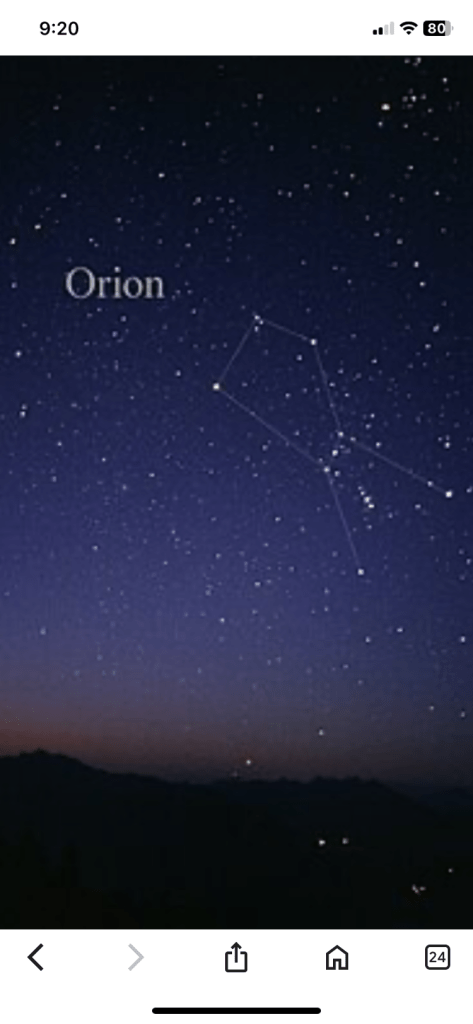
Instead of a single constellation, astronomers focus on specific types of stars and star systems that offer the most promising conditions for life. These stars and their potentially habitable planets can be found scattered across many different constellations, rather than concentrated in one specific region.
The main factors for stellar habitability are the star’s longevity and stability.
Why different star types are more or less suitable for life
The “Goldilocks” stars: K-type orange dwarfs
K-type stars, or orange dwarfs, are often considered ideal candidates for hosting life.
- Long lifespan: They burn their fuel more slowly than our sun, allowing them to shine steadily for tens of billions of years. This offers a longer period for complex life to evolve compared to the shorter 10-billion-year lifespan of a G-type star like our sun.
- Stable radiation: They have less extreme UV and X-ray radiation than hotter stars, but enough warmth to create a temperate zone for planets.
- Less stellar activity: K-type stars are generally less prone to the violent, life-threatening flares that are common among smaller, dimmer red dwarfs.
Sun-like stars: G-type yellow dwarfs
Our own sun is a G-type star, and its system is a proven model for life.
- The right temperature: Our sun sits in the right spectral range to provide sufficient heat for a planet in its habitable zone.
- Adequate longevity: The sun has lived long enough for complex life to evolve on Earth, though it is not as long-lived as K-type stars.
- Less common: G-type stars are rarer than K and M-type stars, which statistically reduces the chance of finding habitable planets around them.
Less ideal candidates: M-type red dwarfs
Red dwarfs are the most common type of star in the Milky Way, but present significant challenges for life.
- Prevalence: They make up over 70% of the stars in our galaxy, meaning most planets with a habitable zone orbit a red dwarf.
- Tidal locking: Planets in their habitable zones are typically tidally locked, with one side always facing the star and experiencing extreme temperatures.
- Stellar flares: Red dwarfs are prone to intense flares, which can be damaging to planetary atmospheres, though some may become calmer with age.
The most suitable constellations for finding life
Several constellations are home to nearby systems with potentially habitable planets, making them targets for future observation.
- Aquarius: This constellation contains the TRAPPIST-1 system, which features seven Earth-sized rocky planets orbiting an ultracool dwarf star. Several of these planets are in the habitable zone.
- Centaurus: The nearest star system to our own, Alpha Centauri, is located here and may contain planets in its habitable zone.
- Cygnus: The Kepler-186 system is found here, and Kepler-186f was the first Earth-sized exoplanet discovered in another star’s habitable zone.
- Indus: This is the location of the GJ 1061 system, with two super-Earth planets in the habitable zone of their red dwarf star.
From which constellation ancient aliens come is believed
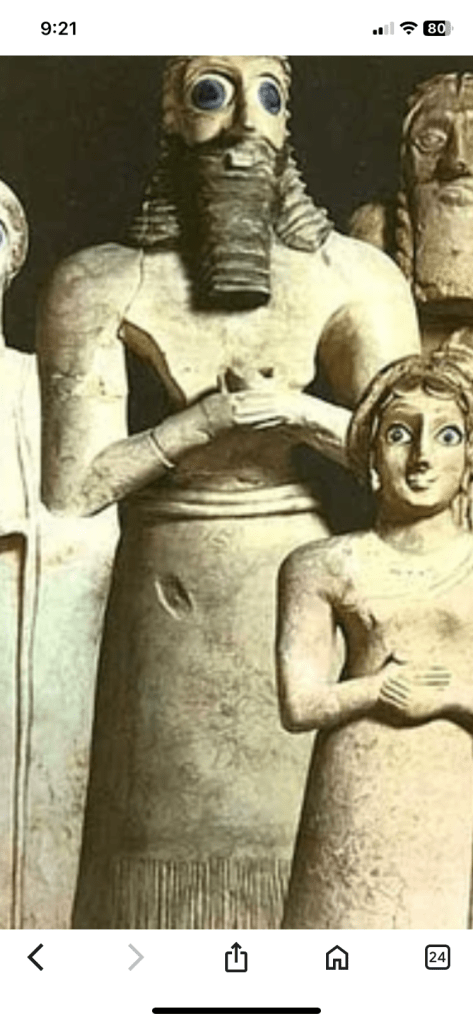
No credible evidence supports the belief that ancient aliens came to Earth from any specific constellation. The idea is a work of pseudoscience rooted in speculation and unsupported theories, rather than scientific, historical, or archaeological fact. However, specific constellations like Orion, Sirius, and the Pleiades are frequently named in these popular, though unsubstantiated, theories.
Constellations commonly cited in ancient alien theories
Orion
- Theories: Some ancient alien theorists claim that the pyramids of Giza were built to correlate with the stars in Orion’s Belt, suggesting it was a potential “stargate” or entry point for extraterrestrials.
- Refutation: Egyptologists dismiss this idea, citing numerous historical and archaeological records explaining how the Egyptians built the pyramids using terrestrial resources and labor.
Sirius
- Theories: A 1976 book, The Sirius Mystery, claimed that the Dogon people of Mali possessed advanced astronomical knowledge of the Sirius star system that they could only have obtained from extraterrestrials. Some theories also link the rulers of ancient Egypt to visitors from Sirius.
- Refutation: Academic research has since shown that any accurate information the Dogon had about Sirius was likely acquired through cultural contact with European astronomers in the 19th and 20th centuries, not from extraterrestrials.
The Pleiades
- Theories: The Pleiades star cluster, also known as the “Seven Sisters,” is mentioned in the myths and folklore of many cultures around the world. Some ancient alien theorists interpret these tales as evidence that humans’ ancestors came to Earth from the Pleiades.
- Refutation: While the myths are ancient, scientists have found plausible explanations for their similarities without resorting to extraterrestrial contact. For example, similar myths among far-flung indigenous peoples may have a common origin dating back 100,000 years or more.
Please like subscribe comment your precious comment on universe discoveries
Full article source google
https://www.amazon.in/b?_encoding=UTF8&tag=555101-21&link
https://www.buymeacoffee.com/Satyam55
https://youtube.com/shorts/bn-MLMexZSQ?si=d5O0X10p6LdrPdBl
Please click on the above link to watch ancient aliens video
 Universe discoveries
This is a fascinating and wonderfully detailed write-up 🌌✨.
I really appreciate the way you’ve broken down complex astronomy into clear sections—explaining why certain star types like K-type orange dwarfs are “Goldilocks” candidates, while also contrasting them with G-type yellow dwarfs and M-type red dwarfs. Your balance of scientific accuracy with easy-to-follow explanations makes the topic engaging not only for space enthusiasts but also for general readers.
Highlighting constellations such as Aquarius, Centaurus, Cygnus, and Indus adds an exciting layer, bridging science with the curiosity around where life beyond Earth might be found. The closing question about where ancient aliens may have come from adds a thought-provoking and imaginative twist, keeping the reader hooked between science and wonder. 🌍👽🌠
LikeLiked by 1 person
Thanks a lot for your magical words sir you are very great person and I am really fond of your articles🎸so heart touching they are🎸and i have immense interest in life in universe so I research a lot and try to ✍️ write a article which every one can read and understand 🎸
LikeLiked by 1 person
🙏🌹
Aum Shanti
LikeLiked by 2 people