

CV Raman’s Nobel Prize-winning discovery, the Raman Effect, is a fundamental principle behind the instruments on NASA’s Mars rovers, which are used to hunt for signs of life. The rovers use a technique called Raman spectroscopy to analyze Martian rocks and soil.
What is the Raman Effect?
In 1928, C.V. Raman discovered that when light passes through a transparent material, a tiny fraction of the scattered light changes its wavelength. This phenomenon, known as the Raman Effect, occurs because the photons of light interact with the molecules in the material, causing them to vibrate and shift the energy of the scattered photons. The specific change in wavelength acts like a unique “fingerprint” for the molecules present in the material.
How Raman Spectroscopy is Used on Mars
NASA’s Perseverance rover, which is currently exploring Mars, is equipped with a sophisticated instrument called SHERLOC (Scanning Habitable Environments with Raman & Luminescence for Organics and Chemicals). SHERLOC uses Raman spectroscopy to:
• Identify Chemical Compounds: By shining a laser on a rock or soil sample, SHERLOC’s detectors analyze the scattered light. The unique wavelengths of the scattered light reveal the chemical composition and molecular structure of the sample.
• Search for Biosignatures: Scientists use this technique to specifically look for biosignatures, which are chemical traces of past or present life. These can include organic molecules and minerals that form in the presence of water, both of which are key indicators of a habitable environment.
• Non-invasive Analysis: Raman spectroscopy is ideal for this kind of exploration because it can identify compounds without needing to prepare the sample, making it perfect for the harsh, remote Martian environment.
In this way, C.V. Raman’s groundbreaking work in the 1920s laid the foundation for a technology that is now helping humanity answer one of its most profound questions: Are we alone in the universe?
Life on mars and cv Raman contribution
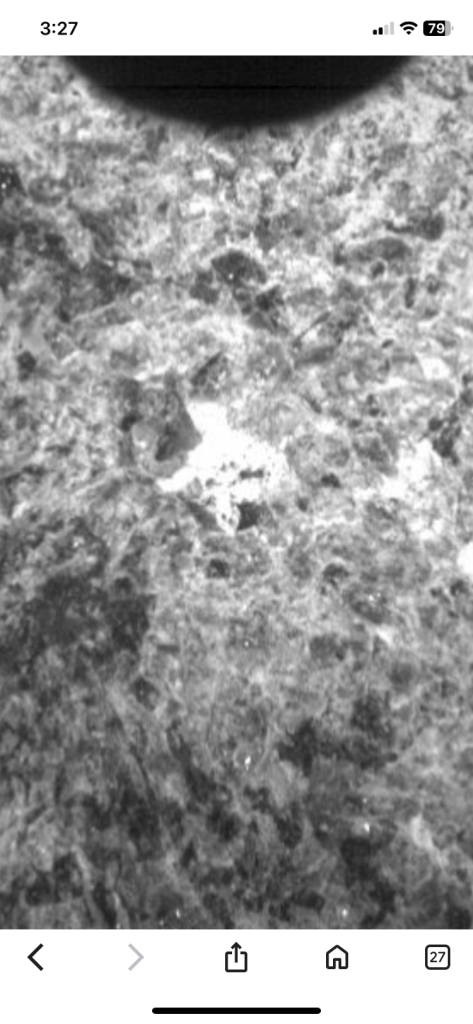
To confirm that the rock picked up by the rover from Mars had potential signs of life, planetary scientists and geologists relied on Indian physicist C V Raman.
After trundling on the surface of Mars for over 1500 days, the Perseverance rover has hit upon a rock that is confirmed to have potential signs of life.
The latest discovery, announced by Nasa, further solidifies the belief that Mars once had active microbial life before it became a deserted wasteland.
Raman spectroscopy, a revolutionary analytical technique, was crucial in confirming the presence of potential biosignatures in samples collected by the rover. It remains a cornerstone of modern science, enabling researchers to identify chemical compounds, molecular structures, and biological markers, even on distant planets.
WHAT IS RAMAN SPECTROSCOPY?
Raman spectroscopy operates by shining a laser light onto a sample and analysing how the light is scattered. Most scattered light maintains its original wavelength, but a small fraction shifts in wavelength due to interactions with molecular vibrations, which is the Raman Effect.
The resulting pattern, known as a Raman spectrum, acts as a molecular “fingerprint,” revealing the sample’s detailed chemical composition, phases, and structural characteristics.
This non-destructive technique provides high specificity and sensitivity, making it ideal for detecting and quantifying biomolecules and minerals. Unlike infrared spectroscopy, Raman works effectively with aqueous substances and biological samples, allowing for precise, in situ diagnoses without the need for intrusive sample preparation.
CV RAMAN’S DISCOVERY
Professor CV Raman discovered the Raman Effect while investigating why the sea appears blue. In 1928, he observed that when coloured light passed through a liquid, some scattered light emerged with shifted wavelengths, revealing otherwise hidden molecular structures.
This landmark discovery earned him the Nobel Prize in Physics in 1930 and fundamentally altered scientific understanding of molecular behaviour and light-matter interactions.
Raman’s work was so impactful that February 28 is now celebrated as National Science Day in India, commemorating his contribution to global science.
RAMAN SPECTROSCOPY AND PERSEVERANCE ROVER
Perseverance’s SHERLOC instrument uses Raman spectroscopy in its search for Martian life.
By directing a deep ultraviolet laser onto rock and soil samples, SHERLOC reads the returning spectra for chemical clues, identifying organic compounds, minerals, and crucially, biosignatures (chemical traces of past or present life).
The detailed chemical “fingerprint” allows scientists to interpret whether Martian conditions ever supported microbial life.
A sample collected by the rover in 2024 confirmed the presence of aromatic organic molecules and minerals associated with aqueous processes, key indicators for potential biosignatures. Such findings, enabled by Raman analysis, strengthen hope for discovering ancient life beyond Earth.
Please like subscribe comment your precious thoughts on universe discoveries
Full article source google
 Universe discoveries
🙏🌹
Aum Shanti
LikeLike
Nice information.
LikeLiked by 1 person
Excelente post 💯
LikeLiked by 1 person