

The nostalgia for the 1980s in India for people around 50 years of age often revolves around a shared memory of a “simpler time” defined by limited but high-quality entertainment, community spirit, and the early excitement of a consumer-driven middle class.
📺 The Doordarshan Era and Shared Viewing
The biggest source of collective nostalgia is the rise of Doordarshan (DD), India’s only national television channel, which became a cultural centerpiece:
• Iconic Serials: Families would gather around the television set to watch national blockbusters and meaningful, high-quality content. Key shows that evoke instant nostalgia include:
• Ramayan and Mahabharat: These mythological epics essentially shut down the country during their Sunday morning telecasts, with people viewing the characters with immense reverence.
• Hum Log: India’s first soap opera, which focused on the struggles of a lower-middle-class family.
• Buniyaad: A saga chronicling the lives of a family post-Partition.
• Comedy and Drama: Serials like Yeh Jo Hai Zindagi, Nukkad, and the detective show Karamchand (with his sidekick Miss Kitty) are fondly remembered.
• The TV Setup: The memory of a single television set, often with an external antenna that needed manual adjustment (often by Dad climbing onto the roof), is a common, humorous memory.
🚗 The Dawn of the Consumer Age
The 80s were the prelude to economic liberalization, and the gradual arrival of new products sparked excitement:
• The Maruti Revolution: The launch of the Maruti 800 in 1983 symbolized the arrival of the modern, affordable Indian family car, a huge shift from the venerable Ambassador and Premier Padmini.
• Two-Wheelers: Scooters like the Bajaj Chetak were major status symbols, and the Yamaha RX100 was the ultimate “cool” bike.
• Iconic Brands: Because of import restrictions, local Indian soft drink brands dominated the market, with Campa Cola and Gold Spot being the definitive colas of the era.
• Electronics: Owning a VCR (Video Cassette Recorder), a two-in-one (radio-cassette player), or a HMT watch represented middle-class aspiration.
🏏 Pop Culture and Simpler Pleasures
• Cricket Triumph: The 1983 Cricket World Cup victory under Kapil Dev is an indelible memory for this generation, a moment of national pride.
• Food and Treats: Simple treats had high value:
• Eating Maggi noodles for the first time.
• The taste of Kissan Jam and Amul Butter.
• The thrill of collecting cricketer cards from Big Fun Bubblegum.
• Buying cheap candies like imli ki goli (tamarind balls) or ajwain (carom seed) candy with the 5 or 25 paise coins, which were still in circulation.
• Community and Childhood: Nostalgia also touches upon social life:
• Playing traditional street games like Gully Cricket, Gilli Danda, or Kho-Kho on less congested streets.
• A stronger sense of community, where neighbors knew each other, and children could roam freely without the worries of modern-day safety concerns.
The 1980s represent a time where a rapidly modernizing India still retained a deep sense of community and scarcity, making the few available entertainment and consumer goods feel incredibly special and universally shared.
For a glimpse into how people talk about the old days, you might enjoy this video: 50 वर्ष पहले भारत कैसा था ? 1980 के दशक की कहानी | यादें बीते ज़माने की.
The memories of Sharemarket in 1980 in India
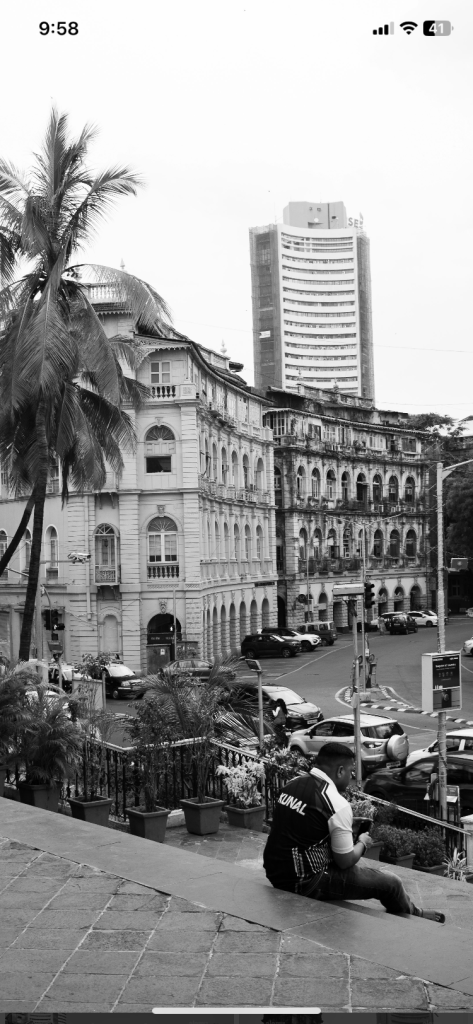
The memories of the Indian share market in the 1980s for someone who lived through that era are often a colorful mix of chaos, high risk, phenomenal returns, and the feeling of witnessing history on Dalal Street.
It was a time when the market was less an institution and more a vibrant, open-air club.
🏛️ The Open Outcry and Paper Trail Era
The most defining memory is the manual, chaotic nature of the trading floor:
• The BSE Trading Floor: Trading was not electronic; it was done through the Open Outcry system. Brokers and jobbers would physically gather on the floor of the Bombay Stock Exchange (BSE) at Dalal Street, shouting out buy and sell orders and using complex hand signals.
• The Power of the Broker: Investors relied completely on their stockbrokers, who were the only gateway to the market. The broker-client relationship was intensely personal and based on trust.
• Physical Shares and Badla: Shares were held as physical paper certificates. Settlements were slow, taking a week or two, and often led to delivery issues or fraud. The market used the informal ‘Badla’ system (a form of carry-forward/financing) to postpone settlements, which created massive speculation and risk.
• Market Information: There was no instant news. Price changes were updated manually on large blackboards or bulletin boards at the exchanges. Investors relied on newspaper reports, word-of-mouth (rumours), and the daily “pulse” of the market as felt on the floor.
✨ The FERA Effect: The First Big Boom
The spark that truly ignited the memory of the 80s market was the legacy of the 1970s Foreign Exchange Regulation Act (FERA).
• The People’s IPO: FERA forced large multinational companies like Colgate, Hindustan Lever (HUL), and Nestlé to dilute their foreign shareholding by issuing shares to the Indian public at a price dictated by the Controller of Capital Issues (CCI).
• The “Lottery” Valuation: These official valuations were ridiculously cheap for such profitable companies. Getting an allotment in these FERA issues was like winning a lottery, often leading to multi-fold returns immediately upon listing. This experience introduced a large number of middle-class Indians to the share market and gave them their first taste of wealth creation.
👑 The Rise of Reliance and Corporate Battles
The 1980s is inseparable from the name Dhirubhai Ambani and the dramatic corporate battles he pioneered:
• The Cult of Equity: Dhirubhai Ambani’s Reliance Industries (RIL), which listed in 1977, became the people’s stock. He successfully convinced small investors that the market was for them, making them feel like partners in his company.
• The Bear Cartel War (1982): A legendary event was the famous battle between the “Friends of Reliance” and the “Bear Cartel” (a group of Calcutta-based brokers who were short-selling RIL). The ensuing chaos on the settlement day, where the bears were cornered and forced to pay a massive penalty (‘Badla’ charge), is a story often told to illustrate the sheer drama and high-stakes games played in the unregulated market. This event cemented RIL’s reputation and Dhirubhai’s legendary status.
📉 The Foundation of Modernization
While remembered for its manual, high-risk nature, the decade also laid the groundwork for the future:
• The Birth of the Sensex (1986): The launch of the BSE SENSEX with a base value of 100 gave the market a formal benchmark for the first time, providing a tangible way to measure overall market sentiment.
• The Inevitable Scams: The lack of regulation and the manual systems allowed significant malpractices. This environment eventually paved the way for the larger scandals of the early 1990s (like the Harshad Mehta Scam) which finally forced the government to act decisively, leading to the formation of SEBI in 1988 and the subsequent full liberalization.
The 1980s share market is remembered as a time of raw, untamed capitalism where fortunes were made and lost on the word of a few powerful brokers, and where the common person first glimpsed the power of stock market investing.
https://youtube.com/shorts/20ykydT8Wv4?si=hlSOxTotHKZNrr3w
The 1980 era Bombay click above to watch video
https://youtube.com/shorts/0ERMx4vu9sM?si=-Q310mFRy4BrKn_v
Bombay stock exchange in India 🇮🇳 in 1980 click above to watch video
Please like subscribe comment your precious comment on universe discoveries
Full article source google
 Universe discoveries
Interesting read.
LikeLiked by 2 people
Yes 👍 sir that era has a great 😊 nostalgia to me I was in my teens with my father and mother in Bombay great 😊 beautiful era
LikeLiked by 2 people
That sounds truly wonderful. The 1980s in Bombay must have been a magical time, especially with your parents by your side. Those memories from our youth stay warm in the heart forever. Such a beautiful era to look back on with gratitude and nostalgia. 😊✨
LikeLiked by 1 person
Yes sir my father was in a big company there we were obliged by various filmstars shows and seen pankaj udas live and I have seen one time amitab ji also my favourite hero till now ( dekha ek khwab to yeah silsile hue🎸🎸)
LikeLiked by 2 people
That’s truly wonderful! What a special experience to grow up around such memorable moments. Seeing legends like Pankaj Udhas live and catching a glimpse of Amitabh ji—your all-time favourite—must have felt magical. And “Dekha Ek Khwab” is such a timeless melody… just hearing the title brings back the golden charm of those days. 🎸✨
Thank you for sharing such a warm and nostalgic memory!
LikeLiked by 1 person
Thanks to you sir you are really wonderful and you have also sweet memories of that wonderful era🎸
LikeLiked by 1 person
🙏🌹
Aum Shanti
LikeLiked by 3 people