
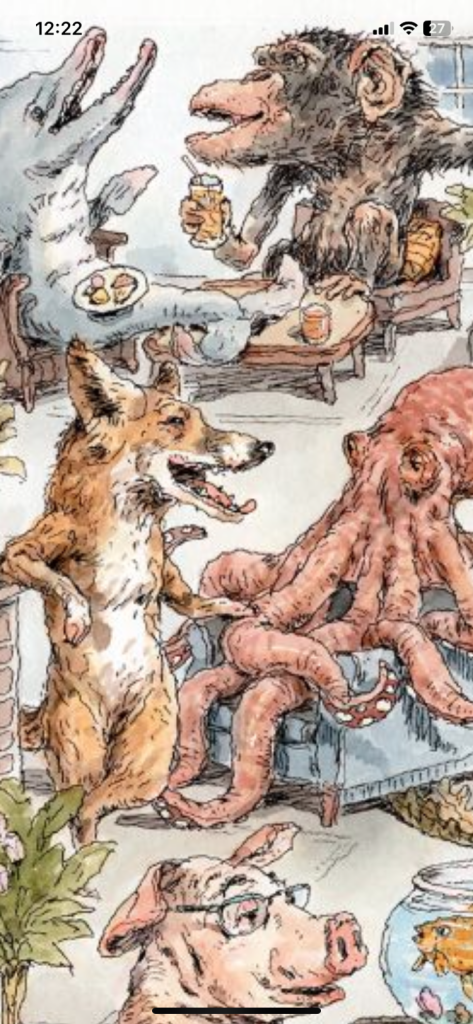
Yes, animals do communicate with each other and with humans, but not in the same way or with the same linguistic complexity as human spoken language. Animal communication is highly effective for their survival and social needs, utilizing a wide range of signals beyond just sound.
How Animals Communicate
Animals use diverse methods to send and receive messages, which can be deliberate or unintentional:
- Auditory Cues (Sound): Many species use sounds for warnings, attracting mates, defending territory, and coordinating group behavior.
- Examples: Whale songs, wolf howls, bird alarms that distinguish between different predators (like vervet monkeys), and the clicks and whistles of dolphins.
- Chemical Signals (Pheromones): Scent marking is common for identifying individuals, marking territory, signaling reproductive readiness, and laying food trails.
- Examples: Ants follow pheromone trails to food sources, and dogs use urine to mark territory.
- Visual Signals: These include body language, facial expressions, gestures, and changes in coloration.
- Examples: A dog’s tail wagging (which can have different meanings depending on context), a chimpanzee’s “fear grin” to signal submission, and the bright colors of a poison dart frog acting as a “do not eat” warning to predators.
- Tactile Signals (Touch): Physical contact is important for social bonding, care for young, and coordinating behavior.
- Examples: Primates grooming each other, and honeybees using intricate “waggle dances” inside the dark hive, interpreted by touch, to communicate the distance and direction of food sources.
Key Differences from Human Language
While animals communicate complex information, their systems generally differ from human language in several key ways:
- Syntax and Grammar: Human language has a complex structure and rules for combining words to create a virtually infinite number of new, abstract meanings and sentences. Animal communication systems typically lack this complex grammar and are often a fixed number of signals.
- Displacement: Humans can discuss things removed in time and space (past and future events, hypothetical situations). Animal communication primarily focuses on the immediate environment and present needs (food, danger, mating). (The honeybee dance is a limited exception, communicating the location of a recent food source).
- Learning and Intent: Human language is largely learned, whereas many animal communication methods are primarily innate or instinctual behaviors, though some species exhibit social learning.
- Physical Anatomy: Humans possess a unique vocal tract, including the specific structure and position of the larynx, tongue, and lips, that allows for the production of the wide range of sounds required for complex speech.
In essence, animals have evolved highly effective communication systems tailored to their specific ecological niches, but humans are unique in their capacity for an open-ended, creative language system.
Has anybody researched on animal language and what they found
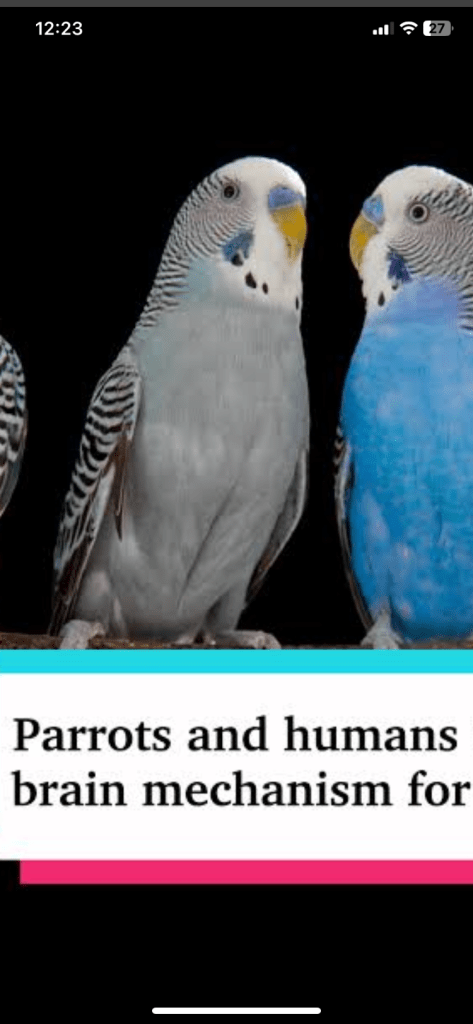
Yes,
numerous scientists have researched animal communication to determine if it can be considered a form of “language,” focusing on elements like vocabulary, grammar, and intentionality. The consensus is that while many animals have sophisticated communication systems, they generally lack the complex, generative syntax and abstract displacement found in human language.
Key researchers and their significant findings include:
Pioneering Ethologists
- Karl von Frisch (Nobel Prize 1973): Decoded the “waggle dance” of honeybees, demonstrating they use a complex system of movements to communicate the precise distance and direction of food sources to their hive mates. This is one of the few examples of an animal communication system that refers to something not immediately present (displacement).
- Konrad Lorenz and Niko Tinbergen(Nobel Prize 1973): Were pioneers of modern ethology (the study of animal behavior in natural conditions). Their work focused on identifying the innate and learned components of animal signals, from goose imprinting to gull territorial displays.
Primate Language Studies
Researchers have famously tried to teach human language systems (sign language or symbol boards) to great apes:
- Allen and Beatrix Gardner and Washoe(chimpanzee): Taught Washoe American Sign Language (ASL) in the late 1960s. Washoe learned hundreds of signs and could combine them into short sequences, suggesting some capacity for symbolic reference.
- Francine “Penny” Patterson and Koko(gorilla): Koko learned over 1,000 signs and reportedly understood even more spoken English words, using signs to express emotions and describe objects and events.
- Sue Savage-Rumbaugh and Kanzi(bonobo): Kanzi learned to use a lexigram board (symbols that represent words) by observation, without formal training, and demonstrated an ability to understand complex human spoken sentences and basic syntactic rules.
- Herbert Terrace and Nim Chimpsky(chimpanzee): This project was more critical, with Terrace concluding that Nim’s use of signs was primarily imitative and manipulative (used to get rewards), rather than a genuine application of grammar or spontaneous language production.
Other Notable Animal Communication Discoveries
- Robert Seyfarth and Dorothy Cheney:Studied vervet monkeys in the wild and found they produce acoustically distinct alarm calls for different predators (e.g., leopards, eagles, snakes). Playbacks of these calls in the absence of a predator caused the monkeys to adopt the appropriate escape behavior, suggesting the calls carry specific “word-like” information.
- Con Slobodchikoff: Researched prairie dogs and found their alarm calls contain detailed descriptive information about predators, including species, size, and speed.
- Katy Payne, Andrea Turkalo, and Project CETI researchers: Have studied elephants and whales, finding that these animals use complex, low-frequency calls (infrasound for elephants, songs for whales) that travel long distances. Recent research suggests elephants may use individual-specific calls, akin to names. Project CETI is using AI to help decode sperm whale communication patterns.
Overall, research shows that animals are highly intelligent and can communicate complex ideas, but they typically lack the open-ended, compositional grammar that defines human language.
Please like subscribe comment your precious comment on universe discoveries
Full article source google
 Universe discoveries
🙏🌹
Aum Shanti
LikeLiked by 2 people