
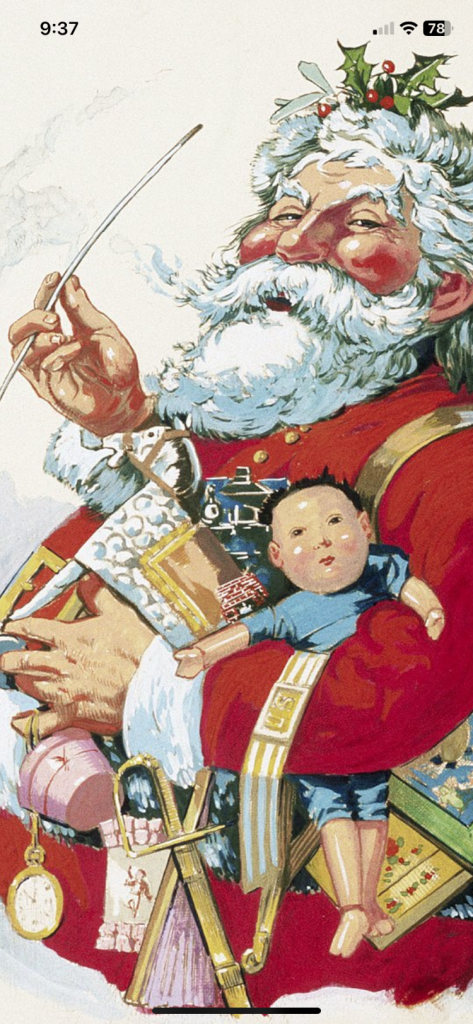
The legend of Santa Claus is not just a fairy tale; it is a blend of a real historical figure, centuries of European folklore, and 19th-century American poetry.
1. The Real Man: Saint Nicholas of Myra
The “real” Santa was a Greek bishop named Nicholas, born around 280 AD in Patara, a village in what is now modern-day Turkey.
• Generosity: Born to wealthy parents who died while he was young, Nicholas used his entire inheritance to help the sick and the poor.
• The “Secret Giver”: His most famous legend involves a poor father who couldn’t afford dowries for his three daughters. To save them from a life of destitution, Nicholas secretly dropped bags of gold through their window (or down the chimney) on three separate nights.
• Patron Saint: Because of his deeds, he became the patron saint of children, sailors, and travelers. His feast day, December 6, was the original day for gift-giving in Europe.
2. From Bishop to “Sinterklaas”
After the Protestant Reformation in the 1500s, many saints fell out of favor, but Nicholas remained popular in Holland. The Dutch called him Sinterklaas (a shortened version of Sint Nikolaas).
He was depicted as a tall, thin, stately bishop who rode a white horse over rooftops. When Dutch settlers arrived in New York (then New Amsterdam) in the 17th century, they brought the tradition of Sinterklaas with them.
Modern Myths vs. Reality
• The Red Suit: Many people believe Coca-Cola invented the red suit in the 1930s. While their ads popularized a specific “jolly” look, Santa was already appearing in red suits in illustrations as early as the 1870s.
• The Chimney: The tradition likely stems from the old European legend of Saint Nicholas dropping gold down a chimney to land in stockings drying by the fire
Fun Fact: The name “Santa Claus” is simply a phonetic mispronunciation of the Dutch “Sinterklaas” by English-speaking Americans
American Santa Claus
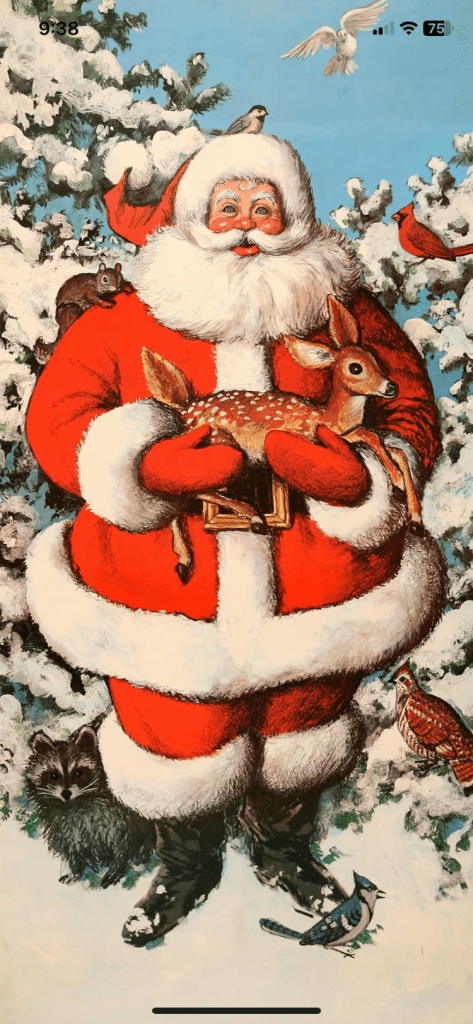
The modern American Santa Claus is
a secular legendary figure who delivers gifts to children on Christmas Eve. While his origins lie in the 4th-century Christian bishop Saint Nicholas, his contemporary image was primarily shaped by 19th-century American writers and illustrators.
Origins and Evolution
- Saint Nicholas (Sinterklaas): The legend began with a Greek bishop in Myra (modern-day Turkey) known for his generosity. Dutch settlers brought the tradition of “Sinterklaas” to New Amsterdam (now New York City) in the 17th century.
- Literary Shaping:
- Washington Irving: In his 1809 book A History of New York, he Anglicized the name to “Santa Claus” and described him as a pipe-smoking figure delivering gifts via chimneys.
- Clement Clarke Moore: His 1823 poem, “A Visit from St. Nicholas” (better known as “’Twas the Night Before Christmas”), established the reindeer, the sleigh, and the image of a “right jolly old elf”.
- Visual Definition:
- Thomas Nast: The 19th-century cartoonist is credited with creating the iconic red suit with white fur trim, the North Pole workshop, and Mrs. Claus.
- Haddon Sundblom: Starting in 1931, his illustrations for Coca-Cola advertisements standardized the human-sized, portly, and warmhearted version of Santa used today.
Modern Traditions
- North Pole: Santa is said to live and operate a toy workshop at the North Pole with a team of elves.
- Reindeer: His sleigh is pulled by nine reindeer: Dasher, Dancer, Prancer, Vixen, Comet, Cupid, Donner, Blitzen, and Rudolph, who was added in 1939.
- NORAD Tracks Santa: Every December 24, the NORAD Tracks Santa program provides real-time updates on Santa’s global journey.
- Letters to Santa: Children send wish lists to the North Pole. The USPS runs Operation Santa, a program where individuals can “adopt” and fulfill these letters.
- Santa Hotlines: Children can call dedicated numbers, such as 605-313-4000, to hear a recorded message from Santa.
Please like subscribe comment your precious comment on universe discoveries
Full article source google
 Universe discoveries
Merry Christmas.
LikeLike
LikeLike
🙏🌹
Aum Shanti
LikeLike
Great information I knew you would have something great👌🏾
LikeLike
Greetings!
LikeLiked by 1 person