
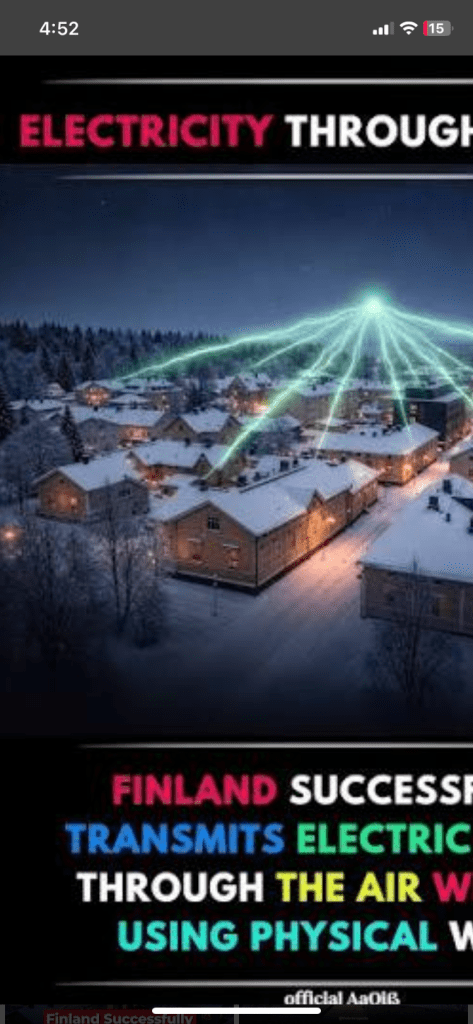
Researchers have shown that electrical energy can be transmitted through open air using a combination of ultrasonic sound waves, laser systems, and radio-frequency technologies.
In Finland, scientists at the University of Helsinki and the University of Oulu are exploring multiple wireless power methods, positioning the country at the forefront of next-generation energy research. One experimental approach uses high-intensity ultrasonic waves to temporarily structure the air, creating a guided pathway for electrical discharges. Often referred to as an “acoustic channel,” this technique relies on sound rather than physical cables to direct electricity.
Although still in the laboratory phase, the technology could eventually enable contact-free electrical connections, allowing devices to operate without plugs, sockets, or conventional wiring.
Finnish innovation also extends beyond sound-based systems. Private-sector companies are developing laser-powered energy transfer, where focused light delivers electricity to remote receivers. This method is especially valuable in environments requiring strong electrical isolation, such as nuclear facilities or high-voltage sites.
Meanwhile, researchers are advancing radio-frequency energy harvesting, capturing ambient electromagnetic signals to power low-energy devices. This approach could significantly reduce dependence on disposable batteries in sensors and Internet-of-Things applications.
Together, these breakthroughs point toward a future where electricity can be delivered more safely, efficiently, and flexibly transforming how energy is distributed across industrial and technological systems.
Wireless electricity can be used in mars and moon man missions
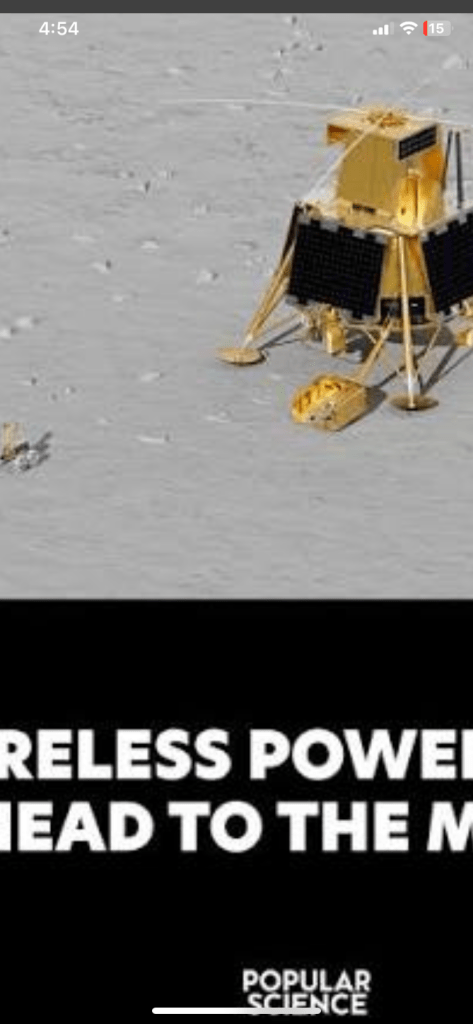
Wireless power transfer (WPT) is a transformative technology for lunar and Martian exploration, offering a way to deliver energy to regions where traditional solar or cable-based systems fail. By eliminating heavy physical connectors and long-range cables, space agencies aim to create flexible, scalable power grids on extraterrestrial surfaces.
Key Applications in Moon and Mars Missions
- Surviving the Lunar Night: A constellation of satellites can collect solar energy in orbit and beam it via lasers or microwaves to surface habitats and rovers, providing a continuous power supply during the 14-day lunar night.
- Powering Shadowed Regions: Wireless beams can reach deep into permanently shadowed craters at the lunar poles to power rovers mining for water ice, where sunlight never reaches.
- Rover Autonomy and Efficiency: Systems like the inductive wireless power transfer (IWPT) being developed by Bumblebee Power remove the need for physical docking, allowing robots to charge while moving or from a distance.
- Dust Mitigation: On Mars and the Moon, abrasive dust can clog mechanical power connectors. WPT provides a contactless solution that remains reliable even in harsh, dusty environments.
- Distributed Sensor Networks: WPT can sustain “zero-energy” devices and distributed sensor networks on Mars, enabling them to harvest energy from a central radio-frequency (RF) source to monitor environmental data for decades.
Recent Developments
- NTT’s Lunar Power Grid: NTT plans to debut an electric field resonance system by 2030 to power unmanned lunar rovers using the moon’s surface as an antenna.
- NASA’s Artemis Support: NASA is funding the development of wireless receiver converters for lunar rovers and inductive connectors to establish long-lasting habitats under the Artemis program.
- Caltech’s Milestone: In 2023, Caltech’s Space Solar Power Demonstratorsuccessfully demonstrated wireless power transmission in space for the first time.
Please like subscribe comment your precious comment on universe discoveries
Full article source google
 Universe discoveries
🙏🌹
Aum Shanti
LikeLike
Very nice.
LikeLiked by 1 person