
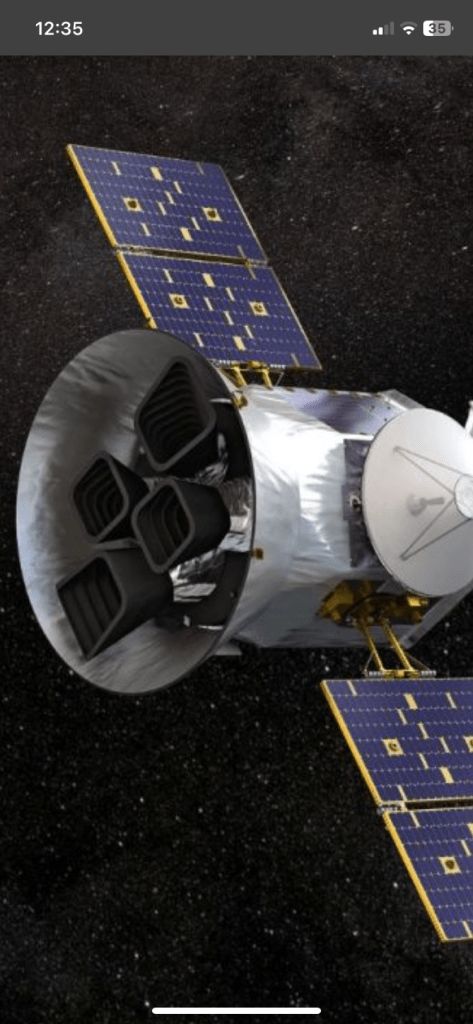
In March 2026, researchers from the University of Warwick announced the discovery of over 100 new exoplanets using a new artificial intelligence system called RAVEN. The AI analyzed data from NASA’s Transiting Exoplanet Survey Satellite (TESS), which searches for planets by detecting tiny dips in starlight as they pass in front of their host stars
Key Highlights of the Discovery
- Validated Planets: The RAVEN pipeline successfully validated 118 new planets.
- Planet Candidates: In addition to the confirmed worlds, the AI identified approximately 2,000 high-quality candidate planets, nearly 1,000 of which were previously unknown.
- Short Orbits: The search focused on planets with orbits of less than 16 days, helping scientists understand how common these close-in worlds are.
- Rare Finds: Among the discoveries were “ultra-short-period” planets (orbiting in under 24 hours) and rare planets in the “Neptunian desert,” a region where Neptune-sized planets are typically scarce.
- Efficiency: RAVEN was trained on hundreds of thousands of simulated planetary transits, allowing it to distinguish real planets from “false positives” like eclipsing binary stars much faster than human researchers
This discovery is a significant boost to NASA’s exoplanet catalog, which currently holds around 6,000 confirmed worlds. By automating the validation process, AI is enabling astronomers to map planetary populations across the galaxy with unprecedented speed and accuracy
What makes this haul so interesting is that it wasn’t just a bunch of random rocks; it filled in some major gaps in our galactic map. Here are the highlights:
- Ultra-Short-Period (USP) Planets: These are the “speed demons” of the universe—planets that orbit their stars in less than 24 hours. They are incredibly close to their suns, making them scorched, molten worlds.
- Neptunian Desert Survivors:Astronomers often find a “desert” where Neptune-sized planets are rare near stars (they usually get stripped down to their cores by radiation). RAVEN found several rare planets sitting right in the middle of this zone.
- Multi-Planet Systems: The AI flagged several systems where multiple planets are dancing around the same star, which helps us understand how solar systems like our own actually form.
As for the “How”:
The Transit Method is essentially a high-tech game of “spot the shadow.” When a planet passes between us and its star, it blocks a tiny fraction of the star’s light. RAVEN’s job was to look at thousands of light-years’ worth of data and distinguish a real planet’s shadowfrom “noise” like starspots or two stars orbiting each other.
While the RAVEN study focused on close-in planets rather than habitable ones, its findings are being used to pave the way for discovering “Earth-twins” in the near future
Why RAVEN hasn’t found an “Earth 2.0” yet
The specific search conducted by the University of Warwick team intentionally looked for planets with very short orbits—specifically those that take less than 16 daysto circle their star
- Too Hot for Life: Because these planets are so close to their suns, they are generally far too hot to host liquid water or life as we know it.
- The Goal: The mission of RAVEN was to create a reliable “map” of how common different types of planets are, which helps scientists understand where Earth-like planets are most likely to hide in larger systems
The Recent Search for Habitable Worlds (March 2024–2026)
While RAVEN was busy with short-orbit planets, other recent AI-driven studies have identified promising candidates for habitability:
- 44 Earth-like Candidates: In early 2025, a different AI model developed by researchers at the University of Bernidentified 44 star systems that are highly likely to contain Earth-sized planets in the habitable zone.
Gliese 12 b: University of Warwick scientists also recently contributed to the discovery of Gliese 12 b, an Earth-sized planet only 40 light-years away. It has a surface temperature of roughly 42°C, making it one of the best candidates for atmospheric study to date.
What’s Next?
The “hidden haul” found by RAVEN provides a perfect list of targets for the European Space Agency’s PLATO mission (launching around 2026). PLATO’s primary goal is specifically to find and study habitable, Earth-sized planets around Sun-like stars.
Please like subscribe comment your precious comment on universe discoveries
Full article source google
 Universe discoveries
🙏🌹
Aum Shanti
LikeLiked by 1 person