
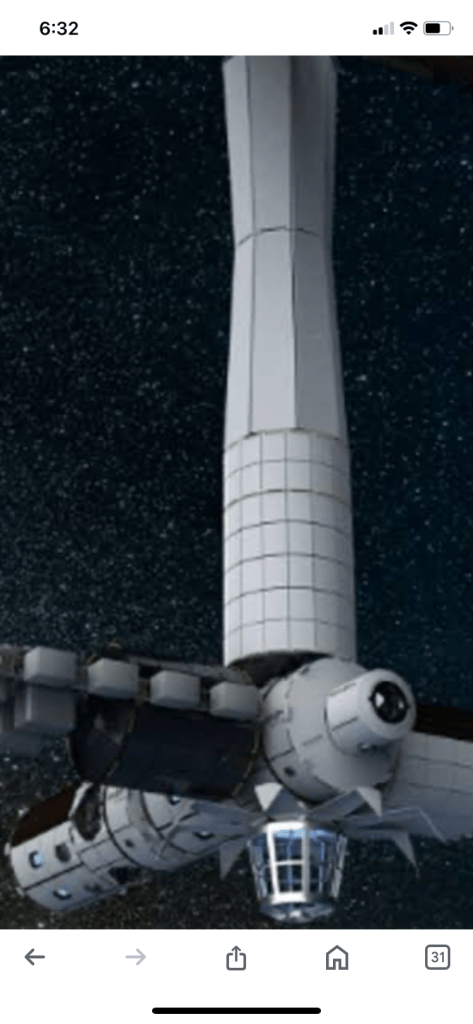
Exploring New PartnershipsHouston-based Axiom Space is considering using launch vehicles from India and Europe to support the development of its commercial space station in low-Earth orbit, as reported by media sources
Axiom Space is in talks with India and European nations to explore “the best fit for its missions” and to diversify its supply chain
An Axiom Space spokesperson told Reuters the company is in talks with India as well as European nations to explore “the best fit for its missions” and to diversify its supply chain. Rockets and launch vehicles from these nations could be used to “transport raw materials as we develop our space station,” the representative said.
Axiom Space won NASA’s contract in 2020 to construct a habitable modulethat will attach to the International Space Station (ISS). If successful, the module would mark the company’s first step toward building its own orbital outpost.
US-based startup Axiom Space is exploring using Indian launch vehicles to support its international space station mission, a senior executive said on Tuesday.
Axiom Space is one of the few companies constructing a private space station, intended to eventually replace the International Space Station (ISS), which the US National Aeronautics and Space Administration (NASA) expects to retire around 2030.
It could be to transport raw materials as we develop our space station,” Pandya said, speaking at an industry event.
The company is also in talks with European nations for its supply chain, she added.
Earlier this year, India opened its space sector to private players and created a 10 billion rupee ($119 million) venture fund to support space startups.
In September, the ISRO completed the final developmental flight for its Small Satellite Launch Vehicle, and planned to hand its design to private companies.
At present, two Indian companies, Skyroot and Agnikul, are building the country’s first privately-built rockets that can carry a payload of up to 300 kg (661 lb) into low Earth orbit.
Indian space companies have already seen an influx of funding – $126 million in 2023, which was up 7% from the $118 million raised in 2022 and a 235% increase from the $37.6 million raised in 2021, according to Tracxn data.
But India only has a market share of about 2% in commercial space activities and demand is still largely dependent on global clients, while well-established companies in U.S., Russia and China are formidable rivals
What is a space station

A space station is a large artificial satellite that orbits the Earth. It provides a platform for astronauts to live and work in space for extended periods.
Key features and functions of a space station:
- Habitability: Space stations are designed to support human life in space, with living quarters, laboratories, and other facilities.
- Scientific research: They serve as laboratories for conducting various scientific experiments in microgravity, including materials science, biology, and astrophysics.
- Technological development: Space stations are used to test and develop new technologies for space exploration and Earth observation.
- Crew training: They provide a platform for training astronauts for future space missions, such as missions to the Moon and Mars.
- International cooperation: Space stations often involve collaboration between multiple countries, fostering international cooperation in space exploration.
Examples of space stations: - International Space Station (ISS): The largest space station ever built, it is a collaborative project involving multiple countries.
- Salyut: A series of Soviet space stations launched in the 1970s and 1980s.
- Mir: The last Soviet space station, which operated from 1986 to 2001.
- Tiangong: A series of Chinese space stations, with Tiangong Space Station currently operational.
Space stations play a crucial role in advancing our understanding of space and pushing the boundaries of human exploration.
Axiom Space has indeed expressed interest in partnering with the Indian Space Research Organisation (ISRO) for its private space station project. This potential collaboration could involve various aspects, including:
- Launch services: ISRO’s reliable and cost-effective launch vehicles, such as the PSLV and GSLV, could be used to transport modules and supplies to the space station.
- Technological collaboration: Both organizations could share expertise and collaborate on developing advanced technologies for space exploration.
- Scientific research: Indian scientists could participate in research experiments conducted on the space station.
However, as of now, there is no official confirmation of a formal partnership between Axiom Space and ISRO. Both organizations are actively exploring opportunities for collaboration, and further developments are expected in the coming years.
It’s important to stay updated on the latest news and announcements from both Axiom Space and ISRO to get the most accurate information about their potential partnership.
What is India plan for its space station
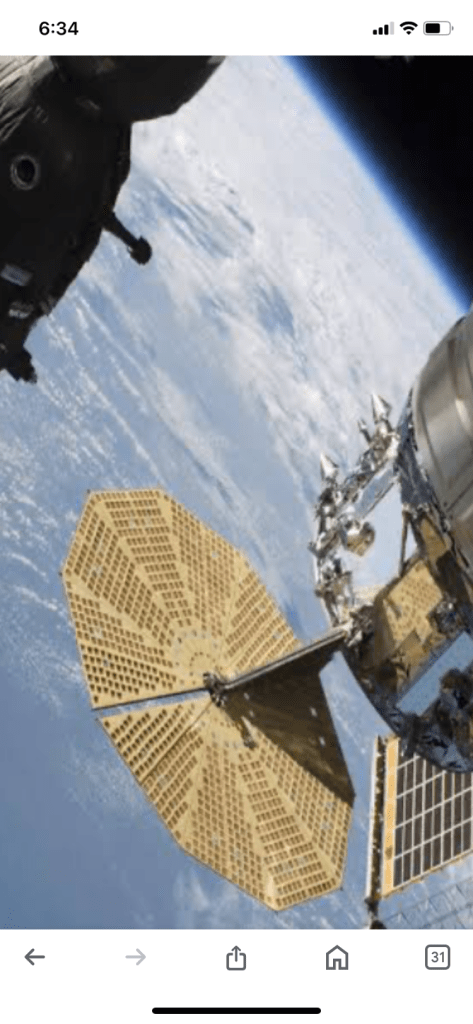
India has an ambitious plan to establish its own space station, named the Bharatiya Antariksha Station (BAS). Here’s a brief overview of the plan:
Timeline:
- 2028: Launch of the first module of the space station.
- 2035: Completion of the full space station.
Key Features: - Microgravity Research: The station will be primarily used for conducting various scientific experiments in microgravity, including materials science, biology, and astrophysics.
- Human Habitation: It will be designed to accommodate astronauts for extended periods, enabling long-duration space missions.
- Technological Advancement: The space station will serve as a platform for testing and developing advanced space technologies.
- International Collaboration: India is open to international collaboration on the space station, inviting other countries to participate in research and technology development.
Challenges and Opportunities: - Technological Hurdles: Building and maintaining a space station is a complex technological challenge, requiring significant advancements in various fields.
- Financial Investment: The project requires substantial financial investment.
- International Cooperation: Collaborating with other space agencies can help share costs and expertise.
India’s space station project is a significant step forward in its space program. It will not only enhance India’s capabilities in space exploration but also contribute to global scientific research and technological advancement.
The great international space station

The International Space Station (ISS) is a marvel of human engineering and international cooperation. It’s a large space station in low Earth orbit, assembled and maintained by a collaboration of five space agencies: NASA (United States), Roscosmos (Russia), ESA (Europe), JAXA (Japan), and CSA (Canada).
Key features and functions:
- Habitability: The ISS provides a home for astronauts in space, with living quarters, laboratories, and other facilities.
- Scientific Research: It’s a premier laboratory for conducting microgravity experiments in various fields, including biology, physics, and materials science.
- Technological Development: The ISS serves as a testbed for new technologies that could be used in future space missions.
- Crew Training: It’s a vital training ground for astronauts preparing for missions to the Moon, Mars, and beyond.
- International Cooperation: The ISS symbolizes global collaboration, uniting nations for the common goal of space exploration.
Fun Facts: - The ISS orbits the Earth at an altitude of about 250 miles (400 kilometers).
- It can be seen from Earth with the naked eye! You can check for sighting opportunities on NASA’s website.
- The ISS has been continuously inhabited since November 2000.
- It’s the largest artificial object in orbit.
The International Space Station is a testament to human ingenuity and our collective desire to explore the cosmos. It continues to inspire and push the boundaries of what’s possible in space.
Please like subscribe comment your precious thoughts on universe discoveries
sk-mania-blogs.in
https://www.buymeacoffee.com/Satyam55
Buy me a coffee!” (your opportunity to say thanks for the free stuff and to encourage me to do even more)
<!– /wp:heading https://www.amazon.in/b?_encoding=UTF8&tag=555101-21&link
“If you like my work or the free stuff on this website and want to say thanks, or encourage me to do more, you can buy me a coffee!
Contribute to my coffee fund with any amount you are comfortable to pay.
The coffee will give me the ‘kick’ to work even harder to empower creative entrepreneurs


🙏🌹
Aum Shanti
LikeLike