

Scientists are interested in a “Voyager 3” mission, a conceptual interstellar probe, for several key reasons:
Studying the Interstellar Medium
The primary goal of a new mission would be to specifically study the interstellar medium (ISM). The original Voyager probes, while now in interstellar space, were not designed for this environment. A new probe would be custom-built with modern instruments to precisely measure interstellar particles, magnetic fields, and galactic radiation. This would provide crucial data on how the Sun’s protective bubble, the heliosphere, interacts with the rest of the galaxy.
Leveraging Modern Technology
A new probe would take advantage of major technological advancements since the Voyager probes launched in 1977. These include:
- Advanced sensors for more precise and detailed data collection.
- AI-based navigation for increased autonomy and efficiency.
- Faster computers for more complex data processing onboard.
- More powerful nuclear batteries (Radioisotope Thermoelectric Generators or RTGs) with longer lifespans, allowing the mission to continue for many decades.
A Long-Term Pathfinder
A “Voyager 3” mission would serve as a pathfinder for future interstellar exploration. By mapping the hazards and opportunities of interstellar space, it would pave the way for a new generation of probes and potentially even crewed missions. Some proposals suggest a new probe could reach much greater distances than the Voyagers, with some concepts aiming to reach 550 astronomical units (AU) to use solar gravitational lensing to image exoplanets
Voyager’s Legacy Still Shapes Space Science
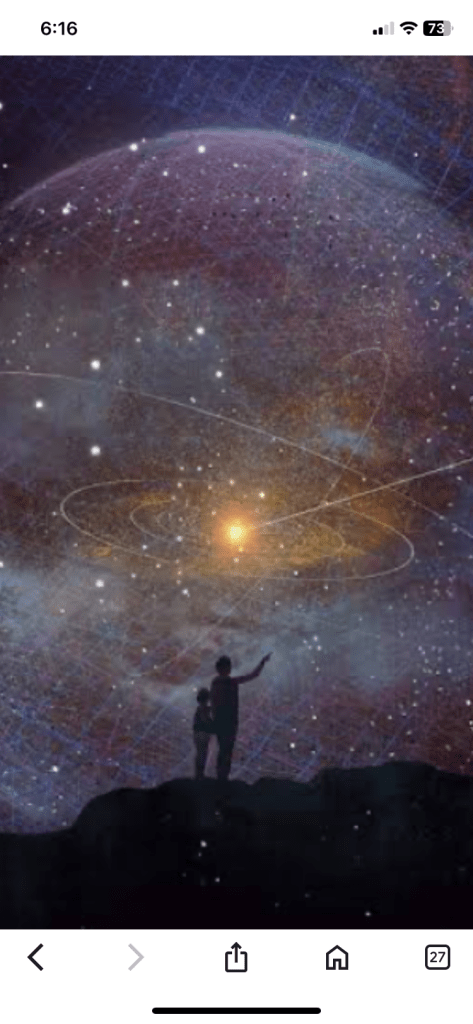
The twin Voyager spacecraft, launched in 1977, gave us humanity’s first close-up views of Jupiter, Saturn, Uranus, and Neptune. Beyond that, they entered interstellar space, sending back data about cosmic radiation and magnetic fields that no other spacecraft has ever recorded. Scientists see these discoveries as unfinished business. A new Voyager, often imagined as “Voyager 3,” would build on that foundation and continue exploring the cosmic frontier.
Technology Has Leapt Forward Since 1977
Voyager 1 and 2 were launched using technology from the 1970s: tape recorders for data, radio transmitters weaker than a car headlight, and instruments that now seem primitive. Today, advanced sensors, AI-based navigation, faster computers, and nuclear batteries with longer lifespans could make Voyager 3 vastly more capable. A new mission could do what Voyager never could, map interstellar plasma in detail, capture sharper images, and transmit richer data back to Earth.
Preparing For Future Interstellar Travel
A Voyager 3 mission wouldn’t just be about science, it would be about preparation. If humans ever send probes or even crewed missions beyond our Solar System, understanding the environment beyond the heliosphere will be critical. Voyager 3 could serve as a pathfinder, mapping the hazards and opportunities of interstellar space for the next generation of explorers
A New “Golden Record” For Humanity
Voyager’s Golden Record is one of the most iconic symbols of human culture in space. Scientists and cultural thinkers argue that Voyager 3 should carry a new version, updated with digital archives of humanity’s art, music, knowledge, and maybe even AI-driven messages for extraterrestrials. It would be both a science mission and a cultural statement about who we are today, nearly 50 years after the first record left Earth.
Timing Is Critical
Launching a Voyager 3 mission soon would take advantage of planetary alignments that happen once every 175 years, making it easier to slingshot past the outer planets and gain speed toward interstellar space. Missing that window would mean waiting decades. For many scientists, this is the most compelling reason to act now: if humanity doesn’t launch Voyager 3 in this generation, the chance may not come again for a lifetime.
Can voyager 3 with AI make contact with aliens
No, there is no official “Voyager 3” mission. However, there are conceptual proposals for a new interstellar probe that could use advanced technology to explore space.
The Role of AI in Deep Space Communication
Scientists have proposed using AI for future deep space missions, but not for direct communication with aliens. Instead, AI would primarily serve as an onboard assistant to a spacecraft. AI systems could help:
- Process vast amounts of data from instruments, distinguishing potential alien signals from background noise.
- Navigate autonomously and make real-time course corrections without relying on delayed communication from Earth.
- Self-diagnose and repair the spacecraft, as it would be too far away for human repair crews.
The Challenges of Communicating with Aliens
Even with advanced AI, communicating with extraterrestrials would face immense challenges. The Voyager probes, for example, carry a Golden Record containing greetings, sounds, and images from Earth, but it’s a passive message, not a two-way communication system. The key obstacles include: - Vast distances: Even to the nearest star, a signal would take years to reach its destination, and a reply would take even longer.
- Deciphering the message: We have no idea what form an alien language would take. A pictorial message on a probe could be misinterpreted, for example, an arrow might be seen as a weapon rather than a symbol of direction.
- Technological differences: An alien civilization might not have the technology to find or decipher a message from a probe, or they might be so advanced that they have no interest in communicating
Please like subscribe comment your precious comment on universe discoveries
Full article source google
https://www.buymeacoffee.com/Satyam55
https://www.amazon.in/b?_encoding=UTF8&tag=555101-21&link
https://youtu.be/-onjzCeEKqI?si=2a9iF40GlIxInX77
Click on the above link to watch voyager video
https://youtu.be/oj-cM1BSsFg?si=AuMNUnrN2WST_Izu
Another video of voyager click on the above link
 Universe discoveries
🙏🌹
Aum Shanti
LikeLike
This is interesting but I am wondering about how long this would take. Voyager 1 is 167AU away from earth and was launched 48 years ago and they want voyager 3 to travel 550AU and take measurements out there. When would we get that data?
LikeLiked by 1 person