
Great leader
Jai jawan jai kisan
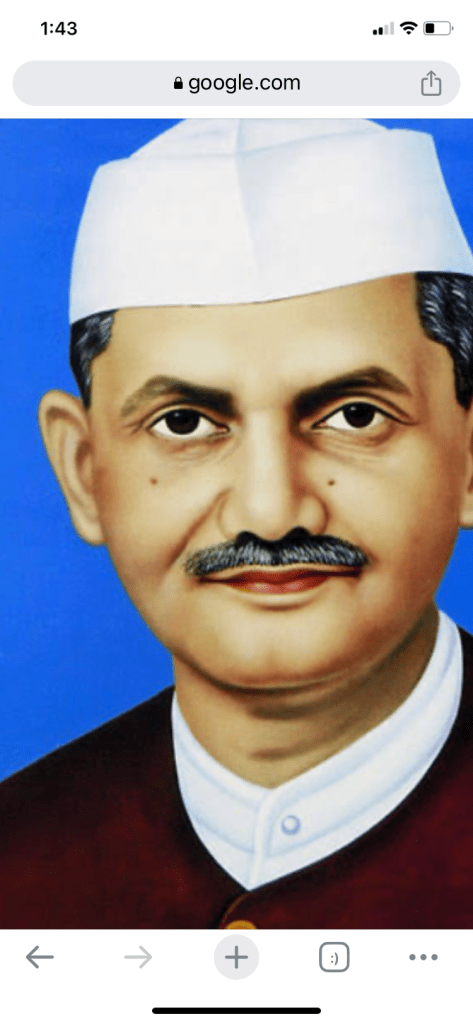
Shastri: India’s Unassuming Hero
Great leader

Jai jawan jai kisan
Title: Lal Bahadur Shastri: The Unassuming Hero of India
Introduction:
Lal Bahadur Shastri, the second Prime Minister of India, may not be as prominently remembered in history as some of his contemporaries like Mahatma Gandhi or Jawaharlal Nehru. However, his contribution to India’s growth and his leadership during a crucial period in the nation’s history are undeniably significant. This article aims to shed light on the life, achievements, and legacy of this unassuming hero of India.
Early Life and Education:
Lal Bahadur Shastri was born on October 2, 1904, in Mughalsarai, a small town in Uttar Pradesh, India. He hailed from a humble family of farmers. His early life was marked by poverty, but this did not deter his determination to receive an education. Shastri completed his schooling and later graduated from the Kashi Vidyapeeth in Varanasi.
A Man of Principles:
Shastri was deeply influenced by Mahatma Gandhi’s principles of non-violence and civil disobedience during the freedom struggle. He actively participated in various movements against British rule, including the Salt Satyagraha. His commitment to the cause of India’s independence was unwavering.
Political Career:
Shastri’s political career took off after India gained independence in 1947. He held several ministerial positions within the Indian government, including the crucial role of Minister of Railways, where he made significant improvements to the country’s rail network. His simplicity, honesty, and dedication earned him respect across party lines.
The ‘Jai Jawan Jai Kisan’ Slogan:
Perhaps one of Shastri’s most memorable contributions was his leadership during the 1965 India-Pakistan War. As Prime Minister, he coined the slogan ‘Jai Jawan Jai Kisan’ (Hail the Soldier, Hail the Farmer) to boost the morale of the armed forces and encourage agricultural self-sufficiency. His pragmatic approach and diplomacy led to the Tashkent Agreement, which ended the war.
Legacy:
Lal Bahadur Shastri’s tenure as Prime Minister may have been short-lived, but it left an indelible mark on India’s history. His emphasis on self-reliance and integrity in public life continues to inspire generations. Even in the face of adversity and limited resources, Shastri’s leadership demonstrated the potential for a resurgent, modern India.
Conclusion:
Lal Bahadur Shastri was a man of integrity, humility, and unwavering commitment to the nation. His life and legacy serve as a beacon of hope for a nation striving for progress. Though he passed away under mysterious circumstances in 1966, his principles and values remain embedded in the Indian ethos, making him a truly unassuming hero of India.
Jai jawan jai kisan
- Prime ministers of India
 Universe discoveries
I heard Lal Bahadur Shashtri in 1965 live at Kolkata Maidan, after Indo Pak War. He was a powerful orator.
Probably the most honest politician ever, anywhere, a person who died as the PM and yet the family was in some debt when he expired. My utmost regards to him
LikeLiked by 1 person
Great sir
LikeLiked by 1 person
Thank you for the interesting article, good to know that some exceptional politicians are honest.
Joanna
LikeLiked by 1 person
Welcome freinds
LikeLike
Thank you!
Joanna
LikeLike
The most lovable leader.
LikeLike