
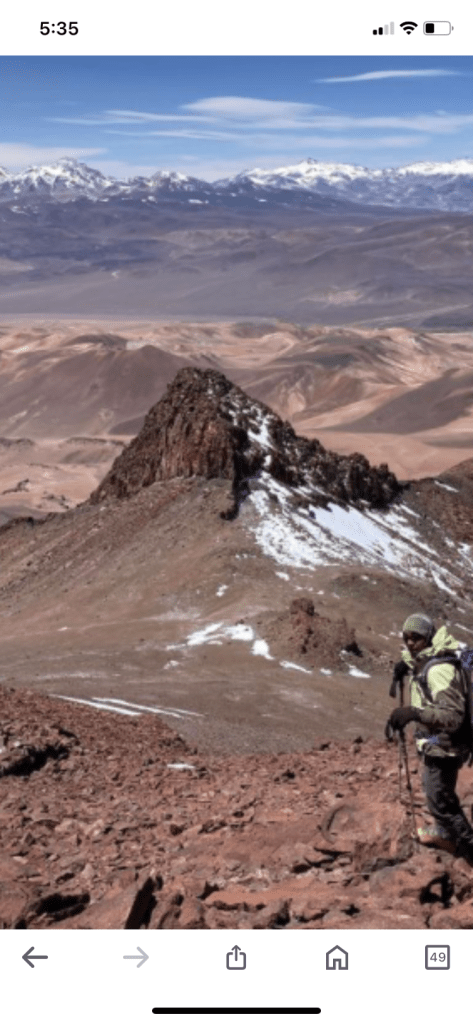
A study uncovered mummified mice on high-elevation Andean volcanoes, revealing that mammals can survive in extreme, Mars-like conditions. This finding challenges our understanding of vertebrate life’s physiological limits and prompts further research into these mice’s survival mechanisms.
An international team of researchers discovered mummified mice on the peaks of Andean volcanoes in Chile and Argentina. The volcanoes are part of the Atacama Plateau, which has conditions similar to Mars. The researchers found 13 mummified mice at altitudes of over 6,000 meters (20,000 feet). The mice were a few decades old, and some were up to 350 years old.
The researchers discovered the first mouse mummy by chance at the summit of Volcán Salín. They found the desiccated cadaver at the edge of a rock pile. The researchers then searched 21 volcano summits and found 13 mummified mice.
The researchers’ findings challenge assumptions about mammalian life. The environment on the volcanoes is harsh, with temperatures rarely rising above freezing and strong winds. However, the researchers’ findings show that mammals can survive in extreme conditions.
Mummification can occur naturally. The mummified mice may have died from natural causes or been killed by bees.
The first published reports of mice at elevations above 6,000 meters came from archaeologists. Mouse mummies have been found near Incan ceremonial structures and burial sites at the summits of several high Andean volcanoes.
The mummified mice are a species of leaf-eared mouse called Phyllotis vaccarum. This species is known to live at lower elevations in the region
The Atacama Plateau, also known as the Puna de Atacama, is a high, arid plateau in the Andes Mountains. It’s located in northwestern Argentina and adjacent regions of Chile. The plateau is about 200 miles long and 150 miles wide, with an average elevation of 11,000 to 13,000 feet
The Atacama Desert is a plateau in Chile that stretches 1,600 kilometers along the Pacific coast. It’s the world’s driest nonpolar desert, and the only desert with less precipitation than polar deserts. The average temperature in the desert is about 63 degrees F.
The Atacama Plateau is 85% in Argentina and 15% in Chile. Geomorphologist Walther Penck based his Grossfalt landform association on the Puna de Atacama
Mummified mice found on the summits of the Andes mountains show that mammals can survive in extreme, Mars-like conditions. The mice were found at altitudes of over 20,000 feet on the summits of volcanoes in the Puna de Atacama of Chile and Argentina. The dry, wind-swept, volcanic peaks of Argentina and Chile’s Atacama Plateau are considered to have the most “Mars-like” conditions on Earth
The discovery challenges our understanding of vertebrate life’s physiological limits and prompts further research into these mice’s survival mechanisms. The leaf-eared mouse Phyllotis vaccarum holds the record for the highest living mammal. (Full article source google)
Best travel accessories on heavy discount on Amazon
https://255efcmo12q0dw8l1jjbz6kj4t.hop.clickbank.net Universe discoveries
Beautiful post, Satyam👏👏👏
LikeLiked by 1 person
Thanks a lot🌹
LikeLiked by 1 person
Nice article 💚
LikeLike