
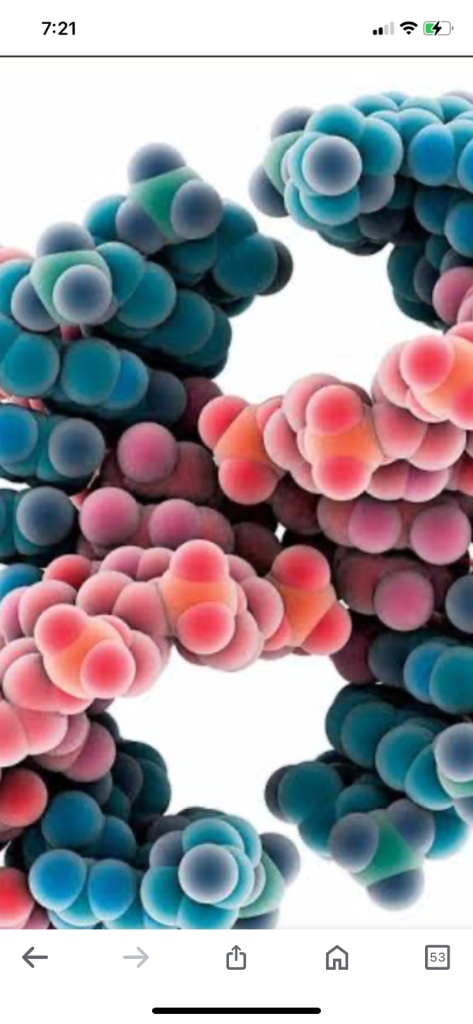
Scientists Reveal a New Way Our DNA Can Make Novel Genes From Scratch. Scientists have discovered how our DNA can use a genetic fast-forward button to make new genes for quick adaptation to our ever-changing environments
Researchers from the University of Helsinki in Finland have discovered a new way that DNA can create novel genes. They found that certain single mutations can create palindromes, which are sequences that read the same forward and backward. Under certain conditions, these palindromes can evolve into microRNA (miRNA) genes.
Other mechanisms that scientists have proposed for generating new genes include:
- Gene duplication
- Transposable element protein domestication
- Lateral gene transfer
- Gene fusion
- Gene fission
- De novo origination
Gene duplication is thought to be the main contributor to the creation of new genes. DNA-based duplication involves copying and pasting DNA sequences from one genomic region to another.
It’s also possible to create new genes in a lab. This is done by linking together nucleotides A, T, G, and C in any order using chemical reactions. The opposite strand is then made so that A pairs with T and G pairs with C. The DNA strands are then mixed together to create a synthetic gene.
Genome editing is another method for making changes to DNA. It can be used to add, remove, or alter DNA in the genome
Yes, DNA can be created artificially. This process is called artificial DNA synthesis, or synthetic DNA synthesis. It’s a fundamental tool of synthetic biology.
To create artificial DNA, scientists:
- Design the DNA using computer-aided design software
- Divide the DNA into synthesizable pieces called synthons
- Break the synthons into overlapping single-stranded oligonucleotide sequences
- Chemically synthesize the oligonucleotide sequences
- Assemble the oligonucleotides into double-stranded DNA fragments
Artificial DNA has many applications, including:
- Creating new genes and protein functions
- Producing vaccines and treatments for infectious diseases
- Gene therapy to treat genetic disorders
Artificial DNA is mostly used in molecular biology and genetics labs. It’s expensive and time-consuming to create.
DNA printing is a key part of synthetic biology. It allows scientists to create custom DNA sequences for a variety of applications, including:
- PCR diagnostics
- Gene synthesis and editing
- Creating new bacteria
- Developing pharmaceuticals, agricultural products, and biofuels
DNA printing differs from ink printing. In DNA printing, four different “inks” are not printed in separate runs. Instead, the DNA is printed base by base.
DNA can also be 3D printed. This process uses laser technology and 3D printers to print the human genome. It’s a simpler method than traditional DNA synthesis.
Yes, it’s possible to 3D print DNA. 3D printing DNA involves using laser technology and 3D printers to print the human genome. This method is simpler than traditional DNA synthesis.
Researchers have also developed 3D bioprinting techniques to produce chimeric biomaterials. These techniques include: Inkjet-based, Extrusion-based, Laser-based.
Researchers have also embedded DNA into 3D printed objects. For example, researchers embedded DNA-containing glass beads into a 3D printed rabbit. They then extracted the DNA information from the rabbit and used it to 3D print five identical rabbits
3D bioprinting is a type of 3D printing that uses biological materials. It can be used to create living tissues and organs.
Researchers have developed 3D bioprinting techniques to produce biomaterials that incorporate living cells and drugs. These biomaterials can be used to treat conditions such as cardiac or gastrointestinal patches.
Here are some examples of 3D bioprinting:
- Hybrid living materials Researchers at MIT, Harvard University, and Dana-Farber Cancer Institute developed a method for 3D printing objects that can control living organisms.
- Living bacteria ETH researchers developed a biocompatible ink for 3D printing using living bacteria.
- Plant cells Bioprinting plant cells is similar to 3D printing plastics, but the ink is made of living plant cells.
- Living tissues The Wyss Institute developed a multi-material 3D bioprinting method that generates vascularized tissues composed of living human cells.
Currently the only organ that has been 3D bioprinted and successfully transplanted into a human is a bladder. The bladder was formed from the host’s bladder tissue
A palindrome is a sequence of symbols that reads the same forwards and backwards. In molecular biology, a palindromic sequence is a sequence of nucleotides in DNA or RNA. A palindromic sequence is when the sequence in one strand of DNA or RNA is the same as the complementary sequence of the other strand. For example, the sequence 5′-CGATCG-3′ is a palindrome because its reverse complement 3′-GCTAGC-5′ reads the same.
Mutations can cause insertions or deletions that make some palindromes no longer palindromes. For example, GCCACCG is a palindrome, but due to deletion, this sequence might be changed to CCACCG
No, DNA is not always palindromic. A single strand of DNA cannot be palindromic because the asymmetry of the ribose gives the strand an intrinsic direction. For example, 5′-GGATCC-3′ on a single strand is functionally distinct from 5′-CCTAGG-3′.
However, a nucleotide sequence can be a palindrome within a gene, at the border, outside the gene, or anywhere. For example, 5′ – GAATTC-3′ and 3′ – CTTAAG-5′ sequences read the same on the two strands in 5’→3′ direction.
Palindromic sequences are found in abundance in the genome of most organisms. They play an important role in DNA replication, gene expression, and regulation.
When a gene is duplicated, it can:
- Lose its function
- Split its function with its parent gene
- Gain a new function
Over time, duplicated genes can accumulate mutations and diverge, encoding different molecules with their own functions.
Other ways that genes with novel functions might evolve include:
- Rearranging existing genes
- Mutations
- Transpositions
The evolution of novel genes also involves the formation of regulatory regions that allow the expression of the genes.(full article source google)
https://130ealik57-6kr9kngv7ujukpe.hop.clickbank.net
