
In 2023, Indian science made significant achievements on the moon, and is also reaching for the sun and pushing new frontiers
On August 23, 2023, India’s Chandrayaan-3 mission successfully landed on the moon, making India the fourth country to do so. The mission is set to last for 14 days, the equivalent of one full lunar day. The moon lander and rover have made some important discoveries, including sulfur and a possible moonquake.
India also launched a mission to study the sun and space weather. The spacecraft, called Aditya-L1, will spend 110 days traveling to its destination, a spot between the Earth and sun known as the first Lagrange point.
In 2024, India plans to launch XPoSat to study X-rays and black holes. The Indian Space Research Organisation (ISRO) also plans human spaceflight and lunar sample return missions
In 2023, India made several scientific achievements, including a successful lunar landing and solar research:
- Chandrayaan-3 On August 23, 2023, India’s Chandrayaan-3 mission successfully landed on the moon’s south polar region. This was the first time any country had landed in this region. The mission was also cost-efficient, coming in at $75 million.
- Aditya-L1 India also conducted pioneering solar research in 2023 through the Aditya-L1 mission.
India also launched the XPoSat mission, which complements NASA’s IXPE mission by offering coordinated observations in the 2-30 keV energy range.
While the Moon-landing was the biggest achievement for Indian science in 2023, it pushed boundaries on both earth and in the sky, with forays in the Arctic and the Antarctic and new partnerships in space
The Indian Space Research Organisation (ISRO) also achieved other milestones in 2023, including:
- Aditya-L1 In September 2023, ISRO launched Aditya-L1, India’s first space-based mission to study the sun. The mission is positioned in a halo orbit around the Lagrange point 1 (L1).
- XPoSat On January 1, 2024, ISRO will launch the PSLV-C58 X-ray Polarimeter Satellite (XPoSat) mission. The PSLV will launch XPoSat and 10 other payloads
In addition to the Chandrayaan-3 and Aditya-L1 missions, ISRO also recently launched a Fuel Cell Power System (FCPS) to test the power source for the upcoming Indian Space Station. The experiment was launched on the PSLV-C58 mission that also carried the XPoSat observatory
ISRO has completed 668 space missions, including 3 nano satellites and 1 micro satellite. ISRO has also launched 104 satellites using a single rocket.
ISRO’s missions include:
Chandrayaan-1 India’s first mission to the moon, launched in 2008.
Mars Orbiter Mission Unofficially known as Mangalyaan, this space probe has been orbiting Mars since 2014.
GLSV MK3 A crew capsule that can take humans to space, launched in 2014.
ISRO’s missions have supported civilian and military domains in areas such as disaster management, telemedicine, and navigation and reconnaissance missions.
Some other successful missions by ISRO include:
- Aryabhata: The first Indian satellite, named after the legendary Indian astronomer, Aryabhata
- Indian National Satellite System (INSAT) Series: Launched in 1983
- GSAT Series: Launched in 1983
- Mars Orbiter Mission (MOM): Unofficially known as Mangalyaan, this space probe has been orbiting Mars since 2014. It was the first Asian spacecraft to enter Martian orbit, making India the first country to succeed at this on its first attempt.
ISRO also has upcoming missions, including:
- Shukrayaan-1: A spacecraft to orbit the planet Venus, anticipated to launch in December 2024 or 2025.
- Gaganyaan: India’s effort at developing a human orbital spaceflight capability.
India’s Chandrayaan-3 lunar mission achieved a notable success, reaching the Moon’s south polar region in August 2023 with a cost-effective budget of $75 million. The mission’s cost efficiency underscored India’s proficiency in executing the complex mission
What is the first project of ISRO?
Aryabhata. The Aryabhata spacecraft, named after the famous Indian astronomer, was India’s first satellite; it was completely designed and fabricated in India and launched by a Soviet Kosmos-3M rocket from Kapustin Yar on April 19, 1975
What is the main achievement of ISRO?
ISRO is the first space agency in the world to have successfully inserted a probe into the orbit of Mars in its very first attempt.
Yes, India plans to send an astronaut to the moon by 2040. The Indian Space Research Organisation (ISRO) has selected four test pilots from the Indian Air Force as astronaut candidates for the mission
India’s space goals also include plans for a space station by 2035. Prime Minister Narendra Modi also asked scientists to work on missions to Venus and Mars
The Indian Space Research Organisation (ISRO) has several missions to the moon, including:
Chandrayaan-2 A complex mission that brought together an orbiter, lander, and rover to explore the moon’s south pole.
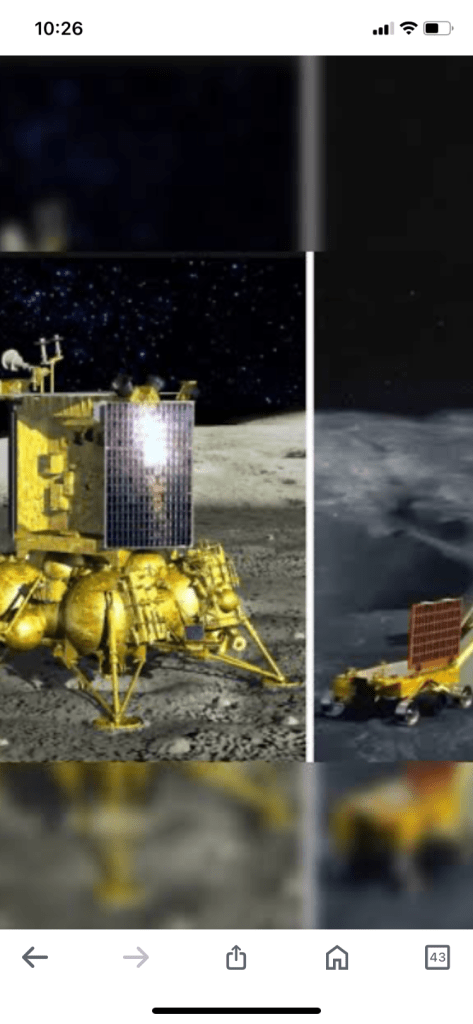
Chandrayaan-3 A follow-on mission to Chandrayaan-2, launched in 2023. The mission’s objectives were to demonstrate a safe and soft landing on the moon, to demonstrate a rover roving on the moon, and to conduct scientific experiments. The Vikram lander touched down on the moon’s south polar region on August 23, 2023, becoming the first spacecraft to do so.
The main objective of the Chandrayaan-3 mission was to demonstrate India’s technical capabilities and achieve a successful soft landing on the moon.
The mission also aimed to:
- Soft-land a rover on the lunar surface and explore the South Pole region of the Moon
- Collect invaluable scientific data
- Perform experiments using the instruments on Vikram and Pragyaan
The South Pole region of the Moon is of particular interest because it is thought to contain water ice. Water ice is a valuable resource that could be used to support future human missions to the Moon.
Chandrayaan-3 is the third mission in the Chandrayaan program, a series of lunar-exploration missions developed by the Indian Space Research Organisation (ISRO)
The Chandrayaan-3 lander is named Vikram. The name is a tribute to Vikram Sarabhai, the father of India’s space program. Vikram is also a Sanskrit name that means “valor”.
The Chandrayaan-3 mission also includes a rover named Pragyan. The rover is equipped with instruments and will crawl on the moon’s surface to conduct experiments
On August 26, 2023, Prime Minister Narendra Modi announced that the Chandrayaan-3 lander’s touchdown point on the moon would be named “Shiv Shakti”. The name was announced during a visit to the Indian Space Research Organisation (ISRO) in Bengaluru
(Full article source google)
Best kitchen and home appliances on discount on Amazon
https://923b8jfj00zw8za6quztya9w5q.hop.clickbank.net
