
NASA is funding a mission to return a sample from the surface of Venus. The planet’s atmosphere is extremely hot and hostile, and the ground conditions are harsh. The mission will use carbon monoxide rocket technology to create propellant from the planet’s atmosphere. It will also use high-temperature surface systems and solar aircraft
The surface of Venus is dry and rocky, with gently rolling plains, large lowlands, and two large highlands. The temperature at the surface is 740 K (467 °C, 872 °F), and the pressure is 93 bar (1,350 psi). The Venusian atmosphere contains opaque clouds of sulfuric acid, making it impossible to observe the surface from Earth or orbit.
A sample return from Venus could provide clues about the differences between Venus and Earth. The simplest sample return would involve flying through the upper atmosphere and returning some of the gas to Earth.
This project will pioneer a new approach to return a sample from the surface of Venus. The approach will merge an innovative carbon monoxide rocket technology to make propellant from the Venus atmosphere with innovations in high-temperature surface systems and solar aircraft.
NASA’s Sample Return from the Surface of Venus project will use a new approach to bring a sample back from the surface of Venus. The approach combines carbon monoxide rocket technology to create propellant from the Venus atmosphere with innovations in high-temperature surface systems and solar aircraft.
Carbon monoxide and oxygen propellant combination research has been conducted at the subscale level to prepare the technology for use in a sample return mission. This research included ignition characterization, combustion performance, and heat transfer characterization.
High-temperature coatings rely on the formation of a dense and adherent surface oxide layer that is chemically stable. This layer thickens slowly with time at temperature, and has good adherence to the coating.
According to a 1986 NASA news article, the Venus Sample Return Mission would take two years to return a sample to Earth orbit. However, a 2023 Digital Trends article suggests that the mission could return a sample within a year.
The mission involves small samplers that parachute to the surface of Venus to collect soil and rock samples. However, collecting samples from Venus is a challenging task due to its extreme surface conditions. Venus has a thick, toxic atmosphere with high temperatures and pressure, making it difficult for spacecraft to land and operate on the surface for an extended period
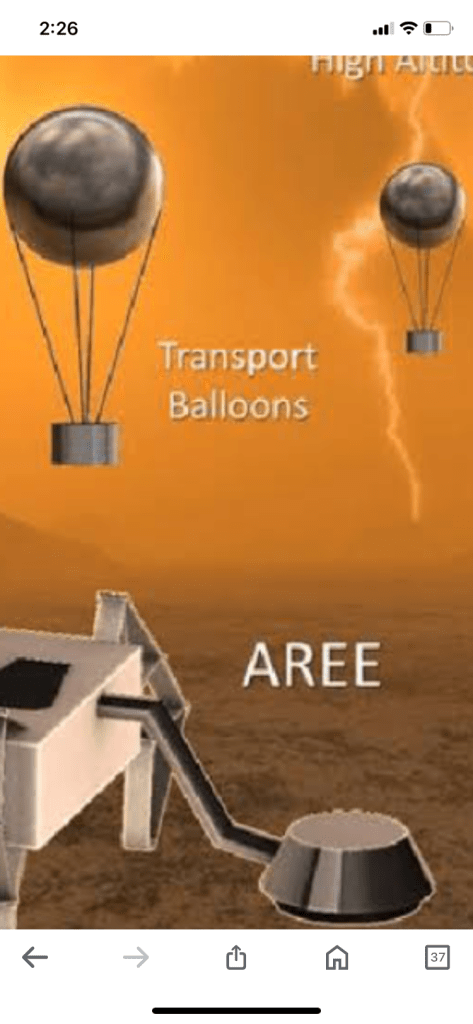
The proposed mission concept has a two-component flight system, an entry probe and orbiter. The entry probe consists of a variable-altitude balloon that operates between 45-60 km altitude above the surface. The balloon’s gondola contains the sample capture hardware, as well as the ascent launch vehicle.
The surface of Venus is the most hostile environment to explore in the solar system, with a temperature of 450°C and 92 atmosphere pressure. Due to the high temperature of the Venus surface, a metal foil combined to a glass fiber canvas may be the safest way to get a suitable balloon envelope.
NASA is returning to Venus to learn more about the planet’s history and to understand how it became a hot, poisonous wasteland. Scientists believe Venus may have been the first habitable planet in the solar system, with an ocean and Earth-like climate.
NASA’s DAVINCI+ mission will send a probe through Venus’ atmosphere to analyze its composition and evolution. The probe will also determine whether Venus had an ocean.
Studying Venus can help scientists learn how Earth-like planets evolve and what conditions exist on Earth-sized exoplanets. It can also help scientists model Earth’s climate and understand how dramatically a planet’s climate can change
Venus is a difficult planet to explore because of its high temperature and atmospheric pressure. Venus’s atmosphere is 90 times denser than Earth’s and is made up of mostly carbon dioxide. The carbon dioxide traps heat, causing a greenhouse effect that makes the surface of Venus 460°C both day and night
However, high-temperature electronics and power systems are being developed that may allow future missions to operate on Venus
Yes, NASA is funding a mission to return a sample from the surface of Venus. NASA has awarded Geoffrey Landis, a researcher at NASA’s Glenn Research Center, a grant to develop concepts for a sample return from Venus. Landis’s proposal includes a spacecraft that can survive Venus’s harsh environment and return a sample using high-temperature technology and solar aircraft.
The surface of Venus is the most hostile environment to explore in the solar system, with temperatures of 450°C and pressures of 92 atmospheres. The longest any spacecraft has survived on the surface is a little over two hours, set by the Soviet Union’s Venera 13 probe in 1981.
The Venus sample return is scientifically interesting, as soil composition analysis could provide clues about the differences between Venus and Earth.
A sample return mission is a mission that uses a spacecraft to collect samples from an extraterrestrial location and return them to Earth for analysis
NASA has also collaborated with the European Space Agency (ESA) on other sample return missions, including:
- Mars Sample Return A mission to bring samples of Martian material collected by NASA’s Mars Perseverance rover back to Earth. The mission would involve the first-ever launch into space from another planet and the first-ever rendezvous in orbit around another planet.
- Stardust A mission to collect samples of a comet and return them to Earth for laboratory analysis.
- OSIRIS-REx The first U.S. mission to collect a sample from an asteroid. The spacecraft returned to Earth on Sept. 24, 2023, to drop off material from asteroid Bennu.
The first successful sample return mission was Apollo 11, which returned 22 kilograms (49 lb) of Lunar surface material in July 1969
Soil composition analysis is a set of chemical processes that determine the amount of plant nutrients and other soil properties. A sample return mission is a spacecraft mission that collects and returns samples from an extraterrestrial location to Earth for analysis.
The Venus sample return mission is scientifically interesting because the soil composition analysis could provide clues about the differences between Venus and Earth. However, the sample recovery is extremely difficult due to the harsh ground conditions.
Here are some differences between Venus and Earth:
- Atmosphere: Venus has a toxic, heavy atmosphere made up almost entirely of carbon dioxide with clouds of sulfuric acid. Venus’s atmosphere is about 100 times thicker than Earth’s.
- Surface temperature: Venus’s surface is the hottest in the solar system at a searing 750 K (477 °C).
- Surface water: Venus has no surface water.
- Rotation: Venus rotates backwards compared to Earth and the other planets.
Yes, we have samples of Venus. The Venera 13 collected samples from the planet’s rolling upland plains.
However, getting samples from Venus is extremely difficult. Venus is almost as big as Earth, which means the returning vehicle needs to carry a large amount of fuel to overcome the planet’s gravity well.
Some scientists and engineers at NASA’s Jet Propulsion Laboratory are studying a plan to pick up a sample of the surface of Venus and return it to Earth.
Another group at the Paris Institute of Planetary Physics is promoting the Venus Atmospheric Sample Return mission (VATMOS-SR). This mission would collect a sample of Venus’s atmosphere and cloud particles. Scientists can use sophisticated instruments on Earth to search for signs of life.
According to cosmos.esa.int, the soil composition analysis of Venus could provide clues about the differences between Venus and Earth. However, recovering samples is difficult due to the harsh ground conditions.
According to Universe Today, Venus’s composition is similar to Earth’s, with a core of metal, a mantle of liquid rock, and a solid rock crust. However, scientists have no direct knowledge of Venus’s composition.
Here are some other differences between Venus and Earth:
- Atmosphere: Venus has no surface water and a toxic, heavy atmosphere made up of carbon dioxide and sulfuric acid clouds. The surface pressure on Venus is over 90 times that of Earth at sea level.
- Temperature: Venus’s surface is the hottest in the solar system at 477°C.
- Size: Venus is slightly smaller than Earth, measuring 12,104 kilometers across compared to Earth’s 12,756 kilometers
Please subscribe like comment your precious thoughts on my blogs on universe discoveries
(Full article source google)
Best pet supplies on discount on Amazon
https://66567ljfz81wbshny7cnm-kodp.hop.clickbank.net Universe discoveries
Wow!
LikeLiked by 1 person
You looking special!! Talk to me..
LikeLike
Good 😊
LikeLiked by 1 person
Thanks 🙏
LikeLiked by 1 person