
Vermiculture is the artificial cultivation of earthworms for the benefit of humans.
In 2017, biologist Wieger Wamelink found that earthworms could reproduce in a Mars soil simulant obtained from NASA. Wamelink is a researcher at Wageningen University who studies farming methods for future Martian colonists.
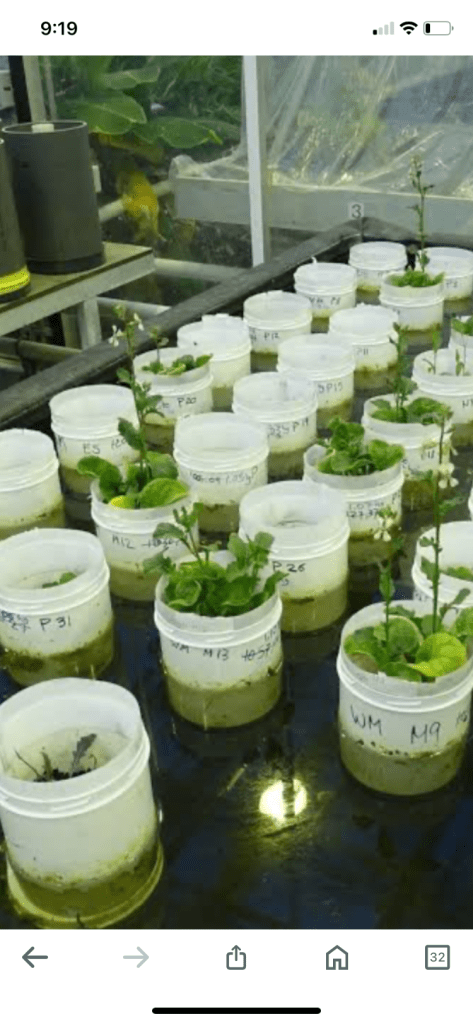
In one experiment, two earthworm genera were added to plants grown in Mars soil simulant. The experiment investigated how the earthworms affected the growth of several crops, but no significant effects were found.
Earthworms are one of four groups that may be necessary for a sustainable agricultural ecosystem on Mars and the moon. The other groups are pollinators, bacteria, and fungi
Earthworms can thrive and reproduce in Martian soil simulants. However, there is no evidence that life has ever existed on Mars.
Earthworms are important for healthy soil on Earth and could be important for future indoor gardens on Mars. They thrive on dead organic matter, such as old plant remains, which they eat, chew, and mix with soil before excreting.
Earthworms could also be a key component for developing an agriculture system on Mars. They could recycle nutrients and aerate the soils through burrow digging, which makes plant watering more efficient.
However, Martian soil may have sharp edges that could harm worms. This is because there isn’t much weathering of Martian terrain, so the sharp edges in its soil do not get worn down.
Good news, aspiring Martian farmers! The soil composition of Mars oughtn’t hinder earthworm reproduction, if experiments here on Earth are any indication
A study at Wageningen University and Research Centre in The Netherlands is trying to determine if humans can survive on Mars by growing their own crops in Martian soil.
According to the American Chemical Society, experiments have shown that plants can grow in Martian soil. However, NASA says that plants would probably need to be housed in a greenhouse on a Martian base, as the Martian surface is too cold, thin, and radioactive for life to survive. Even then, the conditions in a Martian greenhouse would be too extreme for most plants.
Mars soil is almost entirely made of minerals, with very little water and no organic matter or air. It also contains perchlorate chemical compounds, which can be toxic to humans.
Some plants that might thrive on Mars include:
Dandelions, Microgreens, Lettuce, Arugula, Spinach, Peas, Garlic, Kale, Onions.
According to the American Chemical Society, Martian soil contains some nutrients that plants need to grow and survive. However, Martian soil alone doesn’t have the necessary elements for plant life.
In 2016, NASA researchers found that while most native potatoes died shortly after their roots entered the Martian soil, a few of them and most of the LTVR clones managed to grow and produce potatoes.
NASA-funded scientists are designing plants that can survive the harsh conditions on Mars. These plants could provide oxygen, fresh food, and even medicine to astronauts while living off their waste
Two young worms are the first offspring in a Mars soil experiment at Wageningen University & Research. Biologist Wieger Wamelink found them in a Mars soil simulant that he obtained from NASA. At the start he only added adult worms. The experiments are crucial in the study that aims to determine whether people can keep themselves alive at the red planet by growing their own crops on Mars soils.
To feed future humans on Mars a sustainable closed agricultural ecosystem is a necessity. Worms will play a crucial role in this system as they break down and recycle dead organic matter. The poop and pee of the (human) Martian will also have to be used to fertilise the soil, but for practical and safety reasons we are presently using pig slurry. We have since been observing the growth of rucola (rocket) in Mars soil simulant provided by NASA to which worms and slurry have been added. “Clearly, the manure stimulated growth, especially in the Mars soil simulant, and we saw that the worms were active. However, the best surprise came at the end of the experiment when we found two young worms in the Mars soil simulant,” said Wieger Wamelink of Wageningen University & Research
The second experiment on how to grow crops on Mars and moon soil simulant have given a surprising outcome. As a result of what the researchers of Wageningen University & Research centre in the Netherlands learned from their first experiments, they were able to grow ten different crop species. Tomatoes, peas, rye, garden rocket, radish and garden cress were harvested
Earthworms can thrive in simulated Mars soil. They eat dead organic matter, like old plant remains, and then mix their waste with the soil. When they poop, bacteria can break down the waste further, which helps replenish nutrients in the soil
In one experiment, researchers added manure fertilizer, rucola plants, and earthworms to simulated Mars soil. The worms not only survived, but also produced offspring.
Earthworms may play a crucial role in the ecosystem by breaking down and recycling dead organic matter. Their tunnels also bring in oxygen, drain water, and create space for plant roots
According to Quartz, there’s still a long way to go before scientists can say Mars could actually support earthworms.
Some say that Martian soil’s sharp edges may harm worms because they don’t get worn down like they do on Earth. However, others say that earthworms will be a key component for developing an agriculture system on Mars. They can recycle nutrients and aerate the soils through burrow digging, which makes plant watering more efficient.
Yes, Martian soil is considered sterile. It’s also infertile because it lacks biological material and contains high concentrations of perchlorate, which prevents plant growth.
The Martian surface is sterile due to a process called photocatalytic oxidation. This process destroys organic molecules by using free oxygen radicals.
Experiments have shown that compounds found in Martian soil are turned into potent bactericides by the ultraviolet light that bathes the planet. This effectively sterilizes the upper layers of the dusty landscape.
However, some say that microbial life could have been present on Mars in the past and/or today in the subsurface. They also say that the regolith does not contain any bactericidal agents.
Scientists think it’s possible to sustainably grow crops on Mars, but to do this, they’ll need to modify the planet’s dirt. For example, the addition of bacteria and fertilizer as well as the removal of the toxic salts from the soil demonstrate that there is potential for plant growth in a controlled manner on Mars.
In 2017, researchers at Wageningen University in the Netherlands discovered that earthworms can reproduce in simulated Martian soil. The experiment involved a colony of earthworms living in soil created by NASA to mimic the dirt on Mars. The researchers were surprised to find that the worms were thriving and reproducing
The experiment is helping scientists understand how humans might grow crops on Mars. Earthworms can aerate and improve the structure of soil, which can make watering plants more effective.
The Food for Mars and Moon project aims to establish a sustainable agricultural system to feed future humans living on Mars and the moon
Please like subscribe comment your precious thoughts on universe discoveries
Full article source google
Best men and women wear on heavy discount on Amazon

nice
LikeLiked by 1 person
Let’s chat!😊 I want you to be my friend
LikeLike