
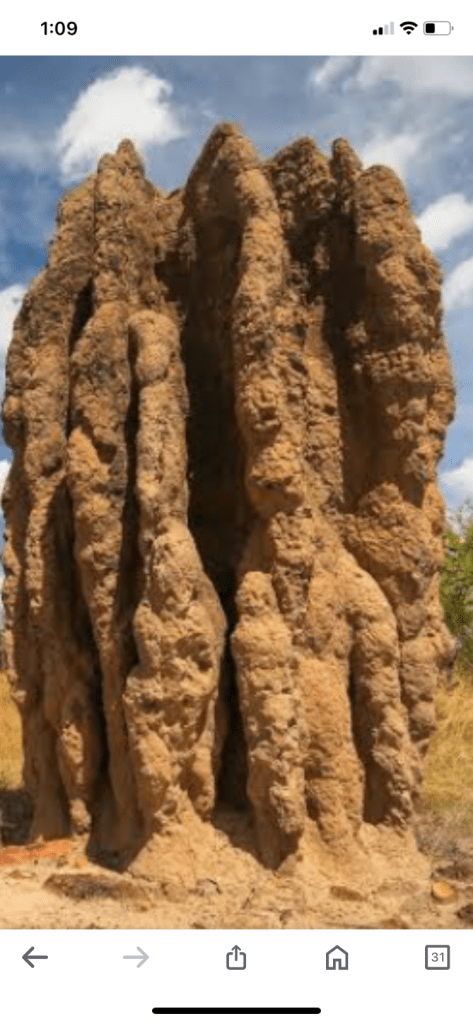
Yes, engineers are inspired by termite mounds to design lunar habitats.
Termite mounds are durable, maintain a constant internal temperature, and regulate humidity and temperature. These qualities could be adapted to create self-sustaining habitats for astronauts on the moon. Lunar structures could use similar ventilation systems and insulation techniques to provide a comfortable environment for long-term missions.
A team of University of Arizona engineers is using robot networks to create termite-inspired structures with NASA funding. The new concept could eventually be used on the Moon as NASA looks ahead to establishing a lunar base by the end of the decade.
During the 1980s, the late architect proposed building sandbag structures on the Moon and other extraterrestrial locations. Thanga incorporated the concept of insect “skyscrapers” into Khalili’s ideas, specifically the tall-standing cathedral termite mounds
Here are some materials that could be used to construct a lunar habitat:
- Lunar regolith The most common material on the moon, this dark, fine, balsaltic grey sand is similar to volcanic sand on Earth. The top layer of regolith is loosely compacted, but the density increases rapidly below 1 meter.
- Lunar soil A blend of silica and iron-containing compounds that can be fused into a glass-like solid using microwave energy.
- Regishell A rigidized mixture of an Earth or lunar-made alkali binder, local regolith, and an inflated structure.
- Hydrogen Engineers are exploring wrapping habitats in a hydrogen-rich water or plastic jacket, or making inflatable structures and spacesuits out of hydrogenated nanotubes. Other materials that could be used to build a lunar habitat include:
- Lava tubes, which are tunnels formed during the moon’s volcanic past
- Frozen water ice beneath the surface Because the moon has no atmosphere, any habitat would need to be highly pressurized to simulate the terrestrial atmosphere.
To live on the moon, astronauts will need the same basic elements they need on Earth: Air, Water, Food, Shelter, Temperature control.
Astronauts will also need access to other resources, such as: Oxygen, Hydrogen, Fuel, Power.
The moon has abundant resources, including solar power, oxygen, and metals. The lunar poles contain large quantities of water in the form of ice. This water can be used for food, agriculture, and rocket fuel.
The moon’s temperature can range from -248 to 123 degrees Celsius (-414 to 253 degrees Fahrenheit). To make the moon habitable, astronauts will need to live in shelters that protect them from meteorites, radiation, and toxic dust.
Astronauts live in pressurized spacesuits that protect them from the moon’s extreme conditions:
- Oxygen: Astronauts bring their own compressed oxygen and breathe it at low pressure. Chemical cartridges in their life support system remove carbon dioxide.
- Temperature: Spacesuit insulation technologies protect astronauts from extreme temperatures and keep heat released by their bodies inside the suit.
- Radiation: Spacesuits protect astronauts from hostile radiation.
- Micrometeoroids: Spacesuits protect astronauts from micrometeoroids.
- Visibility: Spacesuits allow good visibility. Astronauts sleep in a crew cabin, a small room about the size of a shower stall, strapped to the wall with a sleeping bag. Astronauts have reported having nightmares, dreams, and snoring while sleeping in space
NASA and University of Arizona engineers are using robot networks to create termite-inspired structures for NASA astronauts on the moon. The designs are based on cathedral termite mounds, which are native to Africa and northern Australia’s desert.
Termite mounds are mud towers that can reach 26 to 30 feet high. They have a simple exterior, but are well-designed with tiny surface holes that allow air to circulate between the inside and outside.
The ability of termite mounds to regulate temperature and humidity could be adapted to create self-sustaining habitats for astronauts on the moon. The extreme desert environments the termites face are analogous to lunar conditions
Termite Mound Lunar Structures – GroupWith NASA funding, a team of University of Arizona engineers is using robot networks to create termite-inspired structures that will help astronauts survive the moon’s harsh environment
Termite mounds have many advantages, including:
- Biodiverse habitats Termite mounds help create biologically diverse habitats that help many species survive. When ants attack and many ants and termites die in their battles, the bodies provide nutrients for the soil around the mounds.
- Ventilation system Termite mounds act as a ventilation system for the subterranean colony and maintain the stable microclimate of both temperature and humidity within the tunnels and the fungus garden.
- Nutrient hotspots Termite mounds are nutrient hotspots in tropical grasslands and savannas, stabilizing ecosystems. The soil from termite mounds can be high-quality fertilizer. The use of termite mound soil has been suggested as biofertilizers and inoculant in low-input cropping systems because it is rich in nutrients and plant growth-promoting bacteria.
- Protection Termites use swarm intelligence and collective behavior to construct mounds on top of their deep subterranean nests, which protects them from the external environment.
- Durability Most termite mounds are so hard that only a drill or hammer wielded with great force can break them. Some termite mounds are so resistant to weathering that they can survive intact for hundreds or even thousands of years.
- Critical in natural ecosystems Termites are critical in natural ecosystems—especially in the tropics—because they help recycle dead wood from trees.
Please like subscribe comment your precious thoughts on universe discoveries
Full article source google
Best pet supplies on discount on Amazon Universe discoveries
good
LikeLiked by 1 person