
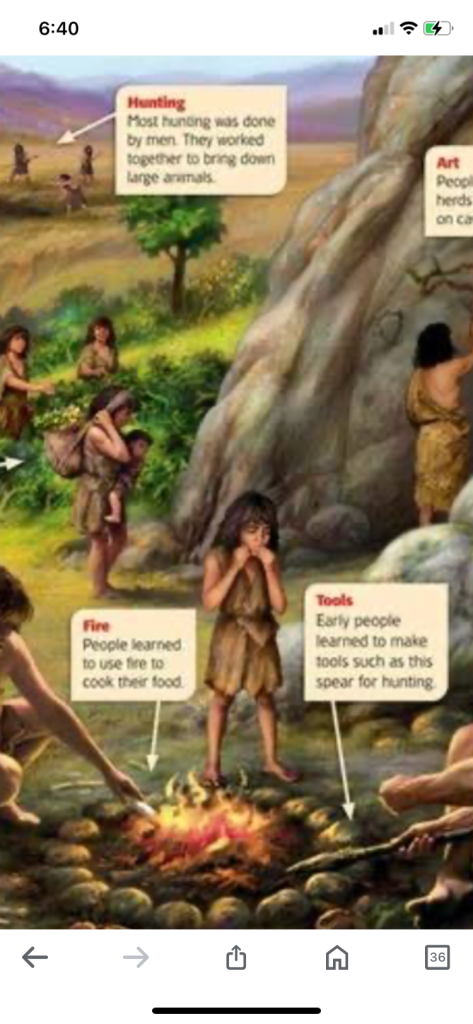
According to a genetic study, Europe’s last Stone Age hunter-gatherers avoided inbreeding by mixing with other hunter-gatherer groups and avoiding the growing Neolithic farmer population
Research also suggests that these hunter-gatherers had strict mating rules and complex social relationships that went beyond biological kinship. Some say that these groups exchanged women between groups to avoid inbreeding.
Inbreeding is when closely related individuals mate and produce offspring. This can lead to homozygosity, which can increase the chances of offspring being affected by recessive traits. In extreme cases, this can lead to a population’s decreased biological fitness, which is its ability to survive and reproduce.
The Stone Age was a prehistoric period that lasted for roughly 3.4 million years and ended between 4,000 BC and 2,000 BC.
Well, our hunter-gatherer ancestors, who lived in very small, close-knit tribes, faced similar problems, with inbreeding being an even bigger issue for them without present-day social constructs. And research shows that they came up with a crafty way of avoiding this: exchanging women between groups!
The study found that these hunter-gatherer groups were made up of few individuals, but they were generally not closely related. The study also suggests that these late Stone Age societies placed significant value on social ties beyond mere bloodlines.
The study also found that these hunter-gatherers had surprisingly intricate social relationships that went far beyond biological kinship. They deliberately mixed with multiple outside communities, likely as an intentional tactic to avoid inbreeding.
Inbreeding is the production of offspring from the mating or breeding of individuals or organisms that are closely related genetically. Inbreeding results in homozygosity, which can increase the chances of offspring being affected by recessive traits.
Inbreeding can have many negative genetic consequences, including:
- Reduced fertility
- Increased infant and child mortality
- Reduced size
- Reduced immune function
- Increased risk of genetic disorders and heart problems
- Increased facial asymmetry
- Decreased genetic variation
- Lower growth rates
Inbreeding can also lead to higher frequencies of genetic defects. This can occur when a common ancestor appears on both the maternal and paternal side of the pedigree.
In extreme cases, inbreeding can lead to inbreeding depression. This is when a population’s biological fitness is temporarily decreased, which is its ability to survive and reproduce.
Inbreeding can also affect a population’s genetic diversity. This can have negative consequences, such as an increase in rare recessive genetic diseases and a decline in fitness.
Some facial characteristics of inbreeding include:
- Malformed ears
- Cleft lip and cleft palate
- Microcephaly
- Low-set ears
- Hypertelorism
- Malformed eyes, noses, and jaws
- Deformities of the skull and facial bones
Inbreeding can also lead to an increase in genetic disorders, such as:
- Loss of hearing
- Blindness
- Limb malformations
- Disorders in the development of private parts
- Neonatal diabetes
- Schizophrenia
- Speech disorders
Inbreeding can also cause the “Habsburg jaw”, a genetic disorder that’s characterized by an oversized jaw, a large lower lip, and a hanging nose tip. This condition is strongly correlated to inbreeding, which royal families did to keep blood lines pure. The causes of the relationship between inbreeding and facial deformity remain unclear, but scientists suggest it’s because inbreeding increases the chances of offspring inheriting identical forms of a gene from both parents.
Inbreeding was likely common in early humans and other hominins, such as Neanderthals. This is because they lived in small family units, making inbreeding likely.
Some research suggests that the human race was down to a few thousand people around 70,000 years ago. This small group size likely led to a lot of inbreeding. This “bottleneck” in population size may be why humans have so much DNA in common.
According to a genetic analysis, our ancestors lived in small, isolated populations for thousands of years, leaving them severely inbred.
Today, inbreeding is still common, but the incidence is decreasing. Around 10.4% of the world population has a consanguineous relationship as second cousins.
Saudi Arabia and Pakistan have the heaviest concentrations of consanguineous marriages. Pakistan has the largest amount of inbreeding and inbred populations (over 70%).
According to a 2017 study, early humans recognized the dangers of inbreeding and developed social and mating networks to avoid it around 34,000 years ago. The study examined genetic information from the remains of anatomically modern humans who lived during the Upper Palaeolithic
Inbreeding has been happening since modern humans appeared about 200,000 years ago, and it still happens today in many parts of the world
According to New Scientist, inbreeding may have shaped the course of human evolution. Inbreeding is a powerful evolutionary force that shapes the distribution of genetic variation among populations of plants and animals
Inbreeding can also be an evolutionary change. It increases homozygosity, which can lead to decreased fitness. This increased homozygosity can also lead to the expression of deleterious recessive alleles, which can also represent an evolutionary change.
Inbreeding is also a potent evolutionary force that shapes the distribution of genetic variation within and among populations of plants and animals.
However, inbreeding avoidance is an evolved trait that characterizes our hominin ancestors as well as modern human groups. Matings between close relatives are extremely rare among all primates, including humans.
Please like subscribe comment your precious thoughts on universe discoveries
Full article source google
Best watches on heavy discount on Amazon Universe discoveries
Nice articol
LikeLiked by 2 people
Thanks 🌹
LikeLike