
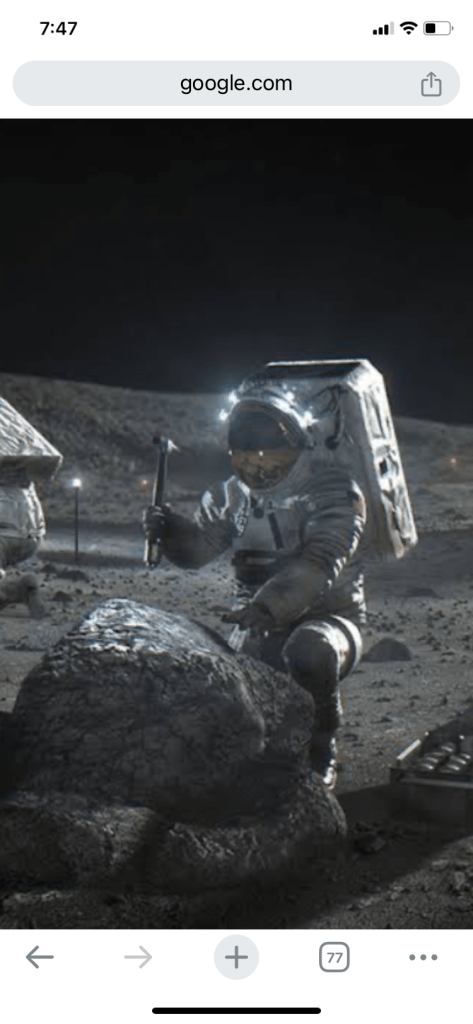
During the Sustained Lunar Evolution segment, there are the deliveries associated with creating an ISRU Pilot Plant and the ongoing logistical needs. In sum, NASA predicts that future demands for cargo will range from 2,500 to 10,000 kg (~5,510 to 22,045 lbs) a year for annual recurring logistics
NASA has big plans for the Moon. Through the Artemis Program, NASA plans to create a program of “sustained exploration and lunar development.” This will include the creation of the Lunar Gateway, an orbital habitat that will facilitate missions to and from the surface, and the Artemis Base Camp that will allow for extended stays. Through its Commercial Lunar Payload Services (CLPS) program, NASA has contracted with commercial partners like SpaceX and Blue Origin to deliver scientific experiments and crew to the lunar surface.
However, these efforts are expected to culminate in the creation of a permanent outpost and human presence on the Moon. This will require far more in the way of crew and payload services to ensure crews can be sustained in the long run. In a recent white paper, “Lunar Surface Cargo,” NASA researchers identified a significant gap between current cargo delivery capabilities and future demand. The paper indicates that this growing cargo demand can only be met by creating a “mixed cargo lander fleet.”
Lunar surface exploration will require the delivery of assets, equipment, and supplies to the lunar surface. While some supplies and equipment may be delivered with crew on HLS, cargo landers provide additional flexibility and capability for robust exploration. In the HLR segment of the exploration campaign, additional cargo delivery can be provided through NASA’s CLPS Provider Landers.”
Growing Demand
To assess the growing need for lunar landers and transportation systems, NASA analyzed a representative sample of planned cargo for the Artemis Program and potential needs. Once again, these needs are broken down by segment, with each sample item represented by a potential mass range (see table below). They also include one-time payloads for habitation, mobility systems, power and communications, freezers, various science and technology payloads, and recurring logistics delivery missions that will include food, water, air, spare parts, and other necessities.
Is NASA going to build a base on the Moon?
We will build an Artemis Base Camp on the surface and the Gateway in lunar orbit. These elements will allow our robots and astronauts to explore more and conduct more science than ever before
Why don’t we build a base on the Moon?
Unfortunately, setting up camp on the Moon is much more difficult than sending astronauts there for a few days. Unlike the Apollo astronauts, lunar settlers wouldn’t be able to carry all their rations and resources on their rocket. It would be too heavy.
What are the necessities for the Moon base?
Their moon bases must protect crew from deadly radiation and dangerous moon dust. They must also provide crew with oxygen, food, and water, as well as provide space to do science experiments. On top of all this, it must be pleasant to spend time in
NASA’s Moon to Mars strategy is guided by both a robust systems engineering process and five interrelated methodology principles. The first principle is a shift from a capability- based framework to an objective-based framework, in which top-level goals and objectives lead, guiding the integrated plan to meet them
NASA prepares for future human spaceflight missions with extended crew duration in
destinations beyond low Earth orbit (LEO), the Agency has focused itself on understanding
the drivers to sustainably support human life beyond Earth’s atmosphere. Future missions to
deep space, the lunar surface, and eventually the Martian surface pose new challenges in
ensuring the crew is sufficiently supplied with all necessary materials. To mitigate the risk of
not delivering sufficient consumables and logistics for human spaceflight missions, NASA has
examined past human space mission data and developed metabolic modeling to determine
estimates for the crew consumption rates of fluids, solid consumables, and additional
equipment needed. This paper is a compilation of guidelines, rates, and assumptions necessary
to evaluate the logistics needs for future human exploration conceptual missions beyond LEO,
providing a starting point and resource of information regarding usage rates and overall
logistics supply planning for crewed exploration missions. Logistics represent all equipment
and supplies not installed as part of the vehicle that are needed to support mission activities.
Logistics can be further divided into specific categories, including consumables, maintenance
items, spares, utilization, outfitting, and any packaging required. This paper will also provide
use case examples of logistics needs to support human missions in deep space, including a
conceptual lunar surface mission. The paper provides information necessary to calculate the
mass and volume of known logistics for conceptual future human exploration missions beyond
LEO. The assumptions in the paper are updated versions of previous assumptions made by
the Agency and were derived from a number of sources, including International Space Station
(ISS) historical usage and resupply rates, the Life Support Baseline Values and Assumptions
Document (BVAD) 2022, Human Integration Design Handbook (HIDH) 2014, and data
gathered from NASA human spaceflight programs and projects. The primary goal of the
paper is to establish a set of consistent reference rates that multiple teams and groups can
utilize to conduct logistics analysis and compare cases. This methodology is for initial
estimates of conceptual human missions and does not take the place of detailed analysis for
How does NASA want to use Gateway to explore space beyond the Moon?
It will enable a wide range of research activities and serve as a vital staging point for deep space exploration. Gateway will feature habitation and research facilities, crew and payload airlocks, and docking ports for visiting spacecraft, including Orion, lunar landers, and logistics resupply craft.
What are some of the key components needed to establish a sustainable lunar economy?
Habitat and life support systems, including radiation shielding, closed-loop life support, and the use of lunar-derived resources like water and oxygen, are essential for the safety and sustainability of lunar habitation
What are the mission objectives for NASA’s first few flights in the Artemis program?
Follow the NASA Artemis missions. NASA’s Artemis missions aim to “land the first woman and first person of colour on the Moon“, explore the lunar surface, and lay the groundwork for sending astronauts to Mars. Find out more about this groundbreaking new era in space exploration
What is the main purpose of the Gateway that will be orbiting the Moon?
International teams of astronauts will explore the scientific mysteries of deep space with Gateway, humanity’s first space station around the Moon. Gateway is central to the NASA-led Artemis missions to return to the Moon for scientific discovery and chart a path for the first human missions to Mars and beyond
When NASA’s Orion spacecraft launches aboard the powerful Space Launch System rocket for the spacecraft’s first mission around the Moon later this year, a suited manikin will be aboard outfitted with sensors to provide data on what crew members may experience in flight
This program of NASA is divided into three parts. The first part will launch an uncrewed SLS and Orion spacecraft next year under Artemis I. After this, there will be a flight test of astronauts under Artemis II in the year 2023. Finally, in the year 2024, Artemis III will land astronauts on the South Pole of the Moon
There are some key elements of this Artemis Program of NASA. First, to find the ground system from where the launch can be done, secondly Space Launch System (SLS), Orion spacecraft for lunar missions, lunar landers, space suits etc. are included. NASA has prepared for all this
एक बार ओरियोन (Orion) अंतरिक्ष यान गेटवे तक पहुंच गए तो अंतरिक्ष यात्री चंद्रमा (Moon) पर रहने के साथ ही काम कर सकेंगे. नासा ने इस अभियान के लिए खास तरह के स्पेस सूट बनाए हैं जिन्हें xEMU. इसमें खास तरह की गतिविधि सुविधाओं के साथ संचार सुविधाएं भी है जो माइक्रोग्रैविटी या दूसरे ग्रह की ग्रैविटी के अनुसार इसकी सेटिंग्स में भी बदलाव किए जा सकते है.
Once the Orion spacecraft reaches the Gateway, astronauts will be able to live and work on the Moon. NASA has made a special type of space suit for this mission which is called xEMU. It has special movement features as well as communication facilities which can also change its settings according to microgravity or the gravity of another planet.
अमेरिका (US) के लिए नासा (NASA) ने सबसे पहले 1961 में चंद्रमा (Moon) का अभियान शुरू किया था इसके बाद 20 जुलाई 1969 को नील आर्मस्ट्रॉन्ग (Neil Armstrong) ने चंद्रमा पर सबसे पहला कदम रखा था. इसके बाद उन्होंने एडविन एल्ड्रिन के साथ वहां तीन घंटों का समय बिताते हुए वहां से कुछ धूल और पत्थर के नमूने जमा किए थे
For America, NASA first started the Moon mission in 1961, after which on July 20, 1969, Neil Armstrong took the first step on the Moon. After this, he spent three hours there with Edwin Aldrin and collected some dust and stone samples from there.
इस अभियान से नासा (NASA) न केवल अंतरिक्ष अनुसंधान (Space Research) में अमेरिका (US) का वर्चस्व कायम रखना चाहता है बल्कि चंद्रमा (Moon) पर अपने रणनीतिक उपस्थिति दर्ज करा कर वह अमेरिका वैश्विक आर्थिक प्रभाव भी बढ़ाना चाहता है
With this campaign, NASA not only wants to maintain America’s dominance in space research but also wants to increase America’s global economic influence by establishing its strategic presence on the Moon.
अमेरिका (US) के अब तक 12 अंतरिक्ष यात्री (Astronauts) चंद्रमा (Moon) पर चहलकदमी कर चुके हैं. इसके अलावा सोवियत संघ और अन्य सात देशों के चंद्र अभियान भी चांद पर पहुंचे हैं. अमेरिकी यात्रियों ने चंद्रमा से 382 किलो के पत्थर और मिट्टी शोध करने के उद्देश्य से पृथ्वी पर पहुंचाई है. 1972 के बाद से कोई भी इंसान चांद पर नहीं गया है.
So far, 12 astronauts from America have walked on the Moon. Apart from this, lunar missions of Soviet Union and seven other countries have also reached the moon. American travelers have brought 382 kg of stones and soil from the Moon to Earth for research purposes. No human has gone to the moon since 1972.
Please like subscribe comment your precious thoughts on universe discoveries
Full article source google
https://www.amazon.in/b?_encoding=UTF8&tag=555101-21&link Universe discoveries
Nice information
LikeLiked by 1 person